Yorgen Fenech’s Defence Pushes Schembri-Cardona Narrative In Cross-Examination
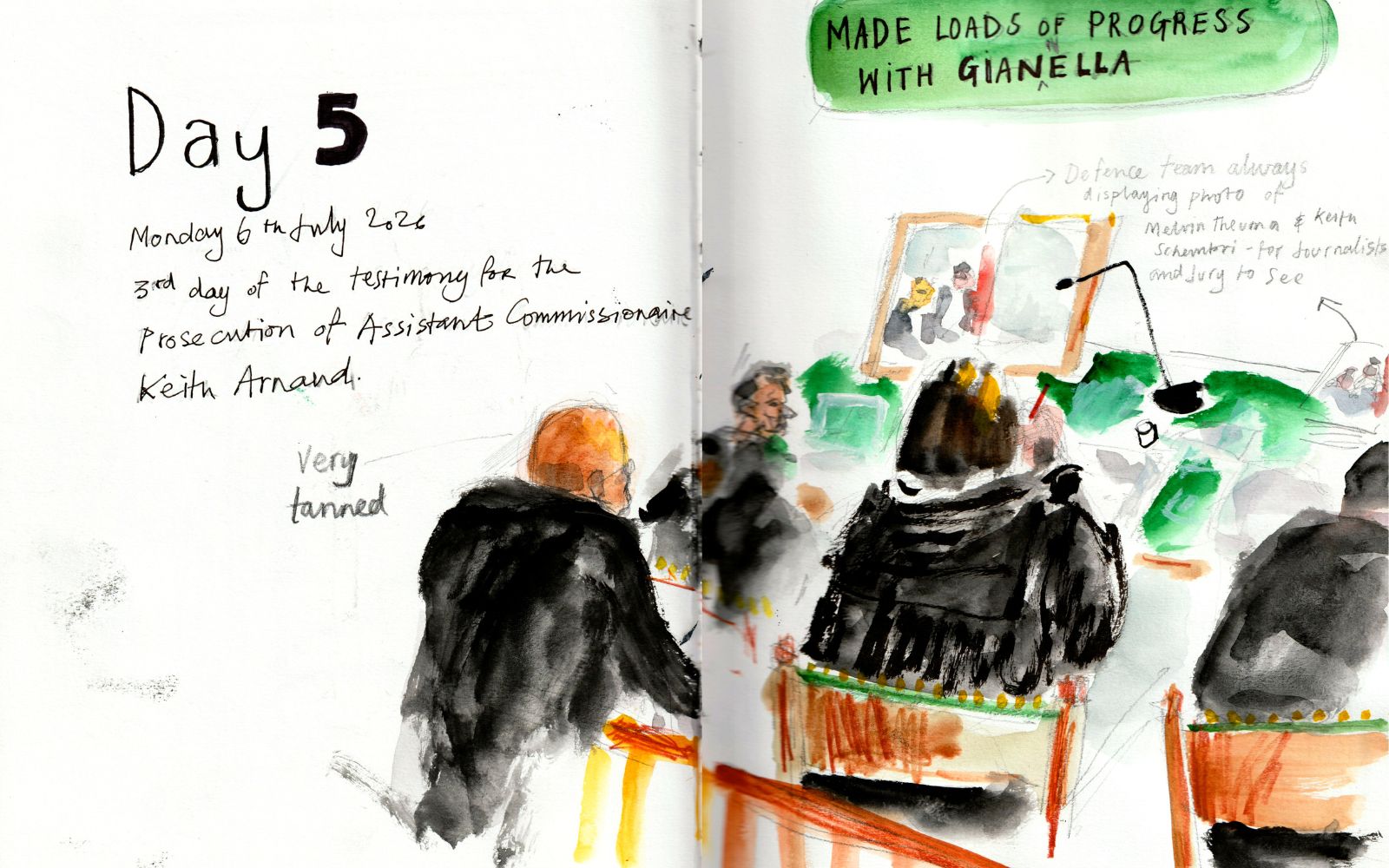
Cover image by Sebastian Tanti Burlo
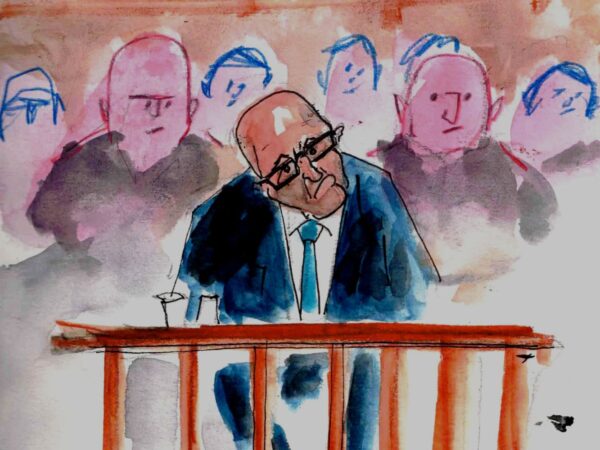
The defence team of Yorgen Fenech has looked to push the involvement of both former OPM chief of staff Keith Schembri and former minister Chris Cardona in the murder of Daphne Caruana Galizia under their first cross-examination.
Gianella de Marco took on Assistant Commissioner Keith Arnaud after he concluded his testimony from the murder to Fenech’s arrest.
De Marco, who created a combative atmosphere from the start, focused on a Europol report submitted soon after the murder of Daphne Caruana Galizia, which named Schembri and Cardona as potential persons who may have had a motive to carry out the killing.
Arnaud explained that the report, written by a court expert and not the police, was based solely on Daphne Caruana Galizia’s blog and phone, which he said was a partial look at the possible motive, and not an analysis using the evidence they would be able to acquire over the next weeks.
Arnaud said that the report never reached him. He discovered its existence when it was presented in the compilation of evidence. Once the police knew, they worked to have it made part of the final submissions.
De Marco opened her questioning on police investigations before the murder. She pressed Arnaud as to whether the Degiorgio brothers and Muscat were considered persons of interest in previous bombings and drive-by shootings which took place in regularly frrequency int hemonths nd years leading up to the murder.
Arnaud confirmed that they were and they were subject to surveillance. He said the potato shed was known to the CID as a criminal hotspot as early as 2009, but it was not monitored.\
“It would be useless. The shed isn’t like films where you see men hanging out with guns committing crimes. If we went there, we would be spotted. These are organised criminal groups with a lot of experience; you have to be creative in surveillance,” he said when asked why police did not monitor their movement.
“Unfortunately, yes,” Arnaud said when asked if the police and MSS failed to pick up signs that the murder was being planned.
The Alleged Escape Plan: Phone extraction and the “Uncle Ray” chats
On 20th November, arresting officers seized Yorgen Fenech’s belongings. His devices were first sent to Europol, which conducted a partial data extraction and handed them to the police.
Included in the chats was a contact saved as “Uncle Ray”. On 18th November, Ray sent Yorgen several WhatsApp messages, warning him that “there may be developments”, accompanied by links to a Times of Malta article & a post by Jason Azzopardi, the parte civile lawyer for the family of Daphne Caruana Galizia.
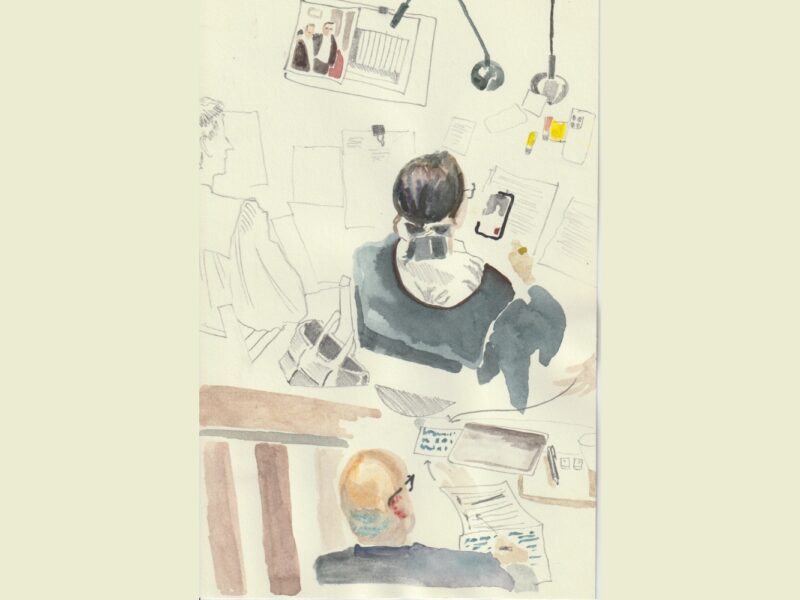
“Ok, I’ll speak to Gianella,” Yorgen told his uncle. De Marco is part of Yorgen Fenech’s legal team; she was not an active participant in his case until the trial, but regularly attended sittings. Her son, Gianluca Caruana Curran, is the only member of the legal team to have been there, officially, since November 2019.
“Gianella said she’s on board,” Fenech’s uncle, Ray, told him on a messaging chat, confirming that he will cover the legal fees for the time being.
In the conversation, Ray and Fenech discussed potential exit routes, including reaching Italy and later France. In those messages lies a reference to KS, Keith Schembri, to help check whether it was safe for him to leave via the airport.
A contact named “Papa” was identified as a number used by Fenech’s brother, Franco. At 8:35 am on 18th November, Franco advised him to seek legal help, leave Malta, and buy time.
Over 18th–19th November, the brothers coordinated with Logan, the captain, to prepare the boat and make arrangements in Sicily.
In a separate chat, Fenech asked a friend to rent him a house in France for two weeks, cash and no contracts.
On the 19th, the evening before the arrest. Yorgen and Ray discussed the presence of journalists at Portomaso, and that “Ivan tat-Times” had tipped them off. Arnaud revealed that police had been monitoring Fenech’s movements after Theuma had been granted a pardon.
That night, Fenech spoke to the captain of his cabin cruiser to prepare for departure. When port authorities contacted Logan, Fenech instructed him to go through all procedures as usual.
Fenech told investigators that he had no intention of fleeing the country and he had switched on the boat’s AIS.
The Final Hours Before Arrest: Keith Schembri and others
Among the material extracted by Europol were Signal messages between Fenech and his brother Franco, saved under the name “George”. At 4:25 am on 20th November, an hour and a half before his arrest, Fenech wrote: “Your phone is tapped, and they picked up a call with Logan.”
Minutes before police boarded the vessel, Fenech sent a final message: “bongu ħabib, aħna ħerġin bil-kwiet” (“morning friend, we’re heading out quietly”).
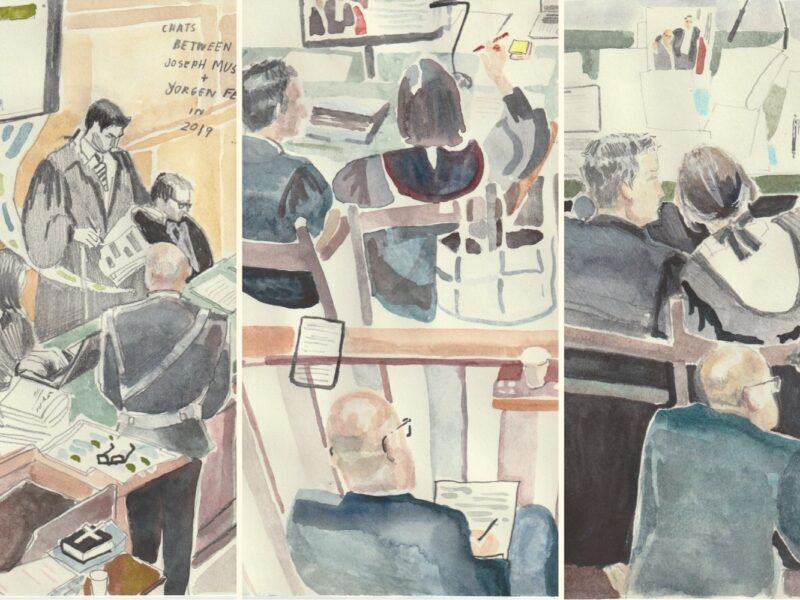
Signal chats between Yorgen Fenech and Keith Schembri the night of the arrest and suspected escape attempt were found on the device.
“Don’t leave me alone, give me support”, Fenech told Schembri.
He shared an article and asked Schembri: “tgħid aħjar nitlaq?” (“do you think I’d better leave?”)
Schembri and Fenech exchanged a few phone calls. In a message, they discussed whether Fenech should hire Gianella de Marco, Stephen Tonna Lowell or Franco Debono.
“They mentioned me from A to Z”, Fenech said, asking for a copy of Theuma’s pardon, also informing him of the presence of journalists in the area.
They also discussed Theuma’s pardon request. Fenech claims Schembri passed the agreement on. It was found in Fenech’s position, but there’s no actual evidence over who sent it.
Schembri, Arnaud said, was trying to convince Fenech to remain on the island.
“Keith’s Playing His Game Too”
Jurors were also shown chats between Fenech and a person who worked at OPM, whose name cannot be published following a court order requested by the defence.
On 19th November, Fenech told her he was going to leave Malta. Asked why, he replied: “għax se jitfgħu kollox fuqi” (“because they’re going to pin everything on me”).
She asked whether he had legal help: “Is K helping or not?”
“Yes, but Keith’s playing his game too,” Fenech replied.
The secretary appears to have spoken to Schembri herself, telling Fenech: “He’s distancing himself”. Fenech replied: “K? That’s not what he’s telling me.”
In the same chats, Fenech shared his plan to sail to La Spezia, and spoke of his worry for his children and his sense that people had turned against him, mentioning the media and the photographers.
Yorgen Fenech’s Police Statement Did Not Add Up To Recordings
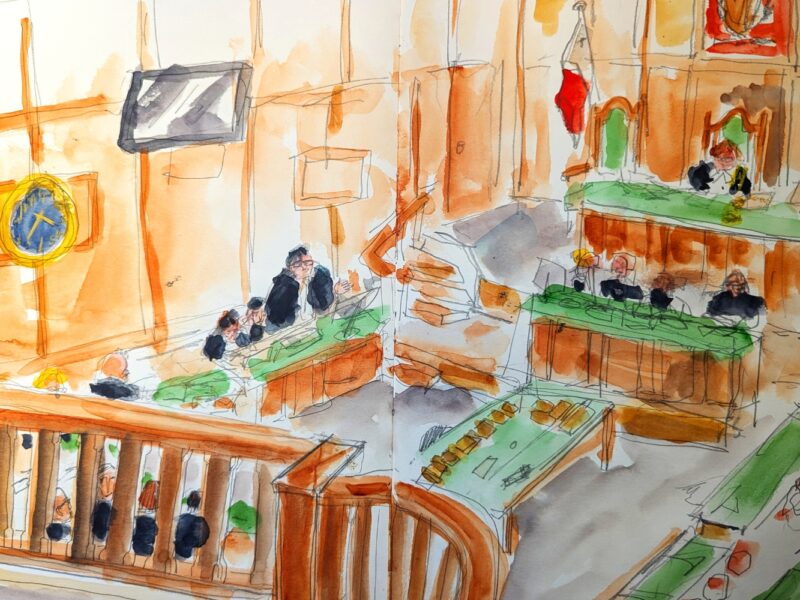
While in police custody, Fenech provided a statement. The statement, Arnaud said, was focused on the claims outlined in the letter Fenech claimed was passed on to him by Keith Schembri by their common doctor, Adrian Vella.
“The story matched neither the police timeline nor the established version,” Arnaud told jurors.
Notably, Arnaud said that Fenech confirmed that he passed on 450,000 to Melvin Theuma, but just not for the killing itself.
According to Fenech, Schembri told Fenech, who in turn went to Melvin Theuma. He claimed that he was blackmailed and threatened.
Arnaud said that Theuma and the hitmen have corroborated the timing and payment amounts, adding that Fenech refused to answer questions about the 120,000 final payment that changed hands.
“He told us ‘he would respond at the opportune time'” Arnaud said.
Every recording, Arnaud said, showed that Keith Schembri was feeding information to Yorgen Fenech. At no point is Schembri’s involvement in the murder mentioned.
Key recordings were read out to jurors: Melvin Theuma asked Yorgen Fenech would speak to then-Prime Minister Joseph Muscat about granting bail to the Degiorgio brothers. Fenech replies: “It would be the biggest mistake of my life”. He is heard telling Theuma that he will continue to help the brothers financially.
- Yorgen Fenech gave money to Melvin Theuma, so he and his family could go on holiday, to help him “calm down”.
- A conversation between Fenech and Theuma in the car while French’s two children are present. Theuma told Fenech he had been betrayed over the bail matter, and that the promise had stirred up the brothers. Yorgen Fenech tells him that it “wasn’t his fault”.
- Yorgen Fenech says: “You brought the man from A to Z, but I have reason to worry”. Theuma replies: “No, you never had a reason to, not even know. If [the police] come, they’ll come for me”. Fenech replies: “The one who arranges things doesn’t have as big a problem as the one who ordered it”.
- In a recording, Fenech says he “paid the full €150,000”.
- Yorgen Fenech: “[Keith] went into the fire [for him]”
Yorgen Fenech and Joseph Muscat
In his statement, Fenech told police that three people knew about the murder after the fact: Johann Cremona, Adrian Vella and then-Prime Minister Joseph Muscat.
Fenech claimed that Muscat approached him twice about the murder: once at his birthday party in Girgenti; and another time in Castille. Fenech said Muscat warned him of Theuma’s arrest. Muscat denied the claims.
Keith Arnaud repeated his testimony about his meetings at Castille, which at first involved himself, Deputy Commissioner Silvio Valletta, Commissioner Lawrence Cutajar, Muscat, Schembri, and then-Justice Minister Owen Bonnici.
He said that the meetings at Castille were requested by the police, not the other way round. The first meeting was roughly mid-November 2017, soon after the murder. Another meeting took place in the last week of November, where the names of the main suspects were discussed. A separate meeting took place soon before the arrest on 4th December.
Arnaud has previously detailed how recordings indicate that Schembri was leaking information to Fenech.
Arnaud’s next meeting took place after Vince Muscat began speaking to police. Fenech was also allegedly informed through Schembri, which triggered Theuma to begin recording.
Once police produced a plan for Theuma, they discussed it with Castille. These meetings took place between June and August of that year. The last meeting was in October, a few weeks before the final arrest.
Parallel investigations
The arrests triggered wider investigations beyond the homicide of Daphne Caruana Galizia. An investigation was opened into leaks of information from the case, a magisterial inquiry, and Theuma’s phantom government job. Both cases have resulted in charges against persons, including Keith Schembri. All were acquitted in the phantom job case after Theuma refused to testify, and the case is not appealable.
A separate task force was set up with the homicide squad and FCID so that all material generated during the investigation was shared with all squads and analysed by both departments.
Closing his testimony, prosecutor Godwin Cini asked Arnaud a final question: across all the sessions in which Theuma explained his involvement in the murder, who did he name?
“He kept naming Yorgen Fenech,” Arnaud replied.
The trial continues tomorrow.
More to read
-
-
Environmental

Green To Grey: How Is Land Take-Up Regulated?
-
-
Environmental

Green to Grey: When Development Creeps Up On Agricultural Land
-
-
Environmental
Infrastructure, Commercial Complexes, Cemetery: Satellite Data Reveals Malta’s Largest Green-to-Grey Areas
-
-
Environmental
Green To Grey: Malta Lost Over 830,000 Square Metres Of Land To Development In Five Years
-
-
Environmental
Profit In Every Drop: The Companies Pumping Malta’s Groundwater For Free
-
-
Crime & Legal Affairs
Listen: The Trial Against Yorgen Fenech – A Podcast By Amphora Media
-
-
Politics
Open Malta: A New Political Data Transparency Platform By Amphora Media
-
-
Crime & Legal Affairs

MGA-Licensed Operator Linked To €5.86 Billion German Illegal Gambling Probe