“His Eyes Were Opened”: Theuma’s Psychiatrists Testify, Fenech’s Chats With Politicians Including Muscat And Schembri Shown
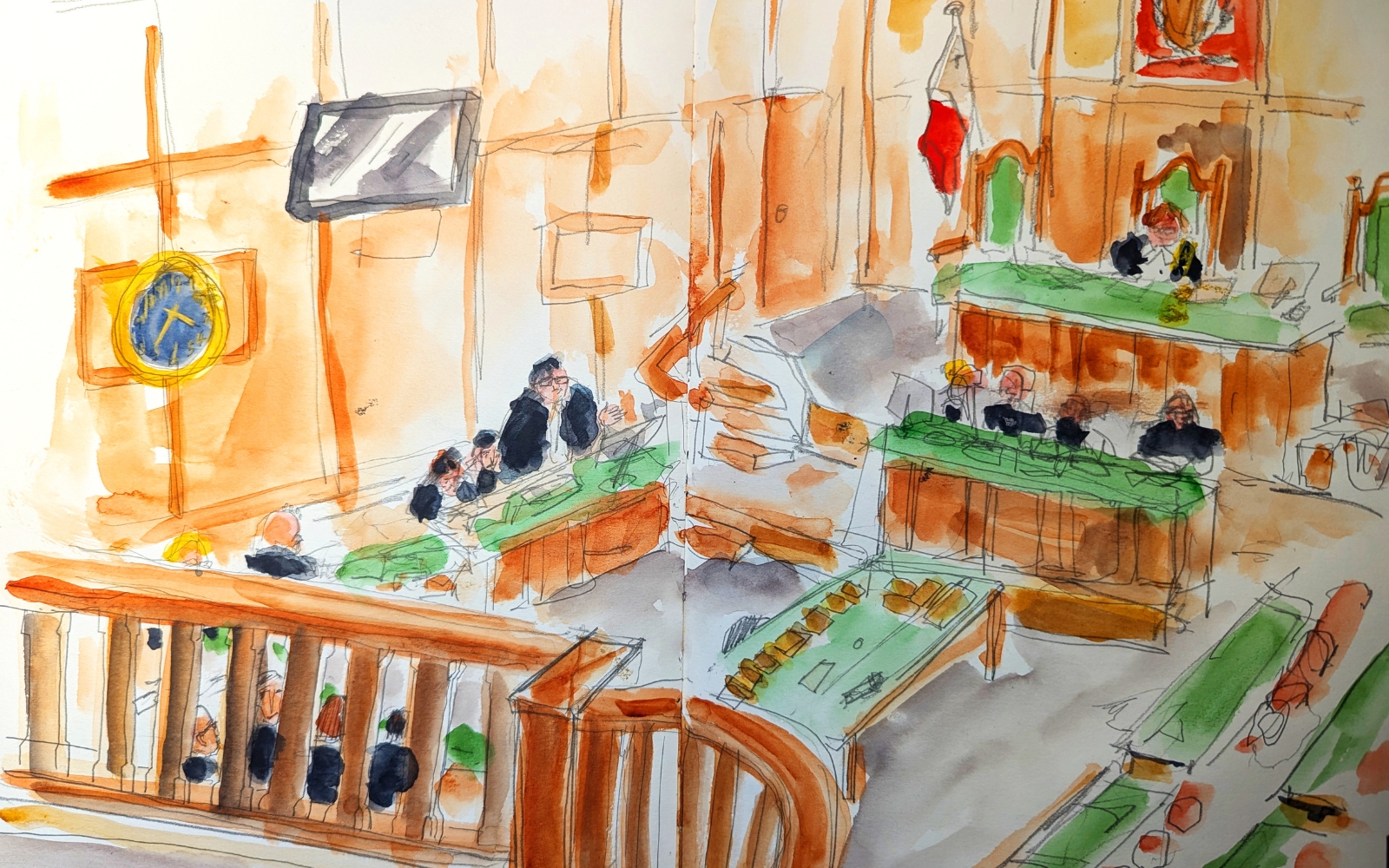
Three psychiatric experts told the jurors that Melvin Theuma is fit to testify. They gave the fullest account yet of his mental state after the murder of Daphne Caruana Galizia and of his 2020 suicide attempt.
Dr Jean Pierre Degiorgio, Dr John Debono and Dr Ethel Felice testified together. They had been engaged to examine Theuma’s psychological condition after the attempt, and specifically to establish whether he was in a position to give evidence.
They concluded that Theuma developed a “mixed anxiety and depression disorder” after the murder. They said his symptoms are under control, that his cognitive faculties are unimpaired, and that he can testify, though possibly not at length.
Theuma told them he had no mental health problems until the day of the murder, when “[his] eyes were opened”, and he realised what had happened. From that day he suffered severe anxiety, which the experts described as remorse both for what he had done and for the effect on his family.
He began to fear losing everything, including his son. He was medicating with prescribed pills and alcohol, and later with Ativan and alcohol. He had thoughts of jumping, the experts said, but thoughts of his son held him back.
On the eve of one of his appearances in the compilation of evidence, Theuma slit his throat with a knife while alone, then stabbed himself six times in the abdomen with the same knife. The experts said he had intended to go up and jump but slipped in his own blood and could not get up. When he could not be contacted, his partner was called and found him on the floor.
He was taken to hospital and began treatment. The experts said that after his discharge he had no further episodes of that kind, but remained low, anxious, fearful and despondent.
Theuma told the experts he had paid Alfred and George Degiorgio out of his own pocket, fearing that if he asked Fenech for the money, Fenech would think he was keeping it for himself. He told Inspector Keith Arnaud that he wished Matthew Caruana Galizia, one of Caruana Galizia’s sons, would forgive him.
The experts also said a question put to Theuma by lawyer Jason Azzopardi, asking whether he had considered Caruana Galizia’s family before she was killed, had stayed with him. Theuma told them he continued to find it difficult to give evidence in front of the Caruana Galizia family, and in front of Fenech and his defence team, because he felt they were mocking him.
In later examinations, the experts said Theuma continued to suffer periods of low mood but had no further suicidal thoughts, and they found no evidence of other mental health problems. He was willing to continue with psychological treatment.
Giannella de Marco’s cross-examination for the defence targeted the timeline of Theuma’s will. The experts said Theuma had made his will when he began thinking of ending his life. De Marco put it to them that the Degiorgio brothers were arrested on 4 December 2017 and that the will was made three days later, on 7 December 2017, referring the court to the will as exhibited in Magistrate Sonia Consiglio’s inquiry.
The experts said they could not assist on that point. Their remit, they told the court, was to establish whether Theuma was in a fit mental state to give evidence, and it was not their task to verify what he told them or to question him about matters outside that assessment.
De Marco also established that the experts met Theuma twice, the first time on 20 November 2020, and that he was already under psychiatric care elsewhere before the attempt. Asked what had prompted the attempt, the experts said Theuma had not given them the reasons, and that what leads a person to attempt suicide is never a single cause.
Fenech’s data
Inspector Brian Paul Camilleri of the Financial Crimes Investigation Department gave jurors a further breakdown of data extracted from Fenech’s devices. He told the court he had supervised a task force that analysed the material by keyword search, working in parallel with a Europol task force, and that anything of interest was flagged and passed to investigators.
Among the material put to him was the “No Valletta, No Party” WhatsApp group. Camilleri said he did not recall every member but named Fenech, Keith Schembri and Silvio Valletta; the prosecution also put Joe Cuschieri’s name to him.
A second group, named Sassicaia, included Fenech, Schembri and JM. Camilleri said JM and Fenech left that group within a minute of one another on 29 October 2019, and Schembri left on 31 October.
Chats between Fenech and other prominent figures were also displayed. They included exchanges with Rosianne Cutajar, Konrad Mizzi, Marvin Gaerty, Heathcliff Farrugia, Catherine Halpin, Pierre Portelli and Saviour Balzan.
Camilleri confirmed that 17 Black changed its name to Wings Development and then to Wings Investments on 11 March 2017. He said the analysis also contained references to bitcoin transactions with Anthony Farrugia, a former business partner.
The court repeatedly limited the scope of his evidence. Citing its decree of 1 August 2026, it held that Camilleri is not an investigating officer in these proceedings but an investigator in other cases involving Fenech and third parties, and that while he could say whether a document had come to his attention through the task force, he could not testify about any investigation he had carried out into it.
The judge also stopped the prosecution’s questioning of individual messages, telling counsel that the witness had made it clear he did not remember them, and warned about the volume of material being put to the jury.
The sitting was twice interrupted by clashes between counsel. A redacted version of a statement by Fenech, exhibited by former criminal courts registrar Eunice Grech Fiorini, turned out to be legible underneath the redaction. By the time the defence raised the point, the document had been uploaded to the jurors’ tablets and displayed on the courtroom screens for several minutes.
Charles Mercieca, for the defence, called the redaction “a joke” and said it was the second time the prosecution had done this. The court said it had made the redactions itself and that the defence had been given a copy. As the exchange continued, the court found both Mercieca and the prosecuting lawyer, Godwin Cini, in contempt and fined them €50 each. It ordered the document to be re-redacted and the flawed version deleted from the jurors’ tablets.
The court later warned both sides about their conduct and said further contempt findings would follow if it continued. It is the second time in a fortnight that counsel have been fined €50 for contempt in this trial.
The defence also failed in a bid to have passages referring to Fenech’s request for a presidential pardon removed from a statement the prosecution intends to put to the jury. Mercieca relied on decrees of 2 and 4 July 2026, which he said barred any witness from bringing the fact of the pardon request, or its content, to the jurors’ knowledge.
The court said it ruled on the statement’s admissibility on 19 June 2025 – and that Fenech had been cautioned and legally assisted when it was taken, and that he had not objected at the time.
More to read
-
-
Environmental

227 Million Litres For Free: Polidano Companies Top Malta’s Groundwater Users
-
-
Environmental
Profit In Every Drop: The Major Industries
-
-
Environmental
Profit In Every Drop: The Companies Pumping Malta’s Groundwater For Free
-
-
Crime & Legal Affairs
Listen: The Trial Against Yorgen Fenech – A Podcast By Amphora Media
-
-
Politics
Open Malta: A New Political Data Transparency Platform By Amphora Media
-
‘All Roads Lead To Keith’: The Defence’s Case In The Trial Against Yorgen Fenech