Tag: trapping

  • Fatti: Do Traditional Maltese Hobbies Need Protection From Environmental Legislation?

    Fatti: Do Traditional Maltese Hobbies Need Protection From Environmental Legislation?

    • The ruling Labour Party (PL) promised constitutional protection for traditional hobbies after the Nationalist Party (PN) proposed a constitutional right to a clean and sustainable environment.
    • Constitutional protections against environmental crimes are non-enforceable in court, and penalties are mild. 
    • Malta already has legal tools to protect traditions under UNESCO’s Convention and the Cultural Heritage Act, but hunting, trapping, fireworks and shooting are not listed as intangible heritage.
    • Many traditional Maltese pastimes rely on open spaces, from fireworks and hunting to village feasts, meaning both environmental degradation and overdevelopment threaten them more directly than environmental laws do.
    • Any Maltese law that breaches EU law is unconstitutional, meaning constitutional protection could not shield practices like bird trapping, which the EU Court has ruled illegal.
    • Spain legally protects traditional bullfighting, and Canada, Australia and New Zealand legally recognise traditional native hunting and fishing, but in court it is up to  defendants to prove they were practising traditional hunting or fishing.
    • The Constitutional Court’s rulings are not automatically binding, so constitutional “protection” offers little practical security for either hobbies or the environment.
    • Overall, claims that only constitutional protection can safeguard hobbies are politically convenient but legally weak.

    From hunting and fireworks to village feasts, many Maltese pastimes depend on open spaces. In the wake of the opposition Nationalist Party’s (PN) voted-down attempt to enshrine the right to live in a clean, healthy, and sustainable environment, Prime Minister Robert Abela pledged constitutional safeguards for traditional hobbies, portraying his party as their only “guarantee.”

    The debate has pitted environmental protection against the preservation of tradition. But is that really the case? And has “constitutional protection” become a buzzword that means little in practice?

    On 12th October, Prime Minister Robert Abela promised constitutional protections for traditional hobbies and said that the Labour Party is the only guarantee for amateurs and hobbyists. 

    He did so in reaction to the opposition’s motion to enshrine a right to a clean and sustainable environment as a constitutional right.

    Abela told the Times of Malta that this proposal was “contrary to what others tried to do, who attempted to take away that protection and deprive [hobbyists] of their pastime.”

    Prime Minister Robert Abela. Photo credit: DOI

    Abela also said that he would offer constitutional safeguards to ‘all traditions’, including hunting and trapping during a limited season.

    “We know the challenges hunting and trapping face locally and in Europe. But traditions like fireworks, feasts, and sports, sometimes taken for granted,” are now at risk, Labour Party MEP Alex Agius Saliba said.

    Alex Agius Saliba
    Alex Agius Saliba. Photo credit: European Parliament

    “Will this give me, as a citizen, the right to play hopscotch out in the streets, as we used to in the past?” Birdlife Malta’s Darryl Grima told the Malta Independent.

    A green paper published by the government after the PN’s the proposal claimed “Safeguarding the environment is a national priority” and that “the country’s commitment to environmental protection is demonstrated through a robust framework of constitutional provisions and international legal agreements.”

    According to reports, Parliamentary Secretary for Reforms Rebecca Buttigieg claimed on national TV that the environment as a human right was already in the constitution, which is not the case.

    The government’s proposal and protection of tradition:

    Malta’s government is yet to present a bill regarding the constitutional protection of hobbies.

    In its 2022 electoral manifesto, the PL had a section on recreation and hobbies. It made promises for caravan, camping and picnic enthusiasts, and promised green networks for ramblers, hikers and all those who visit the Maltese countryside.” It also mentioned amateur fishing and promised safeguarding “equal and equitable” hunting and trapping in line with EU directives.

    However, several safeguards are already available.

    Malta has ratified UNESCO’s Convention for the Safeguarding of the Intangible Cultural Heritage. “Intangible cultural heritage” can refer to social practices, rituals and festive events, and the signatory countries are committed to “take the necessary measures to ensure the safeguarding of the intangible cultural heritage present in its territory”. 

    Malta’s Cultural Heritage Act defines cultural heritage as including “intangible cultural assets comprising arts, traditions, customs and skills employed in the performing arts, in applied arts and in crafts and other intangible assets which have a historical, artistic or ethnographic value”.

    According to this law, “every citizen of Malta as well as every person present in Malta shall have the duty of protecting the cultural heritage as well as the right to benefit from this cultural heritage through learning and enjoyment.”

    The state, in turn, “shall have the duty of establishing and maintaining administrative and regulatory structures of superintendence so as to ensure that this heritage is protected and conserved”.

    Malta’s inventory of intangible heritage includes the traditional village feast, falconry, sea salt harvesting and other practices, but not fireworks, hunting, trapping and shooting.

    Malta had the option to sign the Council of Europe’s Faro Convention, which defines cultural heritage and demands that “exercise of the right to cultural heritage may be subject only to those restrictions which are necessary in a democratic society for the protection of the public interest and the rights and freedoms of others.” But it did not sign it.

    It is unclear how the constitutional protection would address challenges of high population density and fragmented land.

    Speaking at a Labour Party event, Lucas Micallef, president of the National Association of Hunters and Trappers (FKNK), said, “If we do not have a natural environment to go to, if we do not have rural spaces, we cannot practice what we love so much.”

    What’s happened abroad?

    Specifically on hunting, different legal traditions exist in Europe. Polish academics have noted that falconry, for example, is “is considered to be a form of intangible heritage manifested in knowledge and practices regarding nature and the universe”, but English fox hunting with dogs is not and has been banned. 

    “The heritage cultivated by hunters should not be reduced to some open-air folk museum. It should be a living element valuable for the cultural cohesion of local communities, their connections and sensitivity to the natural environment,” the authors argued.

    Canada, Australia and New Zealand legally recognise traditional native hunting and fishing, but their criminal systems impose “burden of proof of traditional practice as a defence”.

    Spanish law protects bullfighting as heritage

    In 2013, Spain adopted a law to enshrine bullfighting as a heritage practice – the law is still in force despite a petition for the “No Es Mi Cultura” campaign to remove the protections gathering over 700,000 signatures, according to the campaign organisers.

    The law establishes that the government must guarantee Spaniards the right to practise bullfighting freely, subject to applicable regulations. Bulls used for fighting, as well as hunting dogs, are excluded under the 2023 national animal welfare law.

    PN’s proposal

    PN’s bill, presented by Darren Carabott, was debated in two parliamentary sessions. It aimed to add the environment among rights to ‘enjoy’ alongside property and the protection of the law. 

    “All persons in Malta shall have the right to live in a clean, healthy and sustainable environment,” the proposed article read.

    It specified that “a person bringing such an action shall not be required to show any personal interest” when pursuing contravening actions.

    MP Darren Carabott. Photo credit: DOI

    The Opposition’s proposal had courted significant criticism from the government and lobbyists, some of which were tabled in parliament. These included The National Band Clubs Association, The Malta Maritime Forum, FKNK, The Malta Shooting Sport Federation, and the football association. 

    Kaċċaturi San Ubertu, another hunters’ organisation, voiced its support for making the protection of the environment constitutionally enforceable, but added that “if environmental rights are to be recognised in the Constitution, then the same consideration should be given to the incorporation of the right to practice traditional and regulated hunting and trapping.”

    The opposition’s proposal was shot down in Parliament with 32 votes in favour, and 40 against. PL MPs all voted against the proposal.

    Caged finches used as live decoys. Photo credit: Birdlife Malta

    A right to clean, healthy and sustainable environment was promised in PN’s 2023 guidelines. The proposed bill defined environment as including “the social conditions, aesthetic coherence and cultural attributes”. 

    On hobbies, the PN’s electoral manifesto singled out “festivals, celebrations, and other manifestations”, and promised to “take all the necessary decisions not only to prevent these habits from being lost but to strengthen them.” It did not mention hunting and trapping.

    Legal protections of the environment

    Currently, Malta’s constitution states that “the State shall protect and conserve the environment and its resources for the benefit of the present and future generations and shall take measures to address any form of environmental degradation in Malta” in Declaration of principles, which are not enforceable in court.

    In comparison:

    • The Spanish constitution contains the clause that “Everyone has the right to enjoy an environment suitable for personal development”;
    • The Greek constitution enshrines a right to a natural environment;
    • The Portuguese constitution protects the right to a “healthy and ecologically balanced human living environment”;
    • The Slovak constitution establishes that “Everyone has the right to a favourable environment” and “No one may endanger, or damage the environment, natural resources, and the cultural heritage beyond the extent laid down by law”.

    In a 2022 resolution, the UN’s General Assembly recognised “the right to a clean, healthy and sustainable environment as a human right”.

    Malta has the Environment Protection Act. It stipulates that “It shall be the duty of every person and entity, whether public or private, to protect the environment” and “It shall be the duty of the Government to protect the environment for the benefit of the present and future generations”. Those provisions are not enforceable in court.

    The Crimes against the Environment Act lists several offences that include radiation, pollution, and the destruction or trading in protected species.

    If the crime does not harm humans, the punishment is set at “imprisonment for a term not exceeding six months or to a fine (multa) not exceeding one thousand euro.”

    The government’s green paper acknowledges that “evolving challenges such as climate change, biodiversity loss, and pressures on natural resources demand further strengthening of existing laws” and that “Responsible execution also entails collaboration with citizens, businesses, and eNGOs so that compliance becomes part of a shared culture of environmental responsibility.” It does not mention courts, police or environmental crime.

    Is the constitution an effective safeguard?

    When Malta joined the European Union, the European Union Act gave EU law supremacy over Maltese law. It specifies that any Maltese law conflicting with Malta’s EU obligations or with rights derived from EU law is “without effect and unenforceable.” 

    EU Law vs Malta’s Constitution 

    For Malta, bird trapping is a clear instance where traditional hobbies clash with EU law.

    According to the jurisprudence of the Maltese Constitutional Court, a law that breaches EU law is contrary to the Constitution. Last year, the Court of Justice ruled that the bird trapping derogation is in breach of EU law.

    If a right to traditional hobbies were added to the constitution, but the practice of those hobbies clashed with EU law, the constitutional ambiguity would have to be either anticipated and addressed in legislation or resolved in case law, potentially inundating the Constitutional Court.

    Manoel Island Malta

    Implementation

    Meanwhile, there are regular concerns over the applicability of constitutional court decisions in Malta to actual legislation.

    The constitution contains Chapter II, in which “The provisions […] shall not be enforceable in any court, but […] it shall be the aim of the State to apply these principles in making laws.”

    In its latest rule of law report, the European Commission highlighted that it is “up to Parliament to repeal or amend laws found unconstitutional”.

    This means that “unconstitutional laws remain valid until Parliament repeals them”.

    Police officers confiscating nets and finches. Photo credit: CABS

    If any national or EU law were to conflict with constitutional provisions, even a Constitutional Court ruling in one case would not mean that the uncertainty would be resolved for all similar cases, because “judgments of the Constitutional Court lack universal applicability.”

    As is the case in human rights cases, or even old rent laws, constitutional redress is not an effective remedy in Malta, and judgments of the Constitutional Court lack universal applicability.
    Carabott’s bill addresses these limitations by prescribing direct court intervention.

    Malta’s constitutional and legislative framework means that rulings by the Constitutional Court lack universal applicability. This weakens constitutional protection, whether for hobbies, traditional practices, or the environment.

    For example, although the Constitution already contains environmental provisions, key laws remain weak and often preclude effective litigation.

    Alarmist claims that stronger environmental protections in the Constitution would spell the end of traditional hobbies are difficult to justify, as are the claims that hobbies can only be protected by the Constitution.

    Malta has failed to use existing tools to protect certain hobbies as intangible cultural heritage, the way it has done with village feasts and falconry. Nor has it signed the relevant Council of Europe convention requiring that restrictions on traditional practices be properly justified.

    Ultimately, politicians’ assertions that constitutional safeguards are the only guarantee for hobbyists are misleading.

    This project is supported by the European Media and Information Fund. The sole responsibility for any content supported by the European Media and Information Fund lies with the authors and it may not necessarily reflect the positions of the EMIF and the Fund Partners, the Calouste Gulbenkian Foundation and the European University Institute.

  • Fatti: Are Bird Trappers Conducting Research?

    Fatti: Are Bird Trappers Conducting Research?
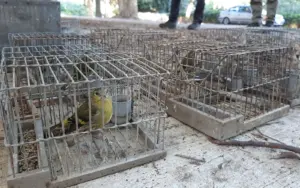
    • Malta’s 2025 trapping season has reopened under a “research derogation” allowing trappers to act as licensed researchers despite an EU court ruling that Malta failed to prove no scientific alternatives exist.
    • Malta’s latest legal notice erases the official ringing coordinator, EURING, and potentially opens up the ringing license to trappers.
    • Government claim: Trapping is “the least intrusive method” to collect data on finch migration. The FKNK defends the derogation as merging “socio-cultural tradition with research”.
    • Over 4,000 trappers have reportedly recorded only 40 ringed finches in 2020-2023, many of which were caught in Malta. EURING, Europe’s bird-ringing authority, says the data “does not meet acceptable scientific or ethical standards.”
    • Government-hired scientists called the trapping derogation results “not directly comparable” with scientific analysis.
    • Malta’s enforcement capacity has declined, the number of vehicles used for field checks has halved between 2022 and 2023, and Gozo remains poorly policed.
    • Licensed trapping areas overlap with Natura 2000 protected zones, and inspectors report vegetation clearing and habitat damage.
    • Both conservationists and independent experts, including a former Ornis Committee chair, say the derogation is a guise to legitimise traditional trapping, not a genuine scientific effort.
    • The European Commission’s infringement case remains open. Malta could face financial sanctions for failing to comply with the Court of Justice ruling.

    Malta’s 2025 trapping season is now open.This year, the government has relaxed rules on scientific bird ringing, removing references to EURING, the coordinating body of bird ringing schemes. The state insists the trapping effort is for research despite the EU Court of Justice ruling that Malta failed to prove a lack of alternatives.

    The government’s decision has split both sides of the trapping debate: the National Association of Hunters and Trappers (FKNK), the leading hunting and trapping association, Kaċċaturi San Ubertu (KSU), a smaller NGO, and conservation NGOs.

    Licensed Maltese bird ringer at work. Photo credit: Birdlife Malta

    “This historic step opens a new chapter in our country’s approach to bird conservation and research,” FKNK said.

    KSU’s secretary Adrian Cauchi emphasised that no formal ringing course exists in Europe, and all ringers must ultimately be allowed to operate by the government. 

    “I cannot do the [training to become a ringer] with Birdlife, because Birdlife is with EURING. EURING is not giving us a way out because it wants to abolish the traditional methods,” he told Amphora Media.

    For Birdlife Malta, this “ill-conceived plan is destined to fail. Scientific bird ringing is only credible when carried out within the EURING network, the only recognised European framework for bird ringing. Any attempt to operate outside this network will produce meaningless data and expose Malta to further ridicule and sanctions.”

    Trapping continues to court controversy, but the question is: Is trapping in Malta really all for research?

    Malta’s government began declaring research derogations for trapping in 2020.  Maltese law allows “under strictly supervised conditions and in a selective manner, a research derogation to obtain scientific data on Malta’s reference population of the seven finch species”. 

    The legal notice argues that “ornithologists  and  licensed  bird-ringers  have  been unsuccessful  in  collecting […] the required  data  to  meet  the  stated  objective  of  the  Finches Research  Project,” which is:

    “Where do finches that migrate over Malta during post-nuptial (autumn) migration come from?”

    Police spot-checks within each region are promised to be daily.

    CABS, a conservation NGO, and Police dismantle trapping site. Photo credit: CABS

    The Wild Birds Regulation Unit (WBRU), under the Ministry of Gozo and Planning, explained in 2021 that trappers can “control”, or temporarily capture, the seven finch species, “determine which are fitted with a ring”, and immediately release them.

    “Once data saturation has been reached for all seven finch species, the research project will terminate in its entirety,” WBRU said in 2023. The government considers that “data saturation may be reached at a threshold of 60 ring recoveries per species”.

    The Ministry for Gozo has claimed it is “the least intrusive course of action to gather quality data on the provenance of migratory finches.”

    “This initiative is generating robust information, including a significant increase in foreign ring recoveries through the clap-net system, which in some species has even surpassed existing information. In five years of such research, the information collected from ring recoveries exceeded 100 years of ring recoveries by BirdLife Malta. This information is essential for calculating the populations of these bird species,” the ministry said in a press release.

    Minister Clint Camilleri. Photo credit: DOI

    FKNK has argued that the derogation combines “deep socio-cultural traditions with scientific research” and that banning the practice risks “the potential for stagnation in the field of ornithological research”. Its president thanked the government for allowing the ‘continuity’ of the practice.

    In 2024, FKNK published a series of claims regarding the research project and EURING, the European coordinators of bird ringing schemes. These included:

    • Trappers’ nets are more effective than ringers’;
    • Each bird is screened for a scientific ring; 
    • “EURING and the local monopoly of bird-ringing made it challenging to persuade impartial candidates (…) to endorse the Project.”
    • “Throughout the open hunting and trapping seasons, the Maltese islands are effectively under police control.”

    Conservation NGOs have a different view. 

    “Trapping is an unsustainable method of hunting which causes damage to wildlife and habitats,” Birdlife Malta has said, adding elsewhere that the traditional trapping method destroys natural habitats, harms non-target wildlife, and fuels illegal wildlife trade.

    “In a last-ditch attempt to justify this discredited scheme, Minister for Hunting and Trapping Clint Camilleri, supported by Minister for the Environment Miriam Dalli, has enacted amendments to the Conservation of Wild Birds Regulations that would significantly dilute the standards for scientific bird ringing,” the NGO said.

    Minister Miriam Dalli. Photo credit: DOI

    The NGO Committee Against Bird Slaughter (CABS) claims that, “Many bird trappers did not comply with the law even before the final finch trapping ban and either laid out their nets in spring or used electronic decoy callers. (…) Police controls are rare, and court decisions against the few convicted bird trappers are usually at the bottom of the penalty line”.

    Timeline of events:

    1st May 2004: Malta joins the EU. The EU’s legislation on wild bird conservation became binding, but Malta is allowed to phase out finch trapping and replace it with a captive breeding programme.

    2008: Arrangement expires. 

    2009-2013: Trapping is prohibited in Malta.

    2013: FKNK submits a request to reopen trapping season following the change of government.

    2014: Government reopens trapping season in autumn.

    2018: The European Court of Justice issued the first ruling on Malta’s finch trapping practice. In its ruling, it said that the government did not prove that no alternative solution exists and that insufficient evidence meant arguments that trapping affects a small number of birds could not be substantiated.

    CABS Bird Guards searching for illegalities. Photo credit: CABS

    2020: Malta’s government started declaring research derogations for trapping. 

    2024: EU court issues ruling on research derogation, finding that Malta’s authorities did not prove a lack of viable alternative, and “there is no mention of other standard scientific means of research in the ornithological field”

    2025: Legal notice 251 removes a requirement for rings to only be obtained from bird ringing schemes approved by EURING. Trappers now allowed to use live decoys.


    The European Commission’s infringement case against the research derogation remains active. The Commission has sent a letter of formal notice for failing to comply with the judgement. The Commission may decide to refer Malta back to the Court of Justice of the European Union, with a request to impose financial sanctions. The Commission’s spokesperson said, “The Commission is assessing the available information before deciding on next steps”.

    Does the derogation follow a research methodology?

    Official bird ringers, under the EURING umbrella, ring finches in the countries where they breed. The WBRU argues that the birds are not followed as they migrate, and the Maltese “research project is what renders the effort invested by bird-ringers in other countries to ring finches worthwhile”.

    To participate in the scheme, trappers must check for scientific rings, a process called ‘control’. 

    Participating trappers are “instructed and examined on the procedure”, and captured finches are “immediately released unharmed back into the wild”, “including those that are “not fitted with a scientific ring or satellite-tag”.

    Bird ringing by Birdlife’s licensed ringers. Photo credit: Birdlife Malta

    In Malta, bird ringing was previously carried out by Birdlife Malta, the only partner of EURING. The legal notice now allows licensing & ringing from any “qualified trainer who is part of a bird ringing scheme”.

    In a December 2024 statement, EURING said that the Maltese trapping research project “is unlikely to provide useful scientific data on a reasonable timescale, and that the poor-quality data being gathered does not meet acceptable scientific or ethical standards.” 

    “The intensity of finch trapping that is being undertaken is likely to have major impacts on bird movements and behaviour, and is therefore not compatible with studying the natural movement patterns of these species,” it continued.

    Trapper on a site. Photo credit: Birdlife Malta

    Nicholas Galea heads Birdlife’s EURING-approved ringing scheme in Malta, with 29 licensed ringers on the islands. According to the government’s 2023 report to the European Commission, Birdlife ringed 20,847 birds in 2023. 

    “We are not against research, but we are against the use of research as a disguise,” he told Amphora Media, confirming that in previous seasons he verified the trappers’ information on ringed birds after it is passed to him.

    “Data is always data, and information is information,” he said, adding that this does not mean he approves of the capturing method.

    Amphora Media spoke to Kaċċaturi San Ubertu’s (KSU) secretary Adrian Cauchi. KSU “practices a policy of zero tolerance towards any hunting illegalities and vets all of its members prior to acceptance.”

    Ringed hawfinch

    “I would have expected EURING to jump on the possibility be there, supervise, offer their expertise and influence, as much as possible, to the legislator to carry out the best activities for the birds,” Cauchi said, adding “why not involve trappers if you really want to convert them, if you really want to ensure that you know exactly what they’re doing, why not get them under your umbrella rather than push them as far away as possible?”

    In previous seasons, Birdlife declined government requests for ringers to accompany the trapping scheme, citing the disparity in numbers between trappers and ringers.

    “With 10 trappers and ringers, it’s fine. (…) But [the government] always wants 4,000 trappers and one or two ringers, which means the others will always do what they want,” Galea said.

    Siskins breed in woodlands and occasionally migrate past Malta

    Amphora Media also spoke to Mark-Anthony Falzon, the former chairman of the Ornis Committee (2014-2017), an advisory board made up of hunters, trappers, conservationists and government appointees.  In 2014, Falzon abstained from the vote on allowing the trapping derogation but defended the position. However, he is critical of the research derogation.

    “To do research, you need researchers. (…) Trappers are not scientists. They are not trained in any scientific method. Bird ringers are not scientists either (…) but they follow the scientific method tightly regulated by EURING,” he said.

    “For a trapper to release what they have just caught is unthinkable. It’s like winning the lottery and tearing up your ticket. (…) Some of these birds are highly prized.”

    Caged finches used as live decoys. Photo credit: Birdlife Malta

    Have the trappers produced quality data?

    A Wild Birds Regulation Unit’s 2024 report states that 4,105 General Licences for Live-Capturing of birds were issued. 

    In addition to collecting research forms filled by trappers, the WBRU commissioned surveys of migratory finches by two scientists with marine ecology specialisations.

    One of the objectives was “to correlate migration data gathered through the present survey with bag data for the relevant species, should any live-capturing derogations or research derogation be applied during the autumn season of the contracted years.”

    Linnet

    However, the authors said “the two sets were collected for different purposes, using very different methodologies, and therefore the magnitude of values are not directly comparable” which is required for “robust and rigorous assessment”. 

    For example, on some days, trappers caught over 200 common linnets and 50 common chaffinches. In contrast, staff at monitoring stations across Malta counted up to 10 common linnets and even fewer common chaffinches per day – sometimes none. 

    Malta submits yearly derogation reports to the European Commission. This is what the trappers have found over the years, according to these reports.

    YearRinged birds foundNotes about the birds
    20207 finches1 ringed by Birdlife Malta, others ringed in Hungary, Italy and Russia
    202115 finches6 ringed in Malta, others ringed in Italy, Slovakia, Greece, Hungary, Slovenia, Lithuania, Spain
    20221 finchRinged in Malta
    2023
    17 finches
    Ringed in Italy, Switzerland, Russia, Poland, Finland and Slovenia
    Total40 finches8 finches ringed in Malta

    Reports to the Commission reveal that across thousands of trapping sites, trappers “controlled” only 40 ringed finches, and a fifth of them had already been caught by bird ringers in Malta.

    A comparison with the government contractor’s data, suggests trapping hundreds of finches has resulted in very few ring recoveries, including only one in 2022. Trappers also send reports on rings that EURING was unable to verify.

    Chaffinch

    EURING’s data Amphora had access to shows that out of 64 ring records submitted between 2020 and 2024, 18 had flaws: unclear country of origin, untraceable ring number, unknown scheme, or suspicious bird properties.

    Fourteen birds carried a Maltese ring, but in several cases, trappers incorrectly recorded ring numbers. Ten of the birds had already been confiscated from trappers and apparently re-trapped.

    “You can’t have 4,000 trapper-ringers all active at the same time in such a small country, because the same birds will be caught and caught all over again causing too much disturbance and stress,” Galea said.

    Caged finches used as live decoys. Photo credit: Birdlife Malta

    “It’s difficult to decipher what people submitted. Sometimes they catch birds with our rings, and I cannot conclude which one it is. And really, what they’ve been discovering is that they’ve discovered nothing new.” Before trapping was outlawed, Birdlife Malta had already collected and published data on finches from trappers.

    A search on Google Scholar for the listed finch species, the mention of Malta and WBRU did not return ornithology or biology articles, except for one that was about ticks in birds and was co-authored by Nicholas Galea.

    KSU has implemented turtle dove satellite tagging projects, which Cauchi cites as an example of how traditional trappers can be retrained and benefit research. “The trapper was happy. The traditional method was kept, and this study and the research part was kept as well.”

    The Ministry of Gozo and Planning did not respond to Amphora’s questions, and neither did FKNK.

    Has the research effort reduced illegal trapping?

    One of the conditions of applicable European laws for issuing derogations is that the practice must be appropriately supervised. But enforcement resources have been gradually reduced over the years, Malta’s derogation reports to the European Commission reveal.

    Police officers confiscating nets and finches. Photo credit: CABS

    The number of officers dropped from a maximum of 64 to a maximum of 53 between 2020 and 2023; as has the number of vehicles from 15 to 9. 

    YearNo. of officersNo. of vehicles
    2020Minimum 53, maximum 6415
    2021Minimum 44, maximum 5918
    2022Minimum 42, maximum 5618
    2023Minimum 49, maximum 539

    The EU’s court found that “In the context of Malta, characterised by a very high density of licence holders […] the fact that merely 23% of hunters have been subject to individual checks seems inadequate”.

    The Malta Ranger Unit has recorded alleged instances of illegal trapping of protected species, use of illegal devices, and trapping outside the permitted hours. In a recent case, illegalities reported by the MRU led to a conviction of a trapper and cancellation of his licence.

    Camilla Appelgren, from the MRU, told Amphora Media that officers often lacked training and coordination. At the same time, trappers allegedly had extensive networks of CCTV cameras and spotters to monitor NGO and police presence.

    Trapping site from above. Photo credit: Birdlife Malta

    “There are times we don’t have any environmental police, and the district police don’t take environmental cases, so there is no one to call,” she said. 

    During the first days of the season MRU, Birdlife and police collaborated in an operation which led tthe o confiscation of illegally used equipment, including electronic bird callers, and unattended clap nets.

    Gozo, meanwhile, presents a separate issue altogether. Data shows that contraventions are minimal compared to Malta. In 2023, there were 50 contraventions in Malta, compared to 12 in Gozo.

    Policer officers dismantling nets in Gozo. Photo credit: CABS

    “With respect to hunting and trapping, it’s an open secret, really, that in Gozo, there is much less law enforcement, and police find it very hard to do their job,” Falzon added.

    Galea and Appelgren warned that trappers inform each other of police presence, especially in Gozo”.

    Enforcement Figures (Source: WBRU): 

    YearContraventions on MaltaUnidentified suspectsContraventions on GozoUnidentified suspects
    20202311, or 48%65, or 83%
    20219620, or 21%2622, or 85%
    2022566, or 11%33, or 100%
    20235012, or 24%126, or 50%

    On 16th October, a trapper from Mgarr, caught in September 2022, was sentenced and had his trapping licence revoked for three years, CABS said in a press release. CABS members went to court as witnesses.

    Between 2014 and 2024, the NGO’s reports resulted in 298 prosecutions for trapping illegalities. Out of those, 187 trappers were convicted, and “thousands” of birds were seized”.

    Cauchi of KSU disagrees that policing levels are low. “You’ll see the police every day, twice, three times a day,” he said. His view is that illegalities are decreasing, but evidence collection methods have improved, and more of them make it to court.

    “We should let authorities work and one of the key objectives is to ensure that trappers become researchers in their entirety. These things require a generational change. [An octogenarian] is a difficult person to change. I’m the next generation. I’m a converted man. I would very happily, very happily give all my [hunting and trapping] licences and just do ringing.”

    Illegal robin trapping used to be common in Malta but has been largely eradicated

    He suggests that, contrary to popular view, KSU, as a hunters’ and trappers’ organisation practices discipline and enforcement internally. 

    “We don’t go and say these things on Facebook, but we do it in our own circles. The results speak for themselves in terms of targeting of protected species.” He would like to see court-mandated courses to rehabilitate perpetrators of illegal trapping.

    Police spokesperson did not reply  to Amphora Media’s questions.

    Is trapping environmentally sustainable?

    Superimposing the map of 2024’s licensed trapping sites on the map of Natura 2000 sites, which is allowed in Malta, reveals significant overlaps. Trappers can catch birds along the entire protected Southwestern coast of Malta and Southern Gozo. Trapping sites next to bird sanctuaries can also be found.  The EU’s court criticised the decision.

    Trapping sites (pins) in protected Natura 2000 zones (red areas) in North Malta. Bird sanctuaries are shaded in green. Data sources: WBRU & ERA

    Appelgren of MRU reports having observed cases where trappers clear vegetation, drastically reducing biodiversity at the sites they use. “It’s worse than hunting, they kill their land, and so that nothing will grow, and they keep them barren for the purpose of trapping birds,”she said.

    Trapping sites (pins) in protected Natura 2000 zones (red areas) in Gozo. Bird sanctuaries are shaded in green. Data sources: WBRU & ERA

    In 2014, the FKNK acknowledged the use of agricultural pesticides but claimed this “can easily be reversed”.

    Falzon doesn’t see a reason why Natura 2000 protection should exclude trapping. “So you have people fishing, you have people walking dogs and a million other things. Why not trapping?”

    Asked about the matter, the European Commission’s spokesperson said that “The Commission has no information on the practice in question.”

    Falzon warns that rampant development will likely spell the demise of the trapping hobby. “In the past there were trapping sites all over the place. Now there are far fewer” .

    Trapping site. Photo credit: Birdlife Malta

    Cauchi of KSU believes that unsustainable agricultural practices threaten finches, and that there is scope for trappers and conservationists coming together to protect birds. “I’d be willing to sit down with another moderate individual, but I cannot sit down with someone whose idea is abolishing hunting and trapping,” he said.

    The government’s claims to allow trapping as a scientific derogation are misleading. 

    The research derogation has resulted in few ring recoveries and, despite hundreds of birds caught and dozens of rings recorded. Trappers’ data has not been cited in published scientific literature that could be found on Google Scholar. Many of the recovered rings belong to birds already caught in Malta. Trappers’ representatives consider that ringer’s refusal to cooperate explains it.

    Police presence remains weak, especially in Gozo, while monitoring 4,000 trappers is a major logistical challenge. Many experts, including those in favour of trapping, said the derogation is a guise and that quality data is not being produced. However, KSU expressed willingness to shift its trapper members to ringers in the future.

    Rather, as Mark Anthony Falzon puts it:

    “[Trapping] is a practice that I think should be absolutely valued for what it is. Malta should make its case that this is a local practice that has value. This is why this deception is going to fail.”

    This project is supported by the European Media and Information Fund. The sole responsibility for any content supported by the European Media and Information Fund lies with the authors and it may not necessarily reflect the positions of the EMIF and the Fund Partners, the Calouste Gulbenkian Foundation and the European University Institute.