Russian Man On UK’s ‘Most Wanted’ List Holds Maltese ‘Golden Passport’
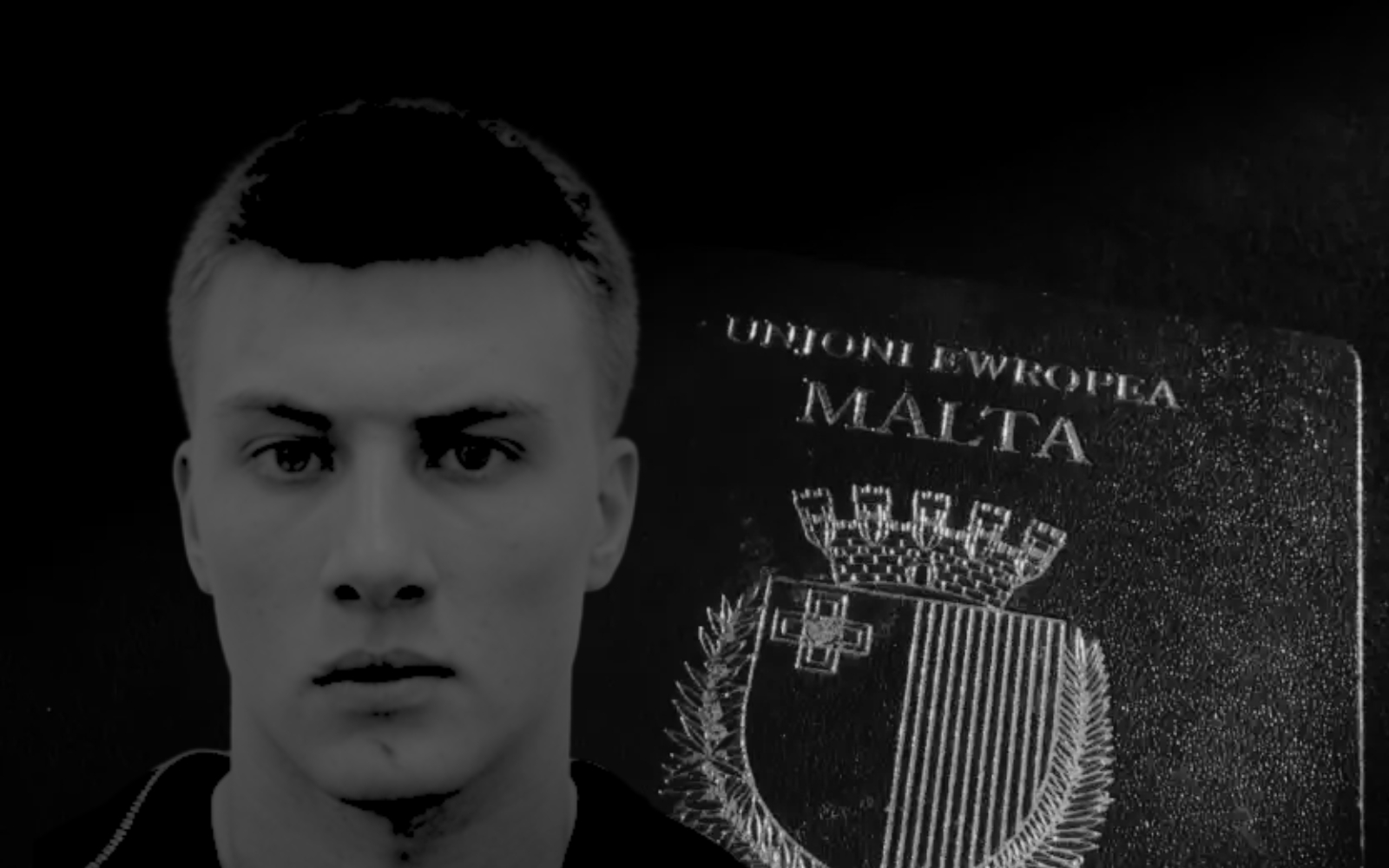
Alexander Kuksov’s older brother, Semen, had his Maltese passport revoked in 2025 following UK imprisonment for ‘running a billion-dollar money laundering network’.
By Joanna Demarco
Updated with a comment from Komunità Malta agency.
Alexander Kuksov, a Maltese passport holder and the brother of Semen Kuksov, is wanted by the United Kingdom’s National Crime Agency. He is suspected of ‘proceeds of crime offences’ in relation to an operation investigating a Russian ‘billion-dollar money laundering network’.
Britain’s National Crime Agency (NCA) this month announced charges against Alexander Kuksov, 23, putting him on its “most wanted” list. The NCA alleged he was “involved with an organised crime group responsible for the transfer and movement of multi-millions of pounds of criminal cash”. The details have been revealed in a joint investigation between Amphora Media, OCCRP, and Times of Malta.
The agency lists the offences as including “entering into or being concerned in the acquisition, retention, use or control or criminal property [sic], in this case, cash.”
Amphora Media, OCCRP and Times of Malta previously revealed that Alexander Kuksov’s brother, Semen, was stripped of his Maltese citizenship in October last year, following his five-year sentence. Semen, 25, was convicted in the U.K. of involvement in a group the NCA called a “professional banking service for criminals across the world.”
The brothers, together with their father Vladimir Anatolyevich Kuksov, appear on a list of people granted citizenship in 2022 by Malta. The Kuksovs appear to have been given Maltese citizenship just weeks before Russians were excluded from passport sales to wealthy investors in the wake of the Kremlin’s February 2022 invasion of Ukraine.
In July 2022 – about six months after receiving his Maltese citizenship – Semen began managing “couriers to collect criminal money and deliver the laundered money overseas,” according to a statement by the UK’s Crown Prosecution Service.
The NCA now alleges that Alexander Kusksov was also involved in the criminal money laundering operation.
Lawyers for the elder Kuksov told OCCRP in 2024 that he had “no comment to make but notes that he and his adult son have lived separate lives for some years.”
Vladimir Kuksov did not respond to a request for comment about the new allegations against his younger son, Alexander, whose whereabouts are unknown.
The Kuksovs received Maltese passports through a controversial citizenship-by-investment program. The so-called “golden passport” scheme was eliminated this year, following a damning judgement by the Court of Justice of the European Union.
The Komunità Malta Agency, which oversaw the citizenship-by-investment programme, responded by saying, “We can confirm that the name of the person in question has come to the attention of the national authorities, and we shall be following any developments in this case closely.”
Under Maltese law, passports can be revoked if an applicant is sentenced within seven years of becoming a citizen to a jail term of a year or longer.
The charges announced by the NCA against Alexander have not been tried in court, and the money laundering allegations against him are not proven.
When the NCA announced its “Operation Destabilise” investigation in December 2024, it said the money laundering bust was its biggest in a decade, OCCRP reported at the time. The agency said the ring run out of Moscow and Dubai had been moving billions in cryptocurrency and hard cash for criminal operations, ranging from Russian ransomware attacks to street-level drug deals in the U.K.
Several alleged members of the network were sanctioned, and the NCA said it had arrested 84 people. They included Semen Kuksov, who later pleaded guilty to laundering more than $15 million of “criminally obtained cash,” according to the UK prosecution service.
The operation uncovered a complex scheme in which the networks collect funds in one country and make the equivalent value available in another, often by swapping cryptocurrency for cash. The crime agency stated that the investigation exposed and disrupted Russian money laundering networks that support crime worldwide.
The Malta Police Force did not respond to a request for comment on the U.K. case against Alexander or whether it was investigating the allegations against him.
Previous reporting by Amphora Media had also highlighted the lag between the government initiating the passport revocation process and the citizenship being officially revoked.
Malta eliminated its citizenship-by-investment programme earlier this year following a damning judgement by the Court of Justice of the European Union, bringing anend to a long-winded saga.
Malta had tried to defend the scheme, claiming that it is being unfairly targeted despite similar schemes existing in other countries – a false claim. It has now expanded a discretionary citizenship scheme for individuals of ‘exceptional merit.
More to read
-
-
Environmental

Green To Grey: How Is Land Take-Up Regulated?
-
-
Environmental

Green to Grey: When Development Creeps Up On Agricultural Land
-
-
Environmental
Infrastructure, Commercial Complexes, Cemetery: Satellite Data Reveals Malta’s Largest Green-to-Grey Areas
-
-
Environmental
Green To Grey: Malta Lost Over 830,000 Square Metres Of Land To Development In Five Years
-
-
Environmental
Profit In Every Drop: The Companies Pumping Malta’s Groundwater For Free
-
-
Crime & Legal Affairs
Listen: The Trial Against Yorgen Fenech – A Podcast By Amphora Media
-
-
Politics
Open Malta: A New Political Data Transparency Platform By Amphora Media