‘Be Faithful To Jurors’: Schembri’s Lost Phone, Ex-Police Commissioner’s Secret Meetings, And 2015 Plot Feature in Cross-Examination
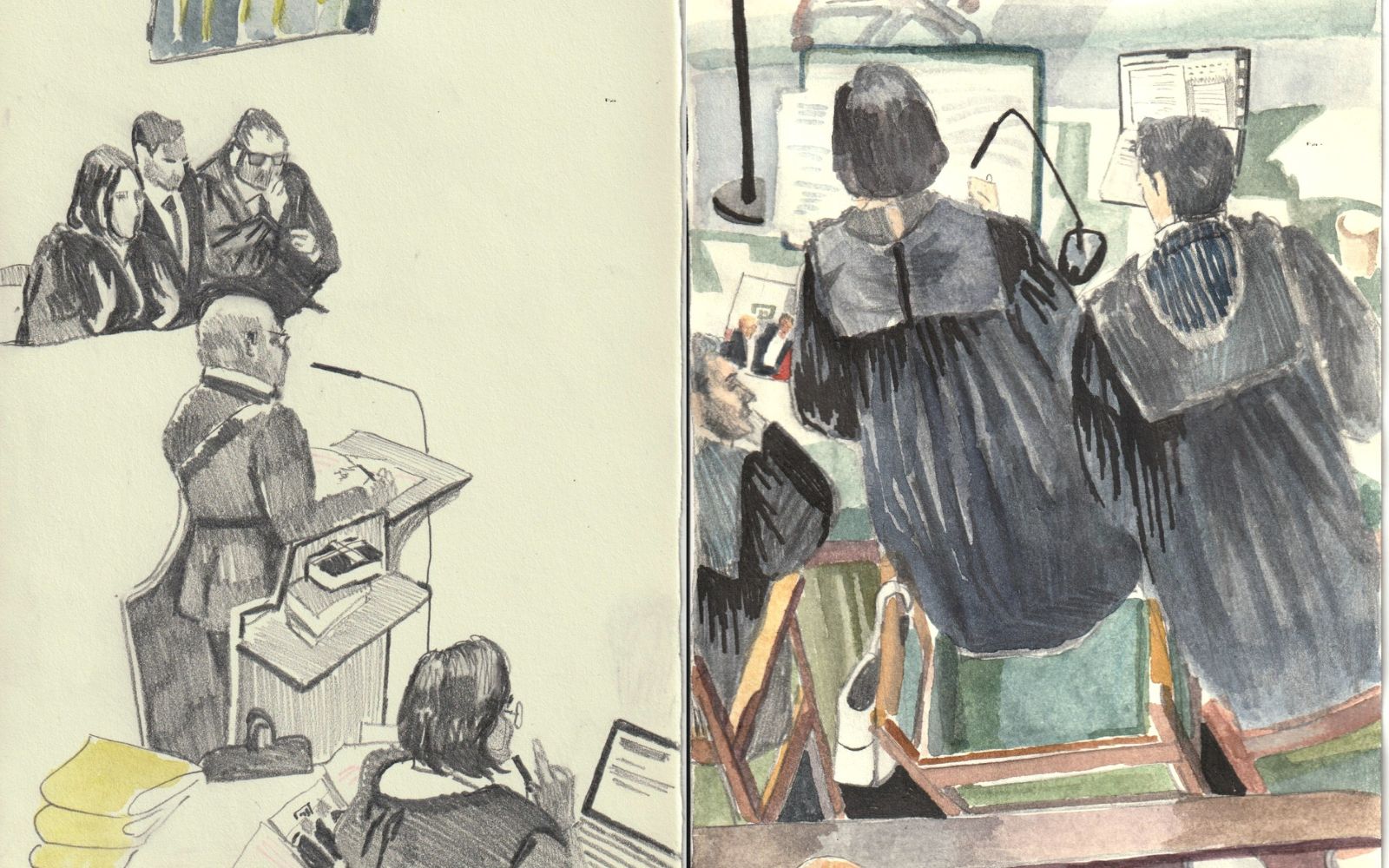
Cover image by Anna Calleja
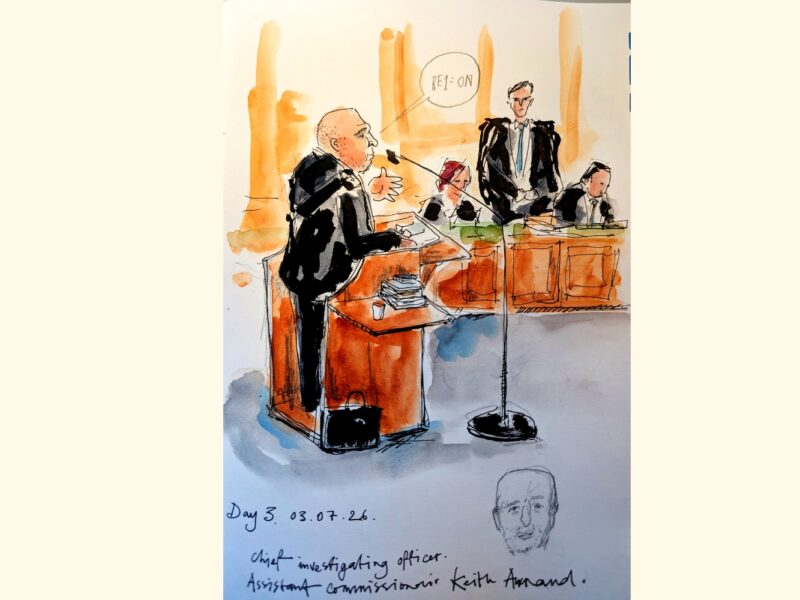
Gianella de Marco’s cross-examination of Assistant Commissioner Keith Arnaud continued on day six of the trial against Yorgen Fenech, producing a series of admissions about the handling of Keith Schembri’s arrest, ex-Commissioner Lawrence Cutajar’s contact with a middleman associate, and the timeline of when Schembri entered the investigation.
1. No Schembri phone or laptop ever seized
The most significant exchanges came late in the day, on the search of Schembri’s home following his arrest on 26th November 2019. Arnaud confirmed Schembri was given police bail and re-arrested two days later, with the home search carried out in the early morning.
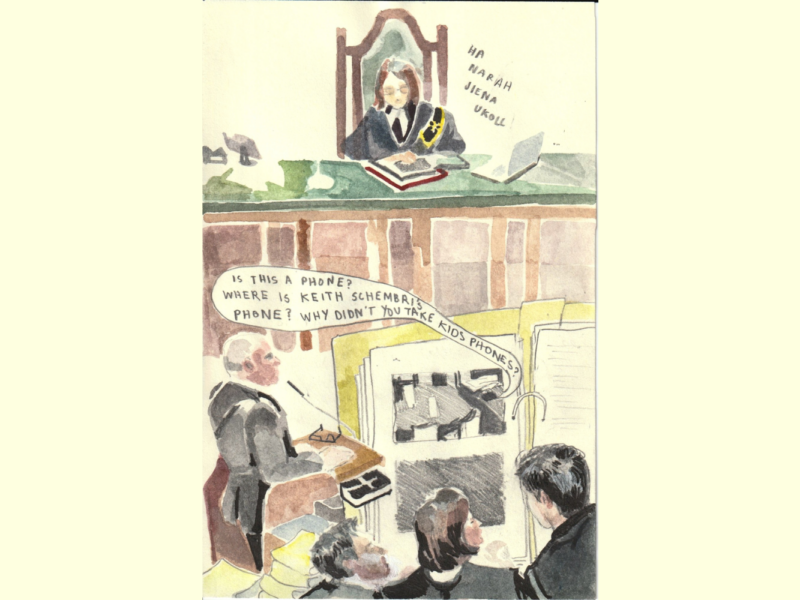
Under sustained questioning, the record showed: Schembri’s phone was “lost”; the kitchen laptop seized was his wife’s; the children’s devices went to forensics; investigators also failed to locate Schembri’s personal laptop, including after a search within his office in Castille.
Schembri’s own telephone data, de Marco said, was ordered by the magistrate and showed his phone active at 5:04 on the morning of the arrest, meaning Schembri was using his phone shortly before it was “lost”.
2. Cutajar’s unreported meetings with il-Gojja
De Marco established through Arnaud that the security service, while surveilling Edgar ‘Il-Gojja’ Brincat, Theuma’s “intimate friend”, observed him meeting Commissioner Cutajar. The investigating team was not informed. Cutajar only told the team about the meetings after he was “caught”.
Arnaud conceded there were two meetings, one of which took place in the weeks leading up to Theuma’s arrest. Arnaud relayed Cutajar’s own explanation: the meetings were not arranged and concerned a ticket Brincat had received, and Cutajar was trying to see whether Brincat could lead police to the tapes on which the case rested.
Notably, Arnaud confirmed Theuma’s self-harm attempt came after the sitting at which he was asked in court whether money had been exchanged with Commissioner Cutajar over the pardon.
In a recording read out to the court, Theuma and Cremona refer to Edgar ‘Il-Gojja’ Brincat allegedly paying 15,000 to the former Commissioner over the pardon; “Kenneth” is also referenced, confirmed by Arnaud as believed to be Kenneth Camilleri.
Arnaud said police investigated the claim and found it false. Another conversation in the same set of recordings contradicts it, and Cremona himself said he chatted to Theuma about everything, including lies, to distract him because Theuma was desperate.
De Marco highlighted the pardon’s wide-ranging scope: the murder, money laundering, the HSBC Balzan and Qormi hold-ups, the Casino di Venezia case, and connected prior offences.
Arnaud said it was proportionate given Theuma’s information and his minimal role in the other cases, and noted the terms were requested by Theuma and his lawyers.
The night before il-Gojja testified, he and Cutajar were on the phone and “agreed how he would testify”. Arnaud said he did not know at the time but learned of it afterwards
3. Schembri “not a suspect” until arrest day
Arnaud stated flatly that up to 25 November 2019, Schembri was never a suspect for the investigating team and “did not fit anywhere in the evidence”.
De Marco then produced records from the leaks inquiry suggesting Arnaud looked up Schembri on the National Police System in November 2017, weeks after the murder.
Arnaud said that while he saw no reason to have checked Schembri before 25 November 2019, searches in the first three weeks after the murder covered everyone Caruana Galizia wrote about. He maintained basic NPS searches return only ID details.
4. The doctor’s letter and the fingerprint results
De Marco raised the letter Schembri allegedly passed to Fenech via their mutual doctor Adrian Vella.
Three experts examined the documents and found around 70 fingerprints. Arnaud told the court that Schembri’s fingerprints did not match any of the ones found.
5. The 2015 plot, David Gatt, Chris Cardona and the “number one” gesture
In the morning, the defence focused on an alleged 2015 plot to murder Caruana Galizia, as claimed by convicted hitman George Degiorgio. De Marco said that Degiorgio, former Minister Chris Cardona, lawyer and former police inspector David Gatt, Anthony ‘L-Iblah’ Sammut (a former driver at Cardona’s ministry) and Anthony ‘Il-Biglee’ Chetcuti (who de Marco said was head of security at the Freeport) were involved in the plot.
De Marco pressed Arnaud on an inquiring magistrate ordering the preservation of call data for Sammut, Chetcuti and Keith Schembri in 2018. Arnaud maintained that preserving data is not the same as investigating, that the decision was the magistrate’s, and that he would not have access to the information.
Arnaud said Gatt was known to have visited the infamous Marsa potato shed, and revealed that Gatt was representing the Degiorgios after the murder, visiting them in prison in that capacity, though he never appeared for them in court.
“It appears [he represented them] at the beginning of the case. He would visit prison as their lawyer,” Arnaud said.
Arnaud also confirmed he remembered testimony given by Vincent Muscat that Gatt visited the shed, signalled “number one” and made a bomb gesture, referring to “Keith the chief of staff”, Keith Schembri. It is unclear whether this was before or after the murder.
De Marco said the 2017 assassination was simply a reactivation of the previous plan. This was resoundingly dismissed by Arnaud: Melvin Theuma only features in the 2017 plot, and the hitmen’s unpreparedness in 2017 (not knowing where Caruana Galizia was, switching from a shooting to a bomb only because Jamie Vella and Robert Agius had bombs available) shows discontinuity with 2015.
On timing, he accepted the trigger and device SIMs appear to have been bought together on 15 November 2016, and the possible FBI-established pairing of bomb and SIM on 10 January 2017.
6. Kenneth Camilleri, the million-euro promise, and the Castille job
The bail request and Kenneth Camilleri appeared again. Arnaud confirmed Theuma’s account that Camilleri promised a million euro for each of the three hitmen and bail, and that Camilleri phoned who Theuma believed to be Schembri.
Arnaud also confirmed Theuma’s account of the phantom job. Fenech told Theuma to go to Castille, Schembri received him and gave him a tour, and he was given a job – processed through Sandro Craus. That was investigated, and charges were issued; they are now subject to appeal.
Arnaud resisted de Marco’s suggestion that Theuma changed his tune on Schembri once the pardon came.
7. Melvin Theuma, his family and their confiscated cash and properties
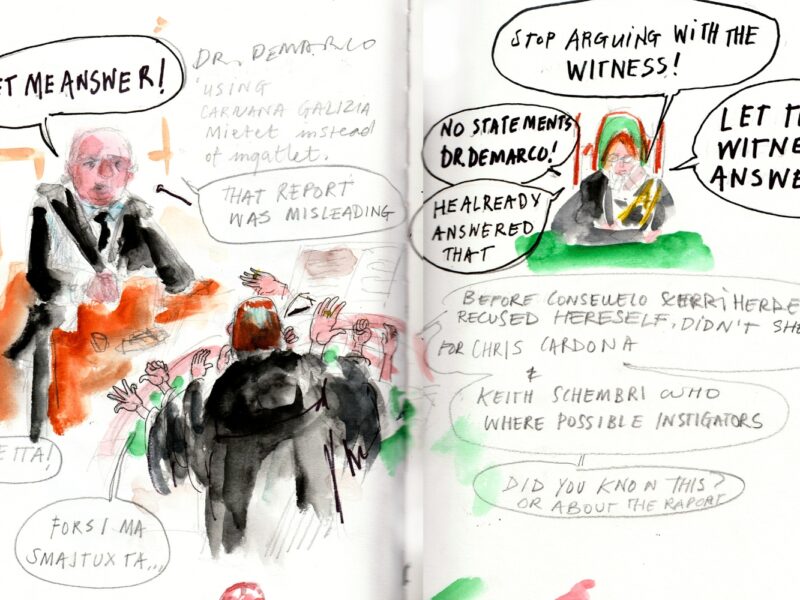
In the sitting, de Marco attempted to sway jurors by claiming Theuma and his family were returned over 650,000 in cash and property worth millions seized on arrest.
This is not the case: by court order, Theuma’s money has been confiscated, and his family members’ assets remain under the court’s auspices. Judge Edwina Grima admonished de Marco – “You need to be faithful to jurors” – and when the jurors returned, directed them to disregard all questioning on the matter.
More to read
-
-
Environmental

Green To Grey: How Is Land Take-Up Regulated?
-
-
Environmental

Green to Grey: When Development Creeps Up On Agricultural Land
-
-
Environmental
Infrastructure, Commercial Complexes, Cemetery: Satellite Data Reveals Malta’s Largest Green-to-Grey Areas
-
-
Environmental
Green To Grey: Malta Lost Over 830,000 Square Metres Of Land To Development In Five Years
-
-
Environmental
Profit In Every Drop: The Companies Pumping Malta’s Groundwater For Free
-
-
Crime & Legal Affairs
Listen: The Trial Against Yorgen Fenech – A Podcast By Amphora Media
-
-
Politics
Open Malta: A New Political Data Transparency Platform By Amphora Media
-
-
Crime & Legal Affairs

MGA-Licensed Operator Linked To €5.86 Billion German Illegal Gambling Probe