‘€150,000 Was Too Little’: Hitman Vince Muscat Gives First-Hand Account of Caruana Galizia Murder
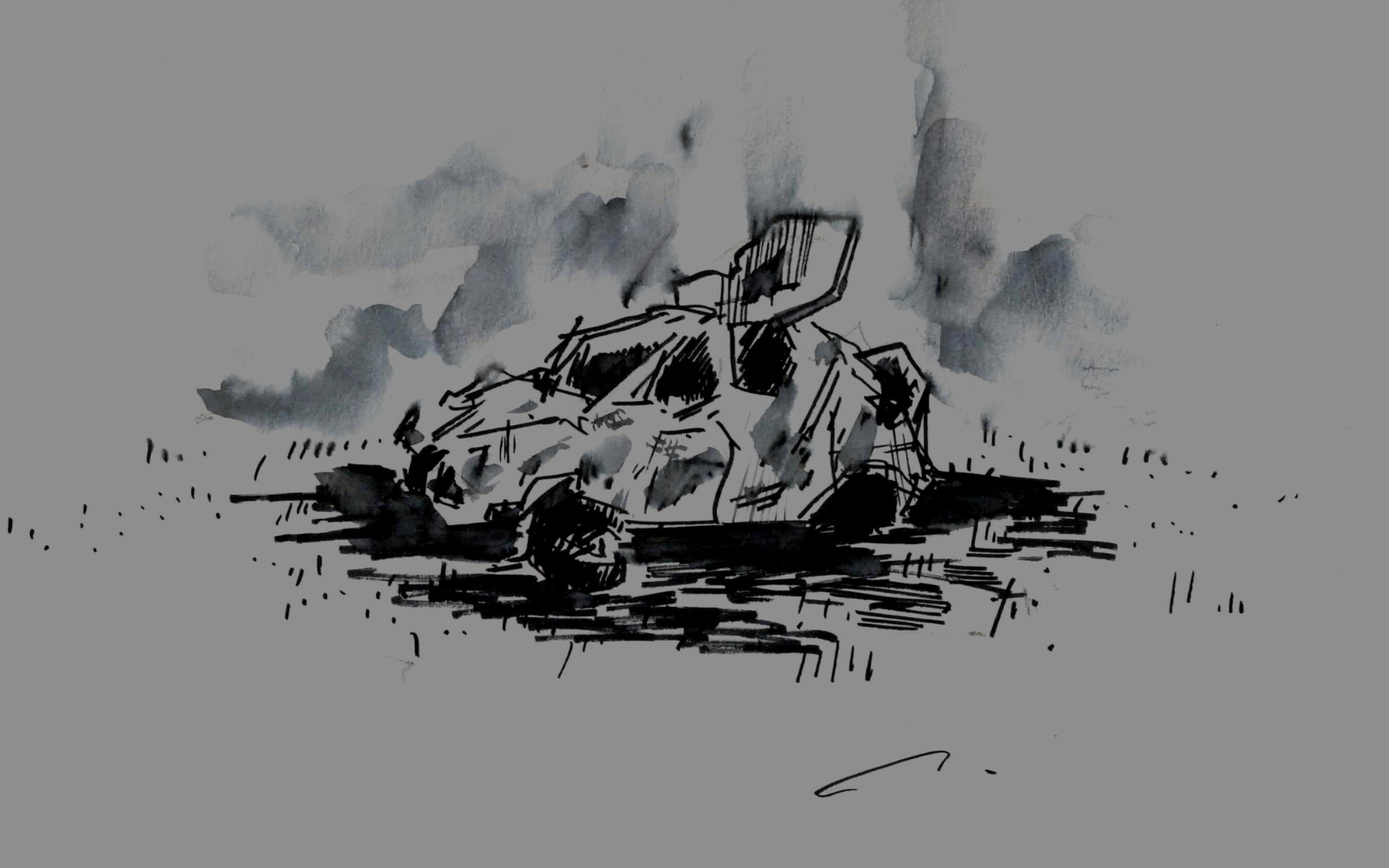
Cover by Anna Calleja
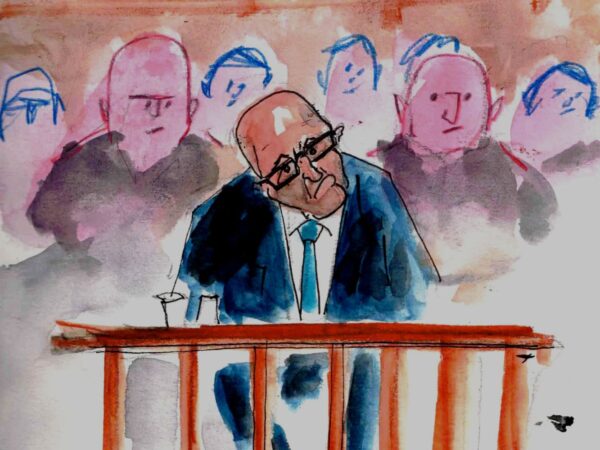
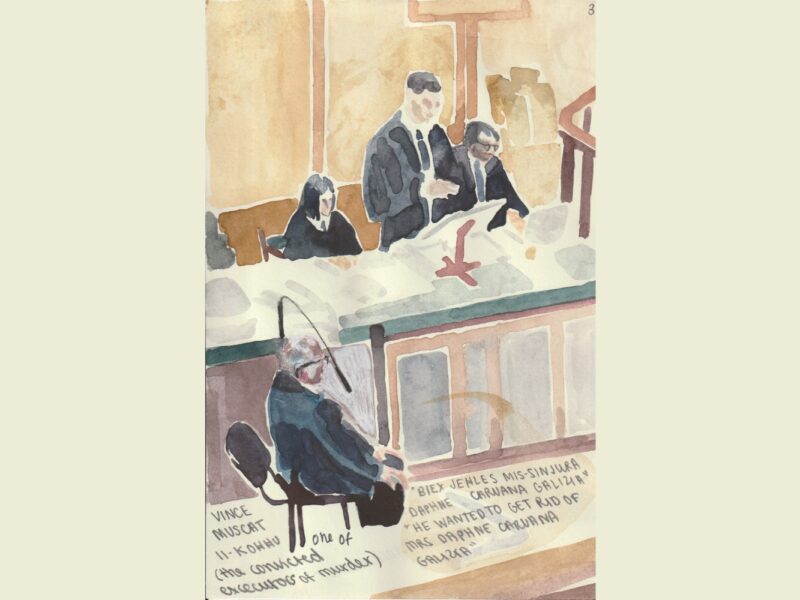
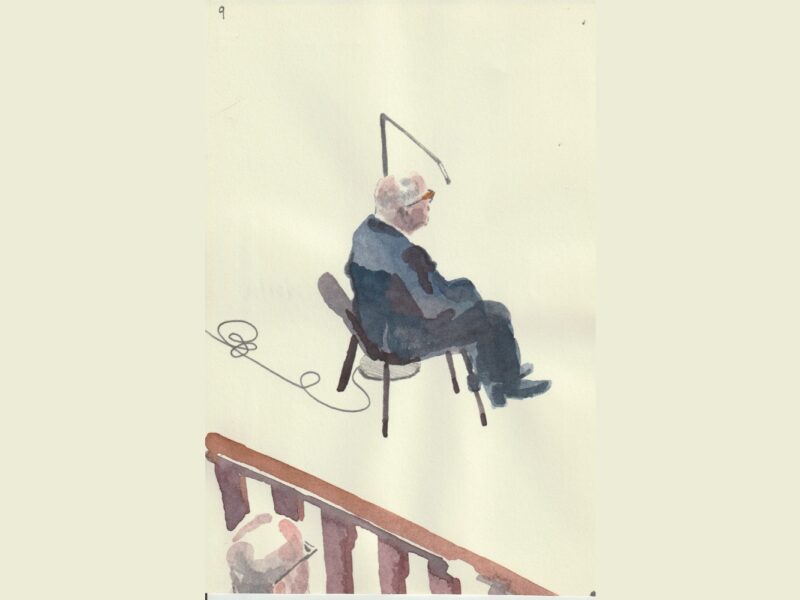
Sitting down, just off the centre of the courtroom, Vince Muscat, the convicted hitman who has turned state witness, provided his first-hand account of the plot to murder journalist Daphne Caruana Galizia.
The 2017 plot: How Daphne was murdered, according to Vince Muscat
Roughly a month before the general election was called in May, Alfred Degiorgio informed him that Melvin Theuma, the confessed middleman testifying in the case, had a “big job” for them. Muscat knew Theuma from the Marsa-Ħamrun area for a decade – as a lotto and horse-race betting operator.
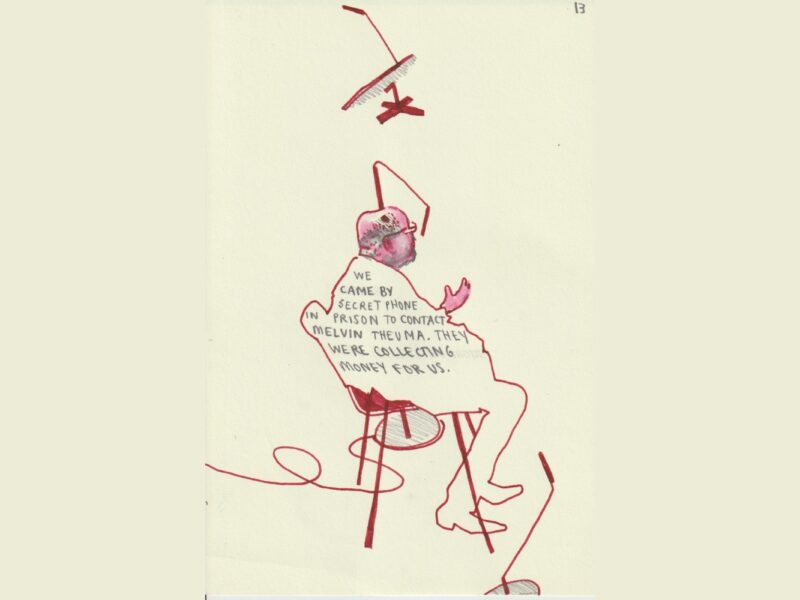
Contact was made through Darren ‘It-Topo’ Debono. Muscat drove Degiorgio to three separate meetings with Theuma at Busy Bee in Msida. Muscat never joined the meetings himself; instead, he stayed in the vehicle, waiting.
According to Muscat, the first meeting focused on commissioning the murder, the second on agreeing the €150,000 fee and €30,000 deposit, and the third on paying the deposit.
“It came in a cigarette carton, one of those brown ones, in 50 euro notes. We split it three ways. Alfred passed me my share, and then we went to drop off George’s share at the Marsa potato shed,” Muscat said.
Muscat confirmed that Theuma halted the plan after the election was called. The go-ahead came a week or two after the election. Surveillance on Daphne’s Bidnija home ran from morning to evening.
“We saw the maid cleaning. The red Vitz. The gardener. Her husband leaving for work. We only saw Caruana Galizia there once. She went out very little,” Muscat said.
The hitmen began wondering whether Caruana Galizia was abroad. Muscat, who said he had never met Theuma, pressed Alfred Degiorgio for information. He believed it was Theuma who told them she frequented a Naxxar cafeteria: Muscat went into the corner shop on the square and saw her once, sitting alone at a table with her laptop.
“One time, Alfred Degiorgio asked me whether we should get some information about her from Chris Cardona. I asked him why, since, as far as I knew, Cardona had nothing to do with this plot,” Muscat said.
“There were three times I dropped Alfred off near Castille to go meet Cardona. I never saw or heard anything myself.”
The first plan, Muscat said, was to gun down Caruana Galizia near her home. Muscat detailed how the hitmen visited Robert ‘Tal-Maksar’ Agius and Jamie Vella to acquire a rifle. They met with the two men at a garage and were shown potential firearms.
“Once we had everything ready. It was 11:30 pm. We could see her through the window, at her computer,” Muscat said, gauging the distance by pointing across the courtroom (“from here to that flag”).
“Alfred and I were waiting, but George began to get a bit reluctant to drive by with the car and started coming up with excuses. Then it all came to nothing,” he added.
“Don’t ask me how many days passed, but George told Jamie Vella to bring us an explosive.”
Muscat detailed the next steps. He said that the hitmen planned to place the bomb under the driver’s seat to ensure maximum impact.
“We also added a small bottle of petrol to the bomb – it would be the first spark to ignite the bomb,” he said.
The hitmen rented a car similar to Daphne’s to help them understand how to break into it without causing damage to the car and raising suspicion.
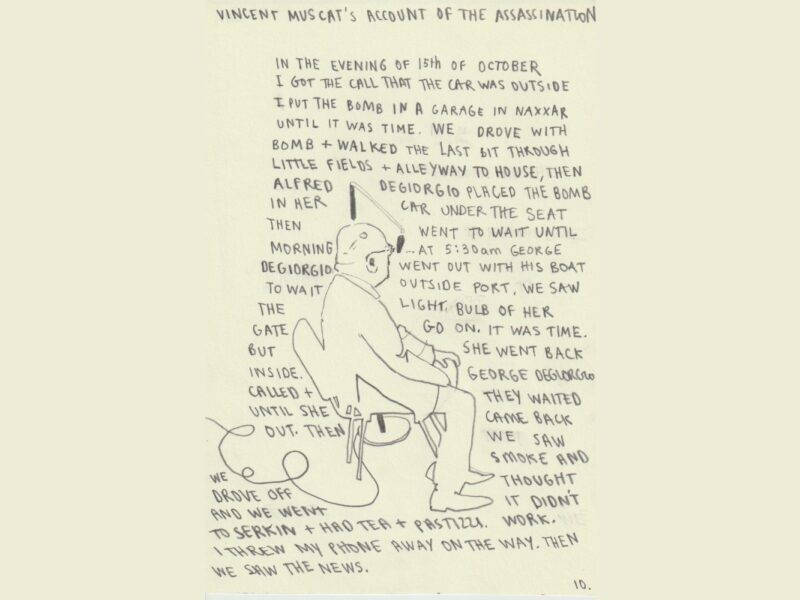
“On the evening of 15th October between 8 pm and 9 pm, Alfred Degiorgio called me to tell me that the car was parked outside. He told me to go get the bomb and come,” Muscat said, detailing how he collected the bomb for a garage in Naxxar.
“George took us to [Daphne’s] house. We stopped in an alleyway before. Alfred carried the bomb in a small back bag. I kept watch by a tree outside the house. Alfred broke into the car and put it under the driver’s seat. We called George, and he came for us,” he added, in a matter-of-fact breakdown of the murder.
“We went to the flat of Alfred Degiorgio and had a few coffees. We went there early at 5:30 am. George went to his boat.”
“We saw the lights of her gate go on. She started driving, and we contacted George. I didn’t see or hear anything except a large plume of smoke. We thought it wasn’t successful and we left,” Muscat said.
“Alfred then dropped me off at my car; I went to get two pastizzi. I went to a garden and sat for an hour,” he added.
“Alfred arranged with Melvin to meet up for the rest of the money. I don’t know how much time had passed, but maybe a few days later, I went with Alfred and George to collect the money from Theuma in Marsaskala.”
“Alfred had the money in €50s. It was in a big bag, split into €5,000s.”
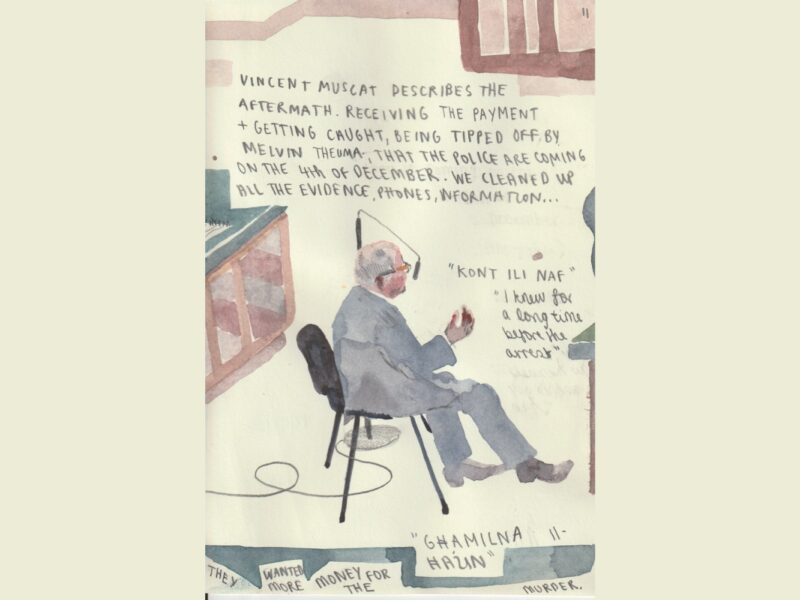
“We continued meeting at the Potato Shed in the evening. Alfred began telling me: the police are coming on 4th December at 8 am. I’m not sure when this was, but it was about two or three weeks before.”
“When we found out about the raid, we started to clean up whatever evidence we had, like mobile phones. There was some evidence of our surveillance, especially from Notte Bianca.”
Muscat detailed a chilling conversation:
“George told me that we were stupid for accepting €50,000 each and should have asked for one or three million. He said: €150,000 was too little.”
Muscat also referred to David Gatt, a former police inspector and lawyer, who also features in the 2015 plot as described further down the article. Fenech’s defence has claimed he was involved.
Muscat knew Gatt for several years. He was well connected with the Degiorgios and even served as their lawyer, not publicly, after their arrest in connection with the murder.
“David Gatt had a habit of always putting his thumb up. He was doing it a lot when he came to Marsa potato shed. One time, he was on the phone, and Alfred Degiorigo told me it was Keith Schembri. Another time, Gatt made this explosive sign….but never spoke about the murder directly,” Muscat said under questioning by AG lawyer Godwin Cini.
The 2015 plot: Chris Cardona & Former Police Commissioner Michael Cassar
Vince Muscat gave an account of the 2015 plot to the jury. Jurors had heard of the plot before during the cross-examination of Assistant Commissioner Keith Arnaud.
Muscat detailed how, in 2015, he drove George Degiorgio to Portomaso for what Degiorgio told him was a meeting with Chris Cardona. The next day, at the Marsa potato shed, Degiorgio told him Cardona wanted Caruana Galizia killed and that four people wanted her dead. Muscat said he does not know why.
Muscat also recalled mention of Michael Cassar, believed to be the former police commissioner, but could not say for certain.
Cassar was Police Commissioner from December 2014 to April 2016.
The price set was €150,000 with a €50,000 deposit, with lawyer and former police inspector David Gatt -a frequent presence at the potato shed, according to Muscat – to deliver Cardona’s deposit and, per what Degiorgio told him, take a cut.
George Degiorgio, Muscat and Jamie Vella were to carry out the hit: the plan was to stop Caruana Galizia as she drove out of her home, with Vella shooting her with a machine gun from a van driven by Degiorgio.
The pair spent roughly six hours in total surveilling her Bidnija home, but never saw her. At one point, Degiorgio approached the house for a closer look and saw an old, dirty BMW behind the gate and a “beware of the dog” sign.
Vella reportedly dismissed the alleged commissioner of the plot: “Chris Cardona is all talk, he won’t follow through.”
The 50,000 euro deposit never arrived. Degiorgio repeatedly confronted Gatt over the money, and within a month or two the plot fizzled out.
“The money didn’t come, so we stopped going to Bidnija,” Muscat said.
Martin Bajada and Jurors Questions: Why wasn’t Schembri’s phone cloned?
Martin Bajada also continued his testimony today. Under oath, he confirmed that Kenneth Camilleri and Johann Cremona’s contacts were in Schembri’s phone.
He also quantified the emails to Caruana Galizia mentioning Schembri (237) and Cardona (175). He addressed the bachelor party photograph: that is a photo allegedly showing Cardona at a party with Alfred Degiorgio.
The figures in a pool are unidentifiable from the image, though police confirmed Cardona attended the party “for 5 minutes”. Whether Degiorgio was there, Bajada could not say.
Jurors asked why Schembri’s “lost” phone could not have been reconstructed the way Caruana Galizia’s was. Bajada’s answers were puzzling: the reconstruction of the victim’s phone happened because he and the magistrate were on the scene and authorised it immediately; for Schembri no such request was made by police, no IT expert was involved at the time as far as he knows, and the first 48 hours after arrest are crucial precisely because anyone with account access can enter the cloud from another device and delete everything.
“It’s too late now,” he said.
More to read
-
-
Environmental

Green To Grey: How Is Land Take-Up Regulated?
-
-
Environmental

Green to Grey: When Development Creeps Up On Agricultural Land
-
-
Environmental
Infrastructure, Commercial Complexes, Cemetery: Satellite Data Reveals Malta’s Largest Green-to-Grey Areas
-
-
Environmental
Green To Grey: Malta Lost Over 830,000 Square Metres Of Land To Development In Five Years
-
-
Environmental
Profit In Every Drop: The Companies Pumping Malta’s Groundwater For Free
-
-
Crime & Legal Affairs
Listen: The Trial Against Yorgen Fenech – A Podcast By Amphora Media
-
-
Politics
Open Malta: A New Political Data Transparency Platform By Amphora Media
-
-
Crime & Legal Affairs

MGA-Licensed Operator Linked To €5.86 Billion German Illegal Gambling Probe