Melvin Theuma’s Recordings Of Yorgen Fenech: Daphne’s Laptop, The Hitmen, Money And Malta’s Politicians
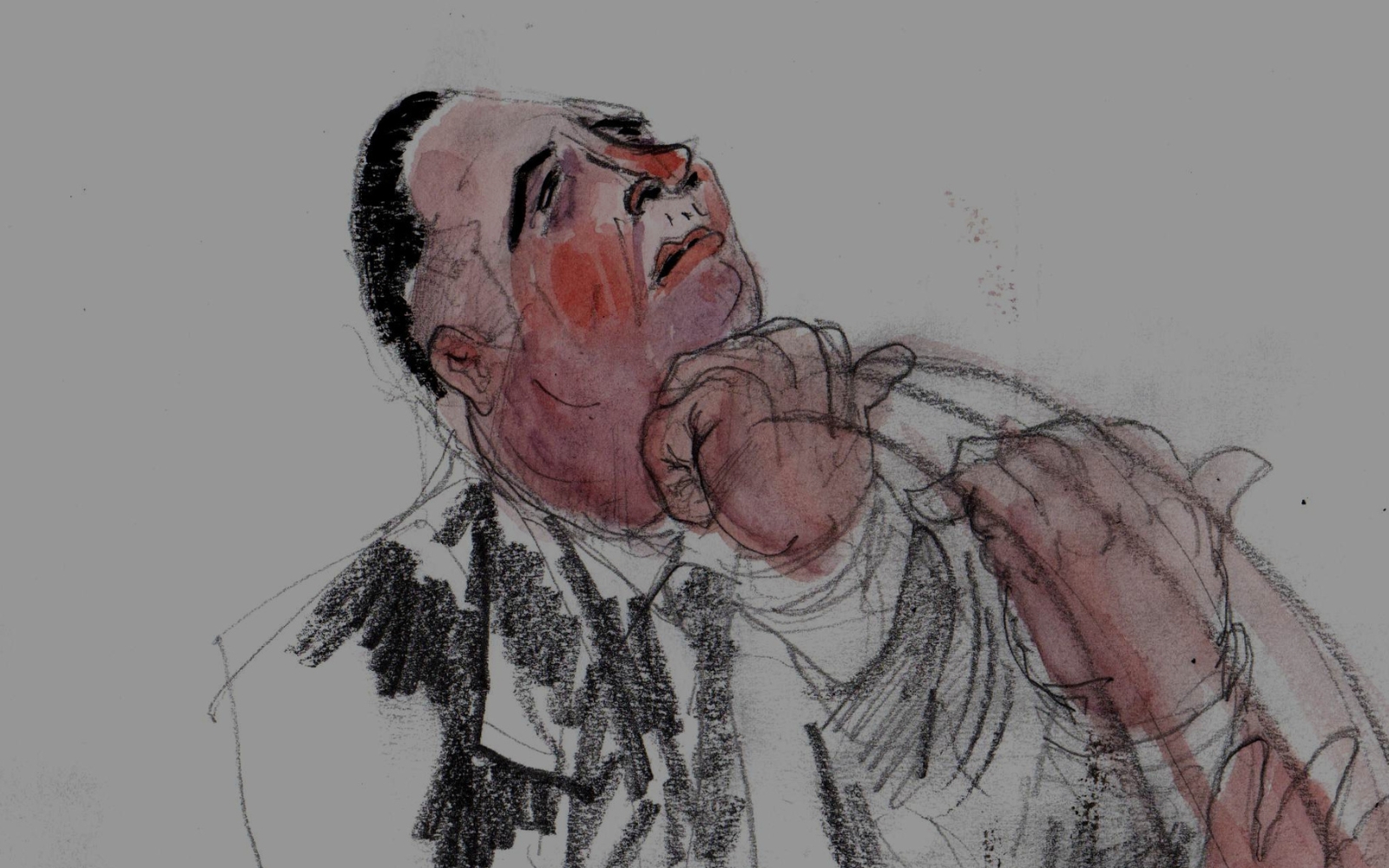
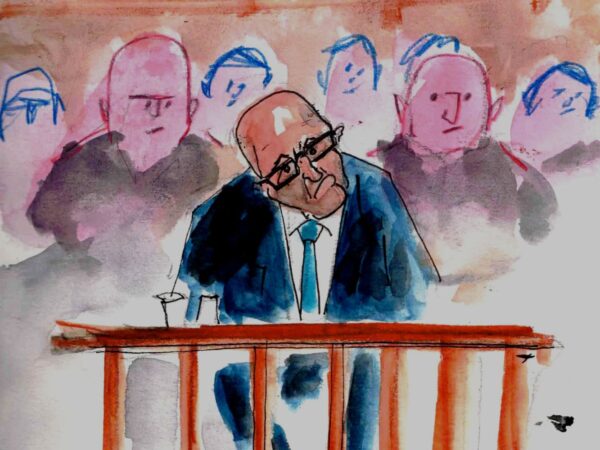
Yorgen Fenech privately backed the public campaign to have Daphne Caruana Galizia’s laptops returned from Germany, because their contents would throw suspicion onto everyone she had written about, jurors heard on Monday.
“It’s disgraceful that they didn’t bring them,” Fenech is heard saying on a covert recording made by Melvin Theuma, the middleman who arranged the journalist’s murder. “For me it’s better, personally.”
“The laptops confuse people’s minds,” Fenech says. “Didn’t she write against the whole of Malta? Whatever had to come out has come out. Don’t forget that the laptops were always in their hands.”
Theuma explained the reasoning to the jury. Caruana Galizia wrote about a great many people, so returning the laptops would open up access to everyone she had written about. It would take the focus off Fenech and himself, and there would be many more suspects instead. Theuma said he felt better whenever more people were under suspicion.
Elsewhere on the tape, Fenech said there were “300” people who had motive to murder Daphne.
The recording was one of eight played to jurors.
What runs through the recording is Theuma’s alarm at how unbothered Fenech appears.
“You drive me mad, how calm you are,” he says early on.
“Let me tell you why I’m calm,” Fenech answers. “If you don’t have control over things, well. If I had control over things I’d be going through the walls.”
Theuma told the court he took this to mean Fenech felt trapped between four walls and could do nothing.
Fenech is also recorded remarking on the decision by Caruana Galizia’s widower to withdraw the libel suits she had been fighting at the time of her death. “I don’t blame him. I’d do the same as him, drop the libel suits,” Fenech says. “Fight with half of Malta because of her? Why?”
Asked by the prosecution whether there had ever been a conversation in which the two of them admitted they had done something wrong, Theuma described driving Fenech to the airport and asking him whether he would have gone through with the killing had they known how big it was going to become.
Fenech’s answer, according to Theuma, was: “Definitely not.”
And asked what interest Fenech had in telling him all of this, Theuma replied: “He had no interest? He had no interest, the mastermind?”
“He used to tell me that he messed things up. He paid for Daphne to be killed. And Johann used to tell me that Yorgen didn’t want her around. He was doing well in life.”
Recording 1: The Hitmen
Much of the conversation is a calculation about time. The compilation of evidence against Alfred and George Degiorgio was nearing completion.
“By law they’re supposed to give them [bail],” Fenech says. But he is emphatic that it will not come early: “Nobody has ever been released before the evidence is brought, never.” He puts the outer limit at “about two years. Twenty months”, and says that at that point “they’ll have to release them, they haven’t even got a choice.”
Fenech is dismissive of the prosecution’s chances should the Degiorgios face a jury. “There’s never been a trial by jury that fast and went well, never,” he says. “They don’t have a chance in a hundred years.”
Theuma’s worry is not the law but the men. “How long they stay calm in there, Yorg, you’ll have to see,” he says.
“A month, two months is one thing,” Fenech replies.
Theuma told the court he had begun to fear that the Degiorgios would get bail, take the money and leave Malta. On the recording he says of Vince Muscat: “At the end of the day, il-Koħħu was going to expose me.”
Fenech commits to keeping the payments going. “It’s not our fault at all, but even so I’m not going to fight with them,” he says. “On the contrary, I’ll help them.”
“And you’ve already helped them, Yorg, haven’t you,” Theuma says. “And we served them.”
“And we promised them we’d carry on,” Fenech answers.
The two men also discuss a €75,000 legal bill. “These are animals, not people,” Fenech says of the lawyers. “These want to become millionaires in a day.”
Recording: The Politicians: Joseph Muscat and Chris Cardona
Theuma is recorded pressing Fenech to take their problem to his contacts. If he were in Fenech’s position, he says, knowing the people Fenech knows, “I’d tell you how fast I’d move: the Prime Minister.”
Fenech refuses flatly. “That would be the last thing I’d do. The maddest thing I’d have done in my life,” he says. “It would be the biggest mistake I ever made in my life.”
“Just by speaking to certain people I’d make it worse, I’d throw everybody into the net, worse and worse,” he goes on. “Throw everybody into the trap for nothing? Why?”
Theuma told the court he had wanted Joseph Muscat approached because this was the biggest killing in Malta and Muscat had the power. He said Fenech had sent him polling showing the Labour Party was solid, and gave him to understand that under that administration they had no problems.
Fenech offers Theuma an assurance instead. “For me it’s not about whether I get exposed or I don’t get exposed,” he says. “But if I give my word, my word is my word.” And on what should happen if they are caught: “Whatever we can sort out, at that moment, not an hour later. At that moment. An hour before, even.” Theuma told the court this referred to sorting matters with the police.
Fenech names one politician on the recording: Chris Cardona.
Theuma reports on the tape that Cardona had told them to ignore the men in custody. “Him too? He said to ignore them?” Fenech replies. “As much as he can help them, nobody can help them, because he knows his way around in there, not like us.”
Theuma told the court that Mario Degiorgio, the brothers’ brother, had told him to have €400,000 ready by the time the jury trial began, and that if the lawyer David Gatt did not have that sum by then it would go badly for him. Theuma said Mario never told him what the money was for, and that his own assumption that it was for a lawyer was just that. Mario also told him that Gatt had said it would go badly for him if Cardona were exposed too.
He said Fenech had told him that a mobile recovered by soldiers searching the sea carried a contact for Cardona and communicated only with Alfred Degiorgio.
Theuma told the court Fenech used to mention Cardona to try and shift blame away from him.
“Tad-diesel, il-Bona, and he would even try pinning it on her son, saying that he left her car out on purpose,” Theuma said.
Theuma said Johann Cremona used to name a number of people to him, but that Fenech only ever named Cardona, and that Fenech did so to shift attention away from himself.
He said Cremona had once shown him a photograph of another middleman, and that Fenech had told him the man’s name began with B and that he was from Birkirkara, a middleman like Theuma but for Cardona.
“Johann once told me that the lawyer Arthur Azzopardi collected €100,000 from the freemasonry for Koħħu, but he did not manage to give it to him before he was jailed,” he added.
Recording: Payments to the hitmen
A second recording, made at Portomaso, has the two men discussing the sums being paid to the Degiorgio brothers, both for the killing and afterwards. Fenech is heard asking Theuma whether he is being careful on the phone so as not to be traced.
Theuma told the court that Mario Degiorgio had asked him for €61,000 to send to the brothers’ relatives outside Malta, on the understanding that the money would then be returned to the country. Theuma paid the money himself, and Fenech reimbursed him.
He said he had felt guilty going back to Fenech for more, because the agreed figure had been €150,000 and that was to have been the end of it. He said the demands had nearly cost him his standing and his friendship with Fenech. “I got fed up taking money out of my own pocket,” he said.
He kept paying, he told the jury, because it was him the brothers knew, not Fenech. He said he never told them who the mastermind was. They found out from the news.
Recording: Phones, Potato Shed, And Trips Abroad
A recording made at the ranch on a Sunday morning opens with Theuma telling Fenech they are making too much of a fuss, and asking: “But aren’t you afraid, Yorg, that we’ll end up in the shit?”
“What do you want to do?” Fenech answers.
Theuma is then heard saying that if they had wanted to find the mobile, they found it. He told the court he had begun to worry that the phone Alfred Degiorgio used to call him had been thrown into the potato shed and recovered by soldiers, who searched the water there.
“What did they do about Cardona’s one?” Theuma asks on the tape.
“My mate told me,” Fenech begins. Theuma told the court the phone in question was Cardona’s, and that “my mate” meant Keith Schembri. Asked who had been giving Fenech his information, Theuma answered with the same name.
Theuma presses on the recording: did they find it, what did they do with it, did they throw it away. “The Government would fall,” he says. “Serious things. And where did they find it, Yorg?”
Theuma is also heard saying that three hundred and fifty had been taken in all. He told the court Cremona had told him the Degiorgios collected €350,000 for the killing.
Asked about a passage in which Fenech asks whether the men in custody have a chance, Theuma said that on the Caruana Galizia case they did, but that otherwise it was life. Asked what would happen if other matters came up, he said there were other murders, and that both Cremona and Fenech had told him there were around seven.
On the recording, Fenech tells Theuma to book a holiday, given his mental state at the time. Theuma in court confirmed that Fenech handed him 5,000 for the trip.
“You’ve given me the courage of a horse,” Theuma tells Fenech.
The two of them then discuss whether they would be arrested first and sort things afterwards. Theuma is recorded saying he does not think they will be arrested and that they will sort it out. He told the court he had said he thought it would be sorted before any arrest.
In the tape, Fenech once again reiterates his relationship with Keith Schembri and Silvio Valletta, detailing how they passed him information.
Recording: The investigation into Theuma
The recording was made when Theuma collected Fenech from the airport. Theuma told the jury he handed his phone to Fenech during the conversation so that Fenech could check whether his WhatsApp was backing up.
Asked why Fenech had an interest in his mobile at all, Theuma answered: because of what the two of them sent each other about the murder. On the tape, Theuma asks whether it would be safe for him to destroy the phone.
He also described being told by Johann Cremona to change his number because it was tapped, and to leave the old handset abandoned somewhere rather than simply switch it off. Theuma also confirmed that Cremona had warned him he was going to be arrested over something, and that he took this to Fenech.
“[The issue] is dead,” Fenech says. “Yes, it’s dead, but can’t you see they’re coming for me?” Theuma replies.
Much of the conversation is about the investigation into Theuma rather than the murder itself. In it, Theuma describes a sanction letter being rescinded by the bank – and that the bank informed him that the request came through the FIAU.
Theuma later confirmed that Fenech offered to lend him the money to pay for the property. He had bought the flat from Fenech’s uncle, and Fenech told him not to tell the uncle where the money had come from. The payments never occurred due to the men’s arrest in November 2019.
On the tape, Fenech reasons out loud that the police do not warn people in advance of an investigation. Fenech is recorded as saying he needed to check because he did not want to tell Theuma things that later proved untrue. He says he had spoken to “the other one”, which Theuma said was Schembri.
In one exchange, the two men discuss the magistrate who conducted the Egrant inquiry, Aaron Bugeja and how he was appointed to oversee the trial against the hitmen. He was tasked with the trial in July 2019. Fenech confidently says he believes the trial will take an extended period.
“If it had been up to me, I wouldn’t have given it to him,” Fenech says.
More to read
-
-
Environmental

Green To Grey: How Is Land Take-Up Regulated?
-
-
Environmental

Green to Grey: When Development Creeps Up On Agricultural Land
-
-
Environmental
Infrastructure, Commercial Complexes, Cemetery: Satellite Data Reveals Malta’s Largest Green-to-Grey Areas
-
-
Environmental
Green To Grey: Malta Lost Over 830,000 Square Metres Of Land To Development In Five Years
-
-
Environmental
Profit In Every Drop: The Companies Pumping Malta’s Groundwater For Free
-
-
Crime & Legal Affairs
Listen: The Trial Against Yorgen Fenech – A Podcast By Amphora Media
-
-
Politics
Open Malta: A New Political Data Transparency Platform By Amphora Media