Prosecution Closes Witness List With Testimony From Daphne’s Son
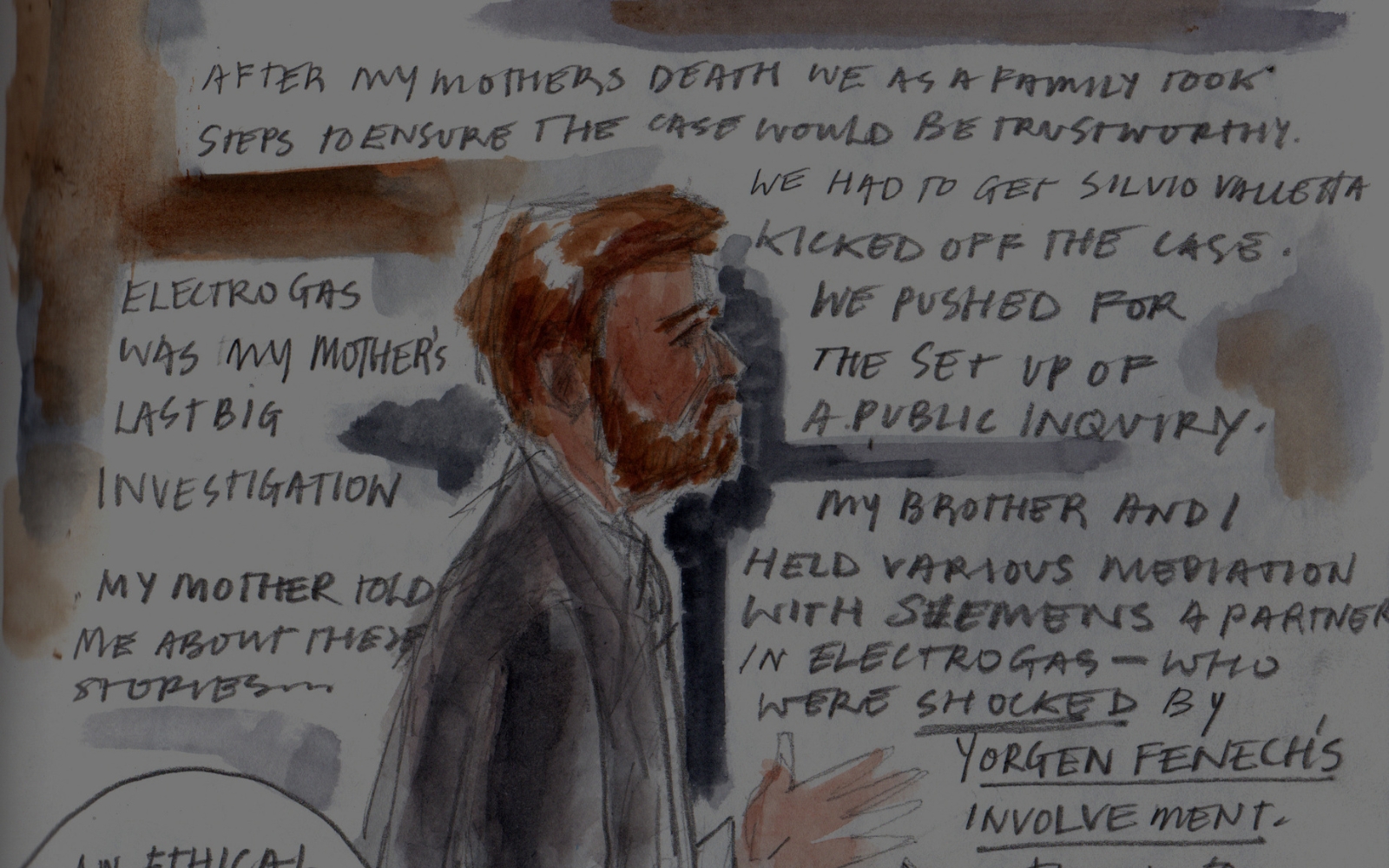
The prosecution closed its list of witnesses in the trial against Yorgen Fenech with the testimony of Andrew Caruana Galizia, one of Daphne’s sons. Tomorrow, the defence will begin to present its witnesses.
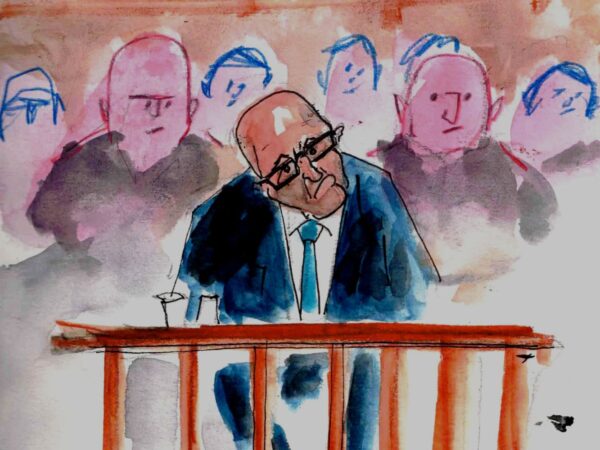
Andrew Caruana Galizia told jurors that his mother had established that Yorgen Fenech was the owner of 17 Black about a year before she was assassinated, in testimony that was interrupted by the defence.
Caruana Galizia, the second of the journalist’s three sons, was giving evidence for the first time in the trial. Fenech has pleaded not guilty to complicity in the 2017 murder of Daphne Caruana Galizia.
He told the court he had returned to Malta from New Delhi in June 2017 and was living in Floriana and working at the foreign ministry when his mother was killed that October. He said he saw her every weekend and that they spoke regularly about her work.
Her last open investigation, he said, was the ElectroGas leak, a cache of emails he testified she had been receiving from inside the consortium. For her, he said, the missing piece was the interface between ElectroGas and the government of the day, which was driving the project and owned 17 Black.
“I was not 3, I was 30, I am a Maltese citizen, I read what she wrote,” he told the court.
He said one red line between them was her sources, which he never wanted to know, but otherwise he knew who owned the company. She had her suspicions, he said, and a year before she was assassinated she found out it was Fenech.
Fenech, he testified, was a co-owner of ElectroGas who received a million euros each time the project hit a milestone. While the other shareholders were paid the same, he was the only shareholder dealing directly with the government. Asked about New Energy Supply, he said his mother had told him it was Fenech’s way of receiving money from the government.
He also testified about the family’s pursuit of Siemens, which holds a third of ElectroGas. After several years, he said, the company agreed to mediation, and the family travelled to Berlin to meet senior directors.
He told the court Siemens were shocked to discover that Fenech was involved in ElectroGas and wanted to exit their shareholding, but that the government pressured them, and that a waiver of 40 million euros was involved. Most of the Siemens people connected to ElectroGas were dismissed, he said.
Defence lawyer Charles Mercieca objected repeatedly that the witness was giving opinion and hearsay rather than facts within his own knowledge, and that he was testifying on documents that are not part of the case.
The exchanges escalated. Prosecutor Cini said in front of the jury that the defence was constantly obstructing the victim’s son. The court fined him 50 euros. Mercieca said the defence would seek to dissolve the jury if the conduct continued.
Daphne’s final weeks
His account of his mother’s final days went unchallenged. He said that he worried for her for the first time around two Sundays before her death. She always maintained a front, he said, but that day was different, and she told him they were trying to fry her alive. He said she was barely leaving the house and had begun parking her car behind the gate, something she had never done.
On the last Sunday, she came to say goodbye at the Floriana house he was restoring. She hugged him, walked to the door, and hugged him again.
He said she was good company, funny, and the person he relied on for advice about marriage, his career, and having children. He said he misses her as a friend, as an adviser and as a reference point, and that even though the sons were adults when she was killed, she left an enormous hole in their lives.
The following afternoon his brother Matthew called to say there had been an explosion up the road, and told him to fetch their father. He said his mother’s phone was off.
At the house, he said, his father asked Superintendent Kurt Zahra where she was, and Zahra confirmed she had been murdered.
There was no time to grieve, he said, because a narrative about diesel smugglers had to be answered immediately, and the family knew it was not true.
Headlines on the jurors’ tablets
Court expert Martin Bajada presented his findings on whether jurors had access to media reports during the trial. He confirmed that the tablets pulled automatic Google updates when PDFs were loaded, so headlines, photos, and bylines from news sites could surface. However, the underlying articles could not be opened.
The examination covered a nine-day review that produced 489 pages of headlines. Only one headline in the period from 1st July to date carried a reference to a pardon, and it appeared after the 18th and after Fenech’s statement had been heard in court. Internet access has now been restricted on the devices.
Zahra cross-examination continues
The sitting also saw defence lawyer Giannella De Marco continue her cross-examination of Superintendent Kurt Zahra, pressing him on lines of inquiry the police did not pursue.
Zahra said he had not spoken to staff at the Blue Elephant, where Melvin Theuma has testified that Yorgen Fenech first ordered the murder. He said he had not spoken to the Degiorgio brothers’ lawyer about a receipt for legal payments.
Throughout, Zahra repeatedly said that Keith Arnaud had been leading the investigation and that he could not answer for parts of it.
The trial continues with the defence’s witnesses.
More to read
-
-
Environmental

Green To Grey: How Is Land Take-Up Regulated?
-
-
Environmental

Green to Grey: When Development Creeps Up On Agricultural Land
-
-
Environmental
Infrastructure, Commercial Complexes, Cemetery: Satellite Data Reveals Malta’s Largest Green-to-Grey Areas
-
-
Environmental
Green To Grey: Malta Lost Over 830,000 Square Metres Of Land To Development In Five Years
-
-
Environmental
Profit In Every Drop: The Companies Pumping Malta’s Groundwater For Free
-
-
Crime & Legal Affairs
Listen: The Trial Against Yorgen Fenech – A Podcast By Amphora Media
-
-
Politics
Open Malta: A New Political Data Transparency Platform By Amphora Media
-
-
Crime & Legal Affairs

MGA-Licensed Operator Linked To €5.86 Billion German Illegal Gambling Probe