Yorgen Fenech’s Fair-Hearing Claim Over Melvin Theuma’s Pardon Is Premature, Court Rules
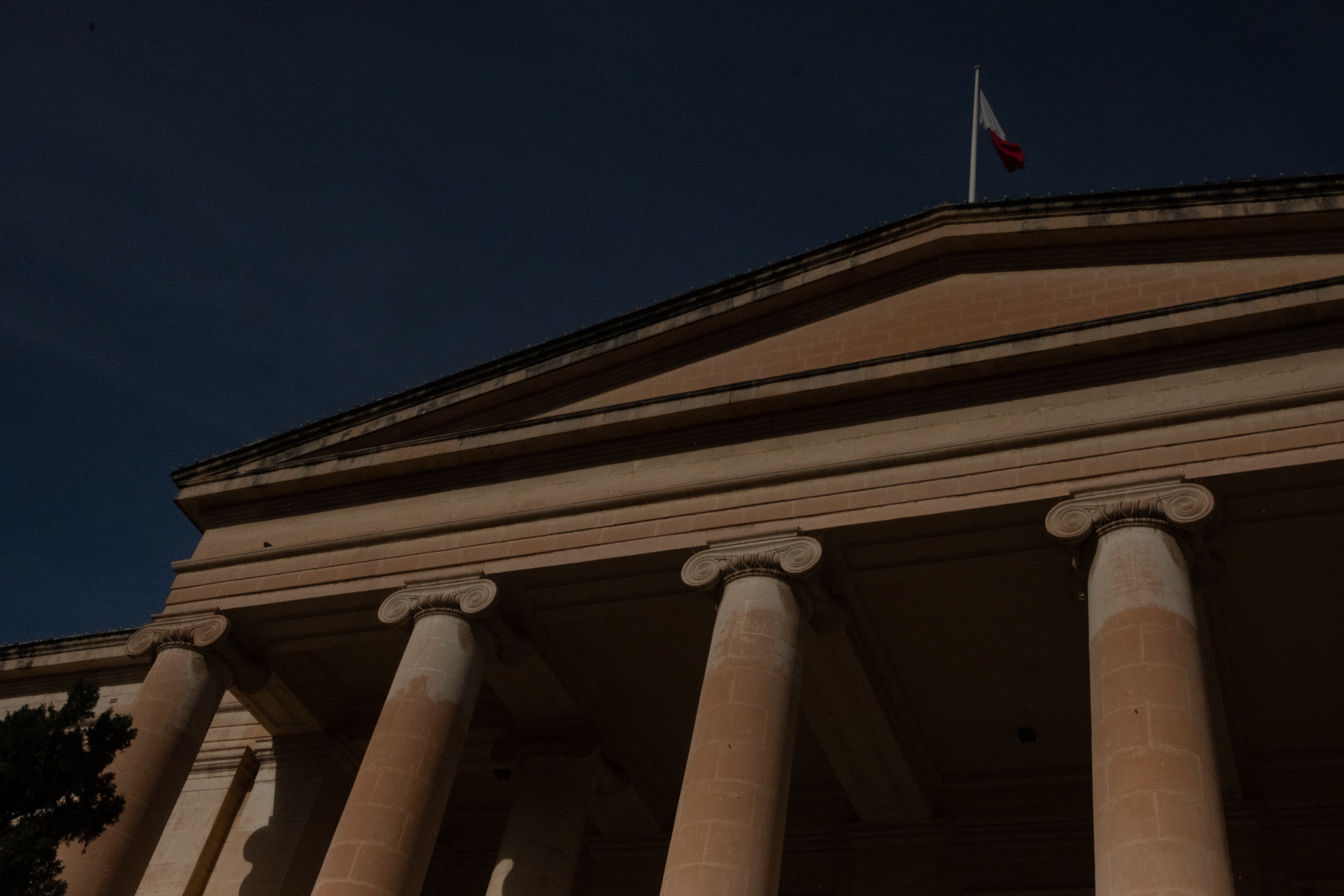
A constitutional court has rejected Yorgen Fenech’s claim that the state breached his right to a fair hearing by refusing to revoke Melvin Theuma’s presidential pardon.
In a judgment delivered on 27th November 2026, Judge Audrey Demicoli found that the fairness of criminal proceedings must be assessed against the entirety of the process once concluded, rather than at an interim stage while appeals remain pending.
The court also dismissed Fenech’s separate claim regarding the lack of effective remedy and ordered him to pay the costs of the proceedings.
Fenech had filed the constitutional application on 17th October 2023 against the State Advocate, the Attorney General, and the Commissioner of Police.
Theuma, the middleman in the assassination of journalist Daphne Caruana Galizia, was granted a presidential pardon on 25th November 2019. The pardon covered his role in the murder, gaming and money laundering offences, and three hold-ups at HSBC (2007), Casino di Venezia in Birgu (2010) and HSBC Qormi (2010).
Under the pardon’s terms, immunity would be withdrawn if Theuma refused to testify or failed to give a requested deposition or statement.
Fenech’s request centred around Theuma’s testimony in the magisterial inquiry linked to the phantom government job he received soon after receiving the order to find the hitmen for Daphne’s murder.
Theuma twice invoked his right to silence during cross-examination, first on 7 October 2022 and again on 25 May 2023, fearing self-incrimination. He did so despite prosecuting Inspector Nicholas Vella confirming the offence was covered by his pardon.
Fenech wrote to the President of Malta on 14th June 2023 requesting that the pardon be revoked or declared void. A month later, the President’s office informed Fenech’s lawyers that the Cabinet decided to follow the joint advice of the Attorney General and the Commissioner of Police to not revoke the pardon.
In November 2024, the Magistrates’ Court agreed to a defence request to strike Theuma’s testimony before the 2021 inquiry concerning the alleged misuse of public funds linked to his phantom government job from the entire criminal case file.
Fenech argued that Theuma was choosing “where, when, and how” to testify with impunity, and claimed the Attorney General and the Police Commissioner, who were prosecuting Fenech in other related cases and had a direct interest in shielding Theuma , breached his right to a fair hearing.
The court had previously upheld the state’s preliminary objection that it lacked power to revoke a presidential pardon or recommend its revocation to the President, limiting any individual remedy to reconsideration of Fenech’s request.
The judge rejected the state’s argument that Fenech should have used the ordinary courts instead of a constitutional case, and that the Attorney General and Police Commissioner were the wrong people to sue.
More to read
-
-
Environmental

FKNK Paid To Ring Trapped Birds Months Before Change In Law, With Commission Escalating Case Against Malta
-
Justice Delayed, Equality Denied: How Strained Services in Malta’s Justice System Disadvantage Foreigners
-
-
Crime & Legal Affairs
In Malta’s Overcrowded Prison, Foreigners Make Up the Overwhelming Majority of Long-Term Pre-Trial Detainees
-
-
Politics

Malta Will Charge Tourists €213 Million; Most Will Be Spent On Marketing Malta To More Tourists