2026 Election Guidebook: The Environment
A voter’s guide to where Malta actually stands on climate, pollution, nature, and the politics of the environment.
- Three-quarters of Maltese respondents say the government is not doing enough to tackle climate change.
- Environment and climate are regularly among the top 5 concerns for Maltese people and the 4th-highest concern for young people.
- 35% of people in Malta reported exposure to pollution in 2023 — the highest share in the EU.
- Between mid-2023 and mid-2024, Malta recorded the fastest-growing emissions in the EU. Malta has negotiated its 2030 emissions target down to 19% — less than half the EU’s 40% commitment.
- The government has set up the Climate Action Authority, but its impact remains negligible.
- Malta is the highest proportionate spender on fossil fuel subsidies in the EU, projected at €172 million in 2026.
- Effective protection of natural spaces and enforcement of environmental law are lacking.
Do voters actually care about the environment?
Yes – and consistently – if surveys are the measure to go by. EU-wide surveys put the environment and climate change among the top five concerns for Maltese people.
A 2022 Ernst & Young survey of Maltese found that 93% of young people believe the environment is getting worse. Nearly half of millennials and 40% of Gen Z see it as a major challenge.
But what do people want? More greenery and less traffic, according to a 2024 survey of children and adolescents.
Maltese respondents say they are ready to sacrifice EU competitiveness to fight climate change, and half are ready to pay more for climate-friendly agricultural products.
In a 2024 survey, when asked about climate adaptation priorities, two in five Maltese called for tree-lined streets or green spaces to cool urban areas.
Failing to address the environment can have a devastating impact on Malta’s reputation and industries that rely on it.
“If people come to the island and they think it’s dirty, full of rubbish and so on, they won’t come,” tourism researcher Marie Avellino told Amphora Media in our short-lets investigation.
How much does Malta spend on the environment?
Before the last general election, the environment held its own dedicated ministerial portfolio. Since 2022, however, it has been folded into Miriam Dalli’s expansive super-ministry covering Energy, Environment, and Public Cleanliness.
The ministry commands one of the largest budgets in government, with projected annual expenditure of €470 million in 2026.
The Ministry has also been the largest spender on direct orders and has maintained an uncompetitive public procurement system since Robert Abela became Prime Minister in 2020.
The United Equipment Co (UNEC) Ltd, part of Bonnici Group, was the top beneficiary, receiving over €32.2 million in direct orders for power generation, infrastructural works, industrial supplies, equipment procurement and more.
The Ministry’s single largest outlay is the Energy Support Measures – subsidies designed to shield households and businesses from rising global energy prices – projected at €172 million for 2026, following an actual spend of €183 million in 2024.
In total, energy support measures will cost Malta €968 million by the end of the year.
Actual expenditure for 2022: €234,189,597
Actual expenditure for 2023: €227,178,199
Actual expenditure for 2024: €183,200,785
Approved estimate for 2025: €152,000,000
Estimate for 2026: €172,000,000
This is proportionately more than any other EU country spends and is, alone, one of the largest items in the entire government budget. The EU’s Council has urged the government to “wind down” the subsidies.
The second-largest expense is the Solid Waste Management Strategy at roughly €41 million, followed by €23 million allocated to the feed-in tariff, which compensates households for solar energy sold back to the grid.
On the purely environmental side, the largest line item is the Environment and Resources Authority, whose projected 2026 operating budget is €21.8 million – a notable drop from the €24.4 million spent the year before.
Is climate change treated as an emergency?
Officially, yes. Malta’s parliament unanimously declared a climate emergency in 2019. However, actions have been limited to the creation of the Climate Action Authority (CAA) in October 2024.
An Amphora Media fact-check uncovered that the CAA’s claims that “Malta [was] at the forefront of planning for climate change adaptation” lacked substance and were false.
Despite its booming economy, Malta lags behind most EU countries in key sustainable development metrics. Meanwhile, commitments are unambitious: the EU has committed to a 40% emissions reduction by 2030, but Malta negotiated its commitment down to only 19%.
Malta was absent from the Transitioning Away from Fossil Fuels conference, where the so-called High Ambition Coalition convened to design measures to address climate change in the absence of UN-level consensus.
Malta is currently ranked 34th out of 63 countries in the Climate Change Performance Index, with the implementation of climate policies rated “poor”.
Between mid-2023 and mid-2024, Malta recorded the fastest-growing emissions in the EU. It should be noted that international aviation and maritime transport emissions, important in the Maltese economy, are excluded from calculations.
Flight intensity, cruise liner arrivals, and Malta’s maritime registry – and the pollution that comes with them – have also grown. Malta currently has the largest registry of superyachts in the world and a growing airline registry that includes Ryanair aircraft. Ryanair calls itself “Malta’s No. 1 Airline”.
Meanwhile, an Amphora Media’s investigation revealed that only one in 11 cruise ship calls plugged into shore-to-ship power despite its availability.
Has Project Green actually greened Malta?
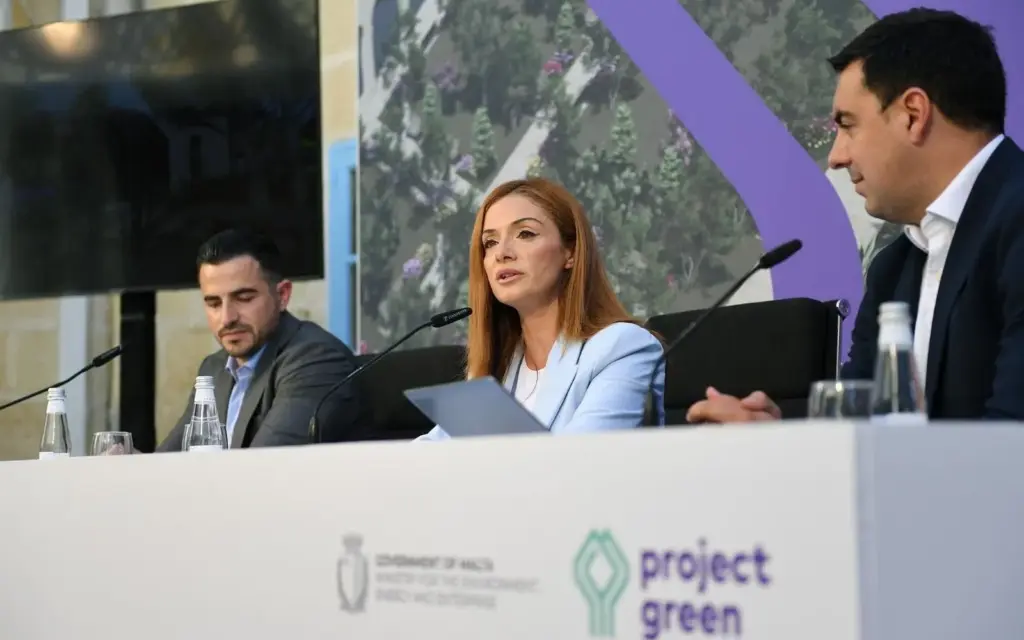
In response to environmental concerns, the government established Project Green, which aims to protect nature and create accessible green spaces.
As of October 2024, Project Green said it would be working on 118 projects within different localities. When asked by Amphora Media for a full list in April 2025, Project Green provided a list of 46 projects.
This year, it has launched public consultation calls for public park works at Manoel Island, Fort Campbell and White Rocks.
Our 2025 analysis showed that a fifth of Project Green’s planning applications included car parks, while a majority of projects fell within the constituencies of Minister Miriam Dalli and Prime Minister Robert Abela.
Beyond that, the Maltese government also diverted nearly 12% of EU Common Agricultural Policy (CAP) funding to Project Green, with no clear benefits to farmers.
Is Malta becoming cleaner?
In 2023, more than a third of people (35%) in Malta reported exposure to pollution, grime, and other environmental problems. This is the highest share in the EU and nearly three times the EU average of 12%. According to the report, high-earning households were more affected than low-earning ones.
Malta still relies heavily on landfilling, while a proposed waste-to-energy incinerator remains what it has been since its announcement in 2017: a proposal. Concerns have also been raised over its potential effectiveness.
In 2024, Circular Economy Malta, a government agency, introduced a scheme to encourage shops to offer discounts or other benefits to users who bring their own containers. The agency claims that this initiative has successfully prevented the use of 63,524 single-use containers – 87% of them were detergent containers. The take-up in other sectors proved lagging.
Is the government protecting nature or hunters?
Hunting and trapping remain a hot-button issue for many Maltese. However, both the PL and the PN have often failed to take action against the practices, amid allegations that they are afraid to take on the 10,000-strong FKNK and risk losing votes.
Malta has been subject to infringement proceedings over bird trapping. Yet the government has regularly changed the rules to ensure that trappers are granted a scientific derogation to continue the practice.
Our fact-check showed that trapping has not produced scientifically useful research. The government has still issued a €7,500 direct order to FKNK to carry out ‘scientific’ bird ringing (read more about direct orders).
Pledges for constitutional protection – either for hunters or the environment, as the PL and PN have done respectively – are non-enforceable in court, and penalties are mild, despite proposals from both the PN and PL.
Another Amphora Media fact-check showed that the government had not used cultural heritage tools for that purpose. Hobbies such as fireworks, hunting, trapping, and shooting have not been added to Malta’s inventory of intangible heritage.
PL’s 2022 electoral manifesto had something for nature and heritage lovers too: it promised “green networks” for ramblers, hikers and “all those who visit the Maltese countryside.” It is not clear how a network would be defined.
Amphora Media spoke to Ingram Bondin, the president of Ramblers’ Association of Malta to check up on the status of the network.
“It’s not ready, by any means, and it was a very slow process,” he said, praising Ambjent Malta for maintaining existing trails but pointing out that there is no network to speak of.
“[To move forward] you have to identify the sites that you really want the public to visit, and you have to break some eggs. For example, we have very beautiful sites that are becoming inaccessible as large landowners buy up everything. So if you want to give the public access to some of the most beautiful sites in Malta, you will have to challenge this.”
Bondin says that there is a lot of appetite for walkable spaces as people want “to relieve themselves from the construction, and the general chaotic environment of the towns”.
Are Malta’s seas ignored in the environmental conversation?
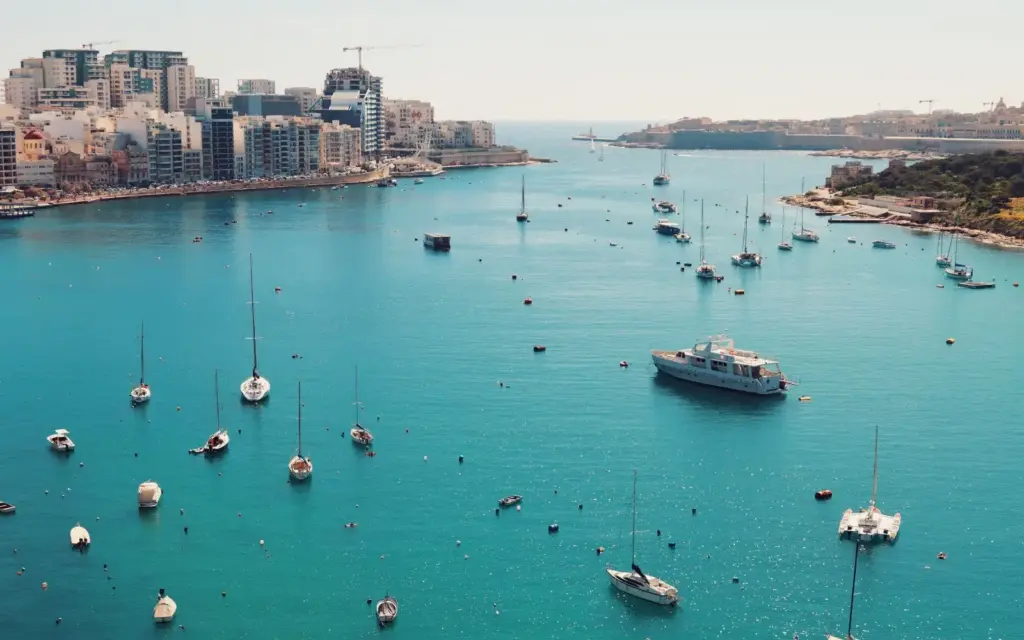
The sea is arguably Malta’s only wilderness. The EU’s Biodiversity Strategy sets a target of protecting 30% of the EU’s seas, and members of Malta’s government say the country is protecting about a third of its waters. Does it mean that the target has been achieved?
Our fact-check showed that this was another misleading claim.
Malta has indeed designated marine Natura 2000 sites. These are not nature reserves – human activities such as fishing and tourism are allowed, as long as protected species remain in good condition. But Malta has a vast marine territory, of which it protects only under 10%.
Even some protected areas are criss-crossed by heavy vessel traffic, alongside pressures from fishing, pollution and water sports.
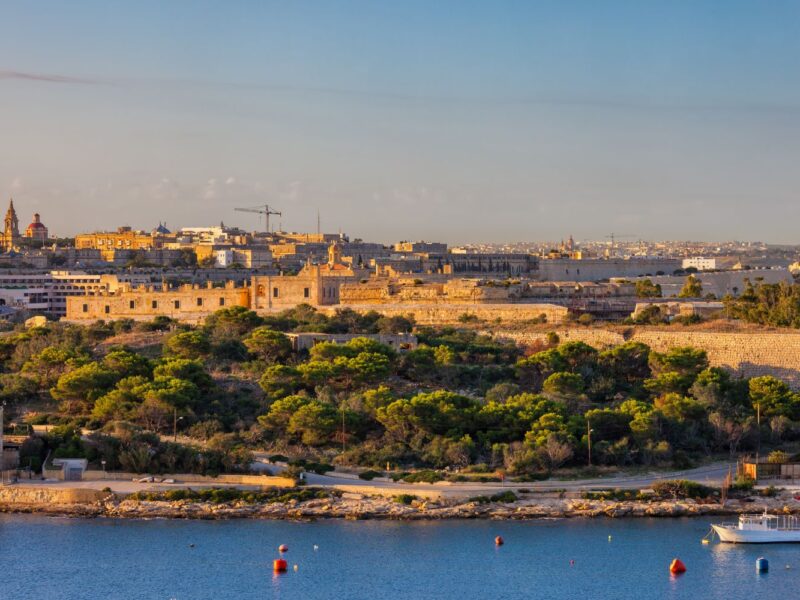
Manoel Island: was the promise fulfilled?
Malta’s government has re-acquired Manoel Island from MIDI in a €47.3 million deal, ahead of a €50 million bond repayment deadline in July 2026.
It was seen as a major win for activists, after a long-standing complaint seeking to rescind Manoel Island from the MIDI concession due to numerous breaches.
MIDI had claimed to have lost 10 years due to archaeological excavations on the two sites included in the concession, including when cemeteries were found. However, Amphora Media’s fact-check showed that the delays were not entirely outside MIDI’s control.
The deal has come at a hefty price, paid for with taxpayers’ money.
Project Green has since launched a call for the public to submit ideas for Manoel Island, alongside two other sites. The page for this consultation is now a dead link, and no summary of responses has been published.
Meanwhile, the Planning Authority’s case officer recommended granting permission to Sharlon Pace on behalf of Gzira United Football Club to sanction illegal padel courts on the island.

What to watch for:
Among Amphora Media’s 16 published fact-checks, five concerned environmental topics. Many propaganda claims continue to circulate, incorrectly claiming that Malta is a “leader” in climate change policy while politicians promise more fossil fuel extraction and processing.
But while many voters may not be thinking about the grand scheme of climate change, there are issues closer to home: polluted air, waste, declining biodiversity and urban heat.
Are political parties going to admit that the current system is not failing to protect nature? Will anyone dare to name the actors accountable for it – developers, environmental crime perpetrators and polluters?
More to read
-
-
Environmental

Green To Grey: How Is Land Take-Up Regulated?
-
-
Environmental

Green to Grey: When Development Creeps Up On Agricultural Land
-
-
Environmental
Infrastructure, Commercial Complexes, Cemetery: Satellite Data Reveals Malta’s Largest Green-to-Grey Areas
-
-
Environmental
Green To Grey: Malta Lost Over 830,000 Square Metres Of Land To Development In Five Years
-
-
Environmental
Profit In Every Drop: The Companies Pumping Malta’s Groundwater For Free
-
-
Crime & Legal Affairs
Listen: The Trial Against Yorgen Fenech – A Podcast By Amphora Media
-
-
Politics
Open Malta: A New Political Data Transparency Platform By Amphora Media