2026 Election Guidebook: Crime, Justice, Corruption
A voter’s guide to what is being done on corruption & justice as overall criminality declines.
- Fewer crimes are committed than 10 years ago, despite a larger population.
- Domestic violence and sexual crimes are on the rise.
- Malta continues to criminalise and prosecute abortion.
- Meanwhile, a new law allows alleged perpetrators of tax crime, money laundering and fraud to avoid prosecution.
- High-profile corruption and homicide cases remain ongoing.
- Malta’s justice system is among the least efficient in the EU.
Malta is officially becoming safer. Theft and arson are the lowest on record. Petty crime against individuals and households is on the decline.
Yet there is more drug-related, environmental crime, while there are numerous prominent cases of corruption and white-collar crime. Justice remains slow, and Malta continues to perform poorly on the EU’s justice scoreboard.
With figures like Jon Mallia warning that the word ‘corruption’ has disappeared from the national debate, is tackling crime & justice on the political agenda?
Do voters care about crime and justice?
Crime & justice is consistently among the top 5 concerns for Maltese people in Eurobarometer surveys.
In national surveys, the salience of the issues fluctuates over time, occasionally soaring upwards. This is especially visible in 2023, when concerns about justice and the rule of law appeared across surveys conducted by the Times of Malta, Malta Today and Eurobarometer.
What crimes are affecting people the most right now?
Registered criminality is declining despite the boom in population and tourism. There were 18,579 crimes registered in 2005 against a population of 403,834 persons, but 15,594 crimes in 2025 against a population of 574,250 persons. As of 2025, Malta had 719 prisoners.
The decline in criminality, however, is not even across the islands.
District 1 is marked by a particular crime risk. Four localities (Marsa, Hamrun, Valletta, Floriana) in the electoral district are classified as high- or very-high-risk localities.
Floriana, in particular, is noted for its “extremely high” risk of vehicle-related crime (theft of or from vehicles; vandalism). In 2024, Floriana ranked at least five times higher than the national rate.
On the other end of the spectrum lies the 8th district. All its localities fall within the low-risk zone. Each other district has at least one locality with high crime risk.
| Crime risk | Low | High | Very high or extremely high |
| District 1 | Birkirkara*Pieta’*Santa Venera | MarsaHamrun | VallettaFloriana |
| District 2 | IslaZabbarFgura*KalkaraMarsaskala*Xghajra | BormlaBirgu | |
| District 3 | ZejtunGhaxaqMarsaskala* | Marsaxlokk | |
| District 4 | Fgura*Tarxien | GudjaPaolaSanta Lucija | |
| District 5 | MqabbaKirkopQrendiSafiZurrieq | Birzebbuga | |
| District 6 | QormiSiggiewi | Luqa | |
| District 7 | Zebbug (Malta) Dingli Mtarfa Rabat | Mdina (extremely high) | |
| District 8 | BalzanBirkirkara*IklinLijaNaxxar* | ||
| District 9 | GharghurPieta’*San GwannSwieqi | MsidaTa’ Xbiex | |
| District 10 | Naxxar*PembrokeSliema | Gzira | St Julian’s |
| District 11 | Attard | Mosta | |
| District 12 | Mgarr (Malta) | St Paul’s BayMellieha | |
| District 13 | Rabat (Victoria)FontanaGharbGhasriKercemMunxarNadurQalaSan LawrenzSannatXaghraXewkija | Zebbug (Gozo)Ghajnsielem |
* – split localities
According to the Annual Crime Review, theft remains the most frequently committed crime, accounting for 28.4% of all offences reported to the police. However, that figure is declining, while pickpocketing cases decreased to 394.
Damages, the second most reported offence (18.8%), experienced a slight increase between 2024 and 2025 but has generally dropped from 24.1% in 2015.

Gender-Based Violence & Femicide
Domestic violence, now the third most-reported offence, is on the rise.
Domestic violence reports have almost doubled since 2015, reaching 4,439 in 2024. One in four women in Malta reports experiencing intimate partner violence. Residents of Bormla, Santa Lucija, Valletta, Isla and Marsa (districts 1, 2 and 4) disproportionately suffer from domestic violence.
Convictions remain low. Police issued 17,486 domestic violence charges between 2021 and mid-2025 but secured only 933 convictions, roughly one for every nineteen charges.
Sexual offences, including against minors, have been alarmingly increasing and more than doubled since 2005.
Amphora Media’s research has shown that while introducing femicide into law was a legal breakthrough, it is not enough to effectively tackle gender-based violence. A man convicted under the new femicide legislation has filed an application to challenge the law before the European Court of Human Rights.

Abortion
Abortion remains a criminal offence in Malta. This year, a woman was handed a suspended sentence for having an abortion; a doctor at Mater Dei Hospital had reported her to police after she admitted herself following heavy bleeding.
Amphora Media’s award-winning investigation has shown there were at least 2,000 self-managed abortions in Malta between 2020 and 2025.
Abortion pill shipments into Malta had also doubled in four years, in a climate where travelling for abortion is up to 25 times more expensive. Spain has now surpassed the UK in the number of women from Malta travelling to have an abortion.

Financial Crime, Corruption & The Assassination of Daphne Caruana Galizia
Fraud and financial crime remain a concern in Malta.
International scam networks with ties to Malta have avoided trial. An alleged illegal gambling network has stretched to the island, while potentially illegal practices, including operations in grey & illegal markets, are effectively protected through Bill 55.
Meanwhile, Malta has introduced an out-of-court settlement mechanism that allows people accused of tax evasion, fraud, and money laundering to avoid all criminal liability.
It has impacted major cases, including: Aron Mifsud Bonnici, Christian Borg, and Nigel & Mikaela Scerri. The new law came into force just as money laundering arraignments were beginning to rise.
Drug trafficking, importation, and possession with the intent to supply are also growing trends. Between 2024 and 2024, there was a 47% increase in illegal hunting and trapping.
Beyond that, there have been a number of convictions involving perpetrators of the assassination of journalist Daphne Caruana Galizia.
Amphora Media reported on the financial activities of the Maksar brothers – including suspicious transactions with We Media – on which the police have never taken action.
The Vitals case, which saw major political figures like former Prime Minister Joseph Muscat, Keith Schembri, Konrad Mizzi, candidate Chris Fearne and others charged in court, is also still underway. A number of other criminal inquiries are still works in progress.
Allegations of corruption or abuse of public office remain commonplace. During this legislature, Deputy Prime Minister Chris Fearne, Minister Clayton Bartolo and Minister Roderick Galdes were all made to resign from their posts. MP Rosianne Cutajar was removed from the PL parliamentary group but was later reinstated.
Bartolo and Galdes are the only two who are not contesting with the Labour Party.
How are the police and justice system resourced?
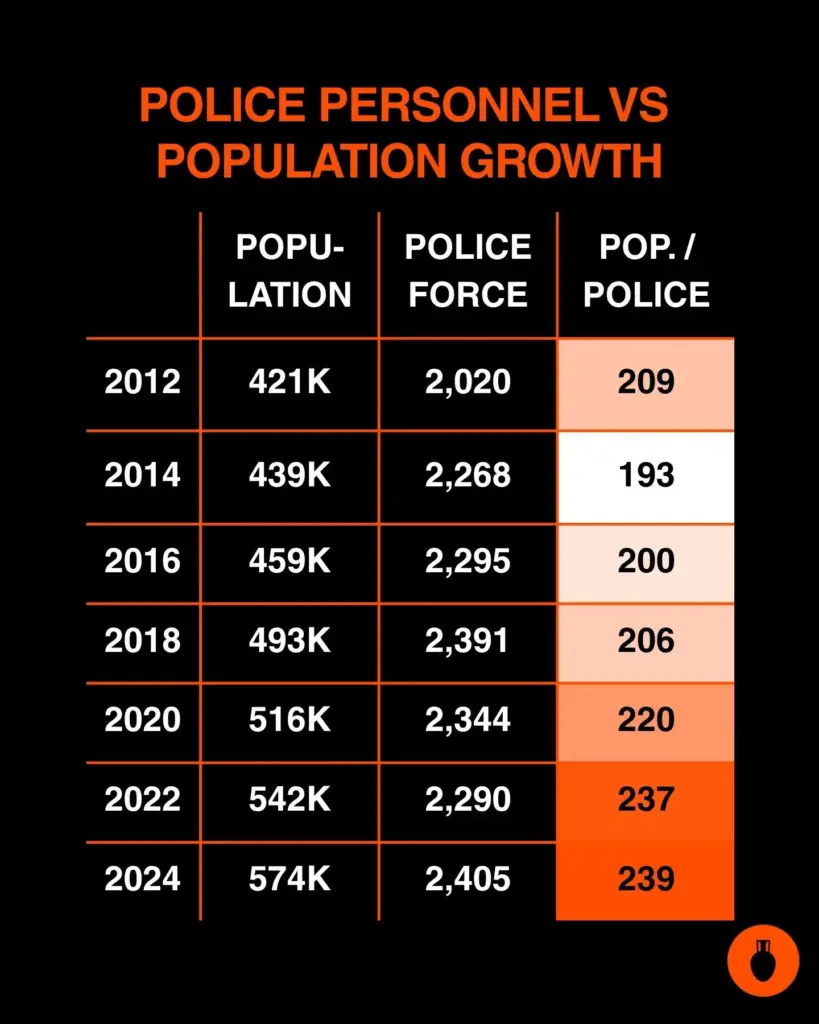
Despite sharp population and tourism increases, the number of police officers across 35 police stations, barely grew, and frontline ranks even shrank.
As of November 2024, Malta’s police force employed 2,405 people, just 32 more than in 2017, and about 500 more than in 2004, when the population was roughly 400,000. That year, the police processed nearly 87,000 reports.
The number of police officers supervising the trapping derogation is also declining, and the number of vehicles they use has halved between 2022 and 2023. In Gozo, despite its small population, the police failed to identify over half of the offending trappers.
The 2025 police budget is set at €117.3 million, more than double the nearly €53 million spent in 2013.
Government budgetary documents indicate that the surge is primarily driven by rising overtime, allowances, and salaries, despite the police workforce expanding by only 14 personnel between 2018 and 2024.
Overtime costs have increased 860% in a decade. Allowances have more than doubled.
The government also generously spends on private security firms.
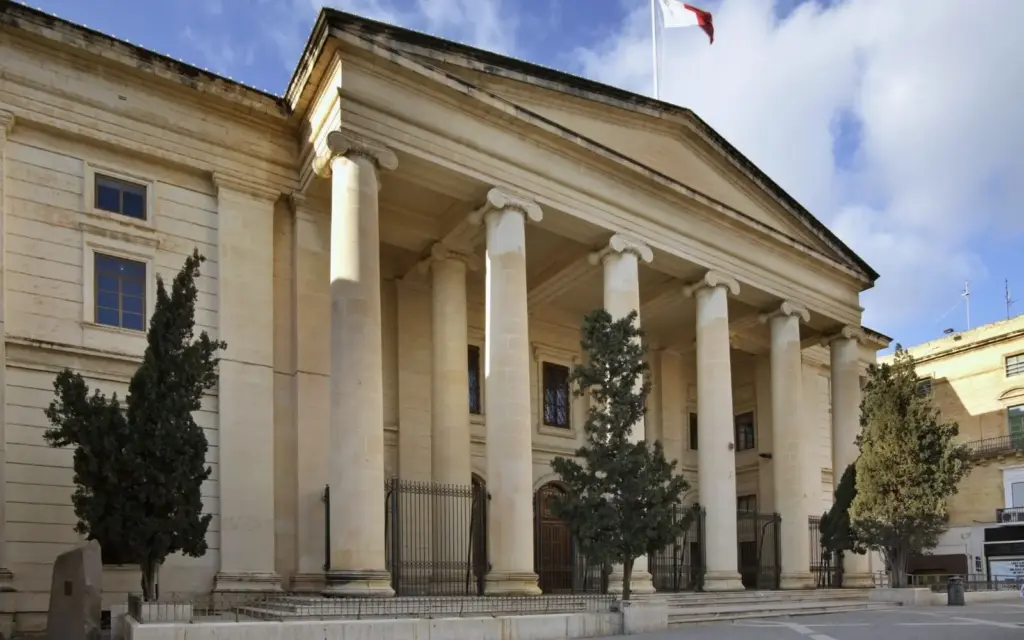
Courts Delayed, Justice Denied
A report by the Daphne Caruana Galizia Foundation revealed that Malta has one of the highest court expenditure rates, yet one of the smallest judiciaries per capita and one of the lowest resolution rates in Europe.
According to separate data compiled by the Council of Europe, in 2022, the implemented judicial system budget of Malta amounted to €38,985,790.
Malta also has more lawyers per capita than most EU countries, but ranks third-worst in the use of digital technology by courts and prosecution services. The estimated time to resolve judicial cases in Malta is among the longest.
The Foundation’s report uncovered how Malta records an average of 6 murders per year, but only an average of 1.5 cases are concluded annually, leading to a mounting backlog of unresolved cases.
Currently, 46% of homicide cases between 2010 and 2020 remain pending, while accused persons wait at least three years for a trial date after being indicted.
A major reform has also impacted citizens’ rights. Under Bill 125, ordinary citizens can no longer directly petition a magistrate to initiate a magisterial inquiry; instead, they must file a police report and wait six months before approaching the courts.
Citizen-led inquiries made an overwhelming minority of cases and led to the arraignment of major political figures.
What to watch for:
In most localities, residents can feel safe from crimes that would target them outdoors: robberies, pickpocketing, attacks on themselves and their property. This is attributed to better policing and surveillance. On the other hand, police can help less in dealing with crimes that happen indoors, such as domestic violence and cyber scams.
Moreover, Malta is becoming safer unevenly across localities. Will the candidates running in the 1st, 10th, and 11th districts dare to confront the disproportionate burden of crime on the localities in these constituencies? Will anyone promise a separate police station for Paceville?
Police resources are stretched, and the justice system is notoriously slow and inefficient. Who will commit to a comprehensive reform?
More to read
-
-
Environmental

Green To Grey: How Is Land Take-Up Regulated?
-
-
Environmental

Green to Grey: When Development Creeps Up On Agricultural Land
-
-
Environmental
Infrastructure, Commercial Complexes, Cemetery: Satellite Data Reveals Malta’s Largest Green-to-Grey Areas
-
-
Environmental
Green To Grey: Malta Lost Over 830,000 Square Metres Of Land To Development In Five Years
-
-
Environmental
Profit In Every Drop: The Companies Pumping Malta’s Groundwater For Free
-
-
Crime & Legal Affairs
Listen: The Trial Against Yorgen Fenech – A Podcast By Amphora Media
-
-
Politics
Open Malta: A New Political Data Transparency Platform By Amphora Media
-
-
Crime & Legal Affairs

MGA-Licensed Operator Linked To €5.86 Billion German Illegal Gambling Probe