Schembri denies ordering Caruana Galizia’s murder as defence presses him on missing phone and Castille note
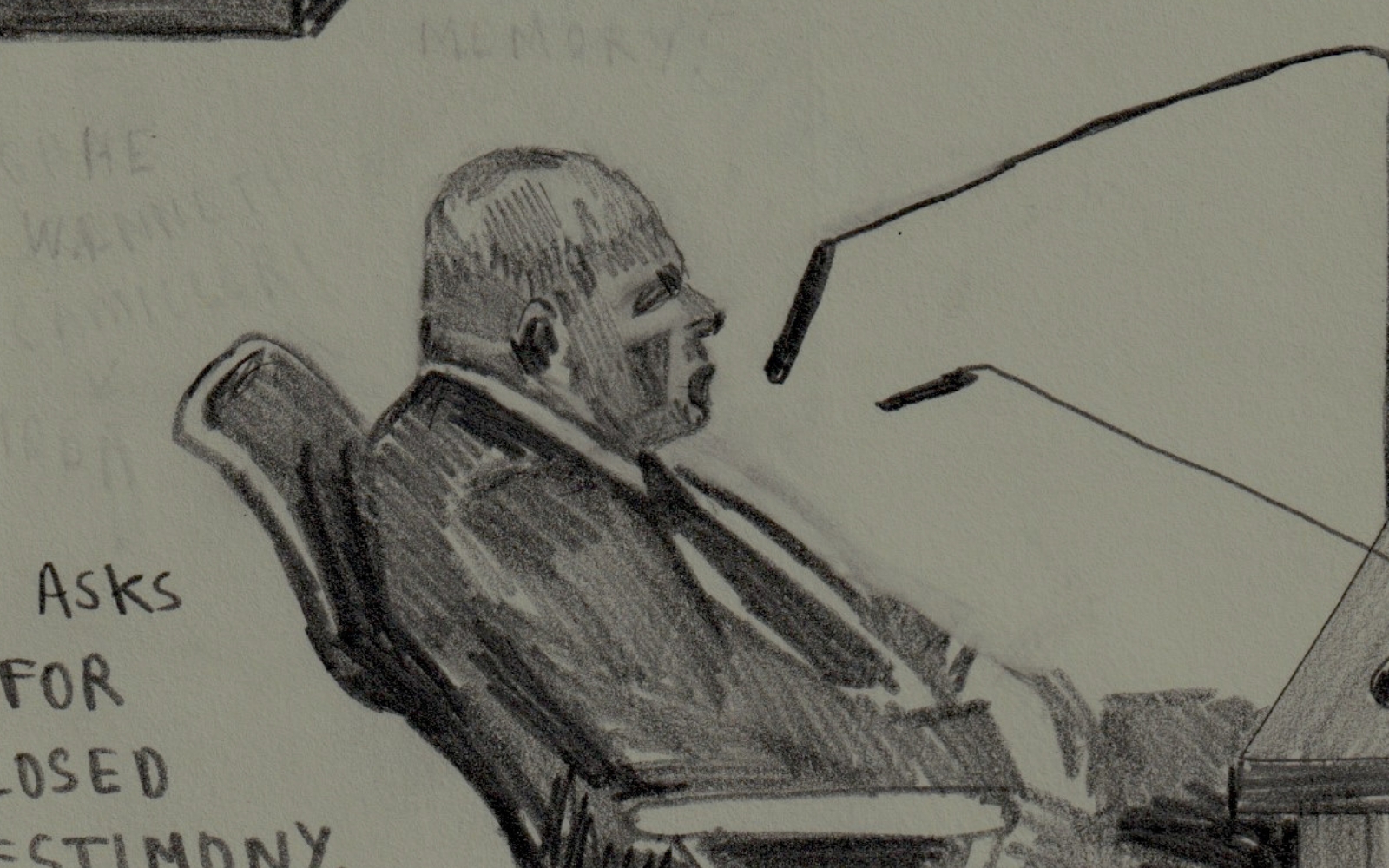
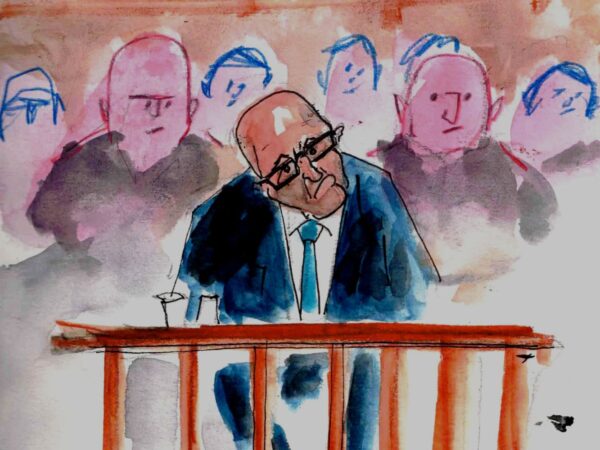
Former OPM chief of staff Keith Schembri told the jurors on Thursday that he had no involvement in the assassination of Daphne Caruana Galizia, denying the allegation in the strongest terms he has used in the trial so far.
“I am not the mastermind,” the former chief of staff to Prime Minister Joseph Muscat said, telling the court he was “600 million per cent” certain he had no connection to Caruana Galizia’s killing or to the men accused of carrying it out.
Asked why he thought Fenech had named him, Schembri said Fenech knew him inside out and that it had been the easiest way out. He said the allegation had cost him his business and his banking relationships.
“I will never forget the friendship I had with him,” he said.
The denial came at the close of a long cross-examination by Giannella de Marco, who appears for Yorgen Fenech. Fenech, who is accused of commissioning the October 2017 car bomb that killed the journalist, has alleged that the murder originated with Schembri. Schembri is not charged in connection with the murder and has consistently denied any role in it. He is charged with leaking information on the case.
The missing phone
De Marco returned repeatedly to Schembri’s mobile phone, which has never been recovered.
Schembri said that on the morning of his arrest he received a call at 5:03am from Dr Adrian Vella, his and Fenech’s personal doctor, who told him people were knocking at his door. Asked why he assumed these were police officers, Schembri said it was obvious to him, because he had been told that Fenech had turned his statement against him.
De Marco put it to him that this account could not stand, because Vella had been arrested at 12:30am. Schembri did not identify who had informed him. Pressed on whether the police commissioner or the officers leading the investigation had tipped him off, he said he did not remember and insisted he had no close relationship with then commissioner Lawrence Cutajar.
Schembri said he had resigned shortly before officers came for him, and that Muscat had told him he was doing the right thing.
He told the court that workmen were at his house that morning, both moving furniture indoors and working near the pool, and suggested one of them might have taken the phone. De Marco noted that this account had not appeared in his statements or earlier testimony, that neither investigators nor scene-of-crime officers had recorded workers inside the house, and that photographs showed no works under way.
“I was going through a trauma at the time, from chief of staff to being arrested,” Schembri said. “To this day, I still don’t know where it is.”
The note passed to his doctor
De Marco pressed Schembri on the note that Adrian Vella is alleged to have carried from Schembri’s home to Fenech.
Schembri denied handing over any paper. He said he had told Vella to “go upstairs, there are some papers, take what you want,” and that Vella had taken it himself. He said no fingerprints of his were found on the document, and that he had never seen it before. He added that he could not go further because he had been instructed not to refer to the first pardon request.
De Marco put to him that Vella, who was accustomed to reading Schembri’s blood test results, would have been able to tell a set of test results from a handwritten note. Schembri maintained he had not touched the paper.
Theuma, Camilleri and Cremona
Schembri repeated that he did not know Melvin Theuma and had met him only when Theuma came to Castille, where he said he passed him on to the head of HR, Sandro Craus, after Theuma asked him for a job. He denied giving Theuma a tour of the building and denied ever asking him to kill Caruana Galizia.
On Kenneth Camilleri, the former security officer who has testified about being sent to keep Theuma calm, Schembri said Camilleri bore a grudge against him because he had once threatened to sack him for carrying weapons into Castille. Asked why he had never raised this before, he replied: “Why did I need to say it?”
De Marco put Camilleri’s and Johann Cremona’s accounts to him in turn.
Schembri said both were lying. Asked in sequence about scene-of-crime officers, Camilleri, Cremona, Theuma, Adrian Vella and the journalist Saviour Balzan, he maintained that each had either lied or was mistaken.
The defence also produced screenshots of Schembri’s call log showing a contact saved as “Rukkell,” which the court has heard belongs to Camilleri, with an answered incoming call at 12:12. The court noted that the date of the screenshot cannot be established from the metadata, which records only when the image was accessed.
David Gatt and the August 2017 calls
Schembri said former police inspector and lawyer David Gatt had lobbied him to be made ambassador to Israel, and described an incident in which he returned to his office to find Gatt undressed, saying he had done so to show he had nothing to hide. Schembri said he told him to get dressed and leave, and that investigators had advised him to steer clear of Gatt.
De Marco put call and location data to him showing that Gatt and Schembri were in the same antenna area on the morning of 16 August 2017, that they spoke at 11:40am, and that Schembri called Gatt again at 5pm.
Schembri said the calls concerned the Israeli ambassador and that he could not explain calls Gatt made afterwards. Dr Martin Bajada, assisting the court, took the jury through the call logs.
“Lorry told me Keith there’s nothing”
The defence exhibited a chat between Schembri and Muscat, marked KS2, in which Muscat asks which recording is in question and Schembri replies that it is not the one mentioned in court, that the story is invented, and that “Lorry” had told him there was nothing but that he would keep checking.
Schembri confirmed that “Lorry” was Lawrence Cutajar and that “there’s nothing” referred to material concerning himself. De Marco pointed out that he had already resigned by then, and asked why, if he was certain he had never spoken to Theuma, he was asking the police commissioner whether recordings mentioning him existed. Schembri said he could not explain the message because too much time had passed.
The paper on the Castille desk
De Marco produced a handwritten sheet recovered during the search of Schembri’s Castille office, visible in the search video. It carried a reference to Caruana Galizia’s blog dated 31 October 2016, an arrow, and the initials “PD,” alongside the date of the murder and the date of the Degiorgio brothers’ arrest.
Schembri first accepted the handwriting as his, then, on closer inspection, said only the initials “DCG” were his. He said the notes related to reports in the Italian media suggesting the murder was connected to diesel smuggling, and that he had passed that material to Saviour Balzan, with whom he said he shared stories.
Balzan has told the court that Schembri confided the story to him; Schembri said Balzan was wrong, because the material had already appeared internationally.
Daphne’s writing about him
Asked whether Caruana Galizia had crossed a line when she wrote about his cancer diagnosis, Schembri said she had not done so with him, but had with his family and children. He said he had filed libel suits against her, which he believed concerned 17 Black, and had withdrawn them after her death.
He told the court he had developed a political thick skin and that his family had not, and said he asks his mother to pray for Caruana Galizia before he goes to sleep.
De Marco also returned to his earlier evidence that people from abroad had asked him why he had not got rid of the journalist. Schembri said these were investors from the Middle East, accustomed to a different environment, and that he had replied: “What, do we kill people like that?”
The trial continues.
More to read
-
-
Environmental

Green To Grey: How Is Land Take-Up Regulated?
-
-
Environmental

Green to Grey: When Development Creeps Up On Agricultural Land
-
-
Environmental
Infrastructure, Commercial Complexes, Cemetery: Satellite Data Reveals Malta’s Largest Green-to-Grey Areas
-
-
Environmental
Green To Grey: Malta Lost Over 830,000 Square Metres Of Land To Development In Five Years
-
-
Environmental
Profit In Every Drop: The Companies Pumping Malta’s Groundwater For Free
-
-
Crime & Legal Affairs
Listen: The Trial Against Yorgen Fenech – A Podcast By Amphora Media
-
-
Politics
Open Malta: A New Political Data Transparency Platform By Amphora Media