“Keith Never Told Me Directly”: Fenech Concedes His Mastermind Claim Rests On What Theuma Told Him, As Prosecutors Press Him On 17 Black
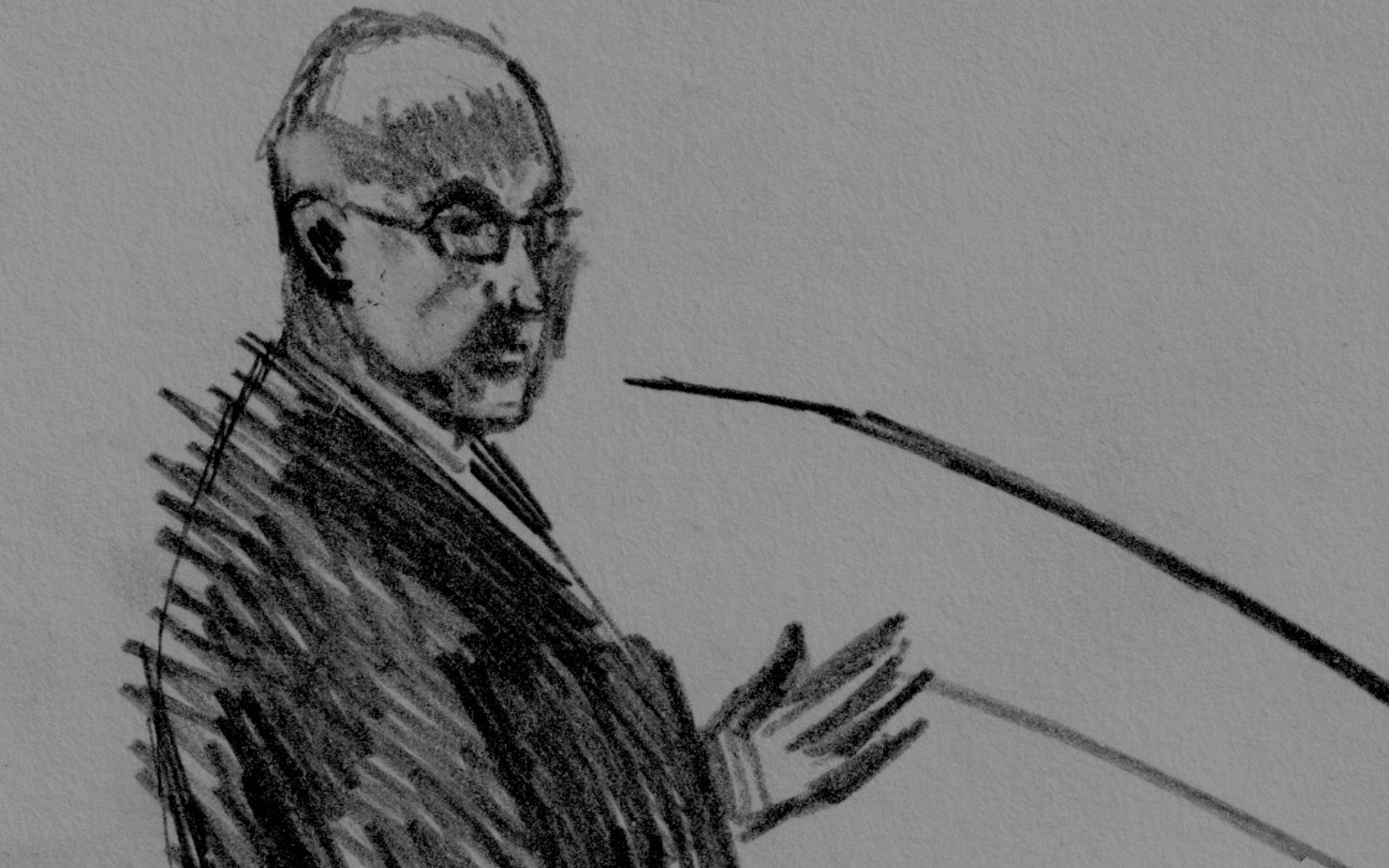
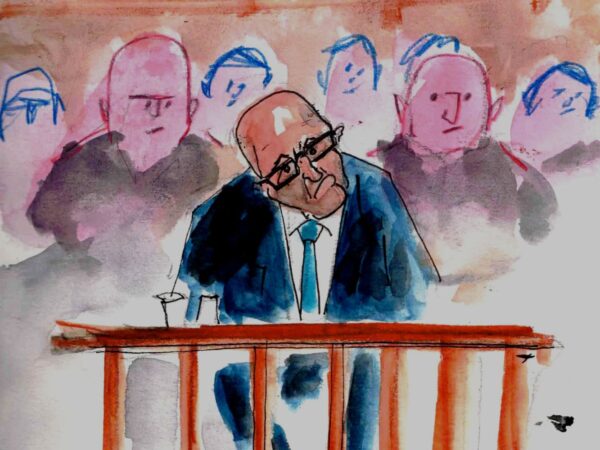
Yorgen Fenech conceded under cross-examination that Keith Schembri never told him directly that he was involved in the assassination of Daphne Caruana Galizia, saying his belief that the former chief of staff was the mastermind came from Melvin Theuma.
“Keith never told me directly. Melvin told me,” Fenech told the court, after insisting moments earlier that he had not assumed Schembri’s role but knew it.
The exchange came on a day when prosecutor Godwin Cini pressed Fenech on 17 Black, the Dubai company he owns, which was named as a target client of two Panama companies belonging to Schembri and former minister Konrad Mizzi.
“No. I knew it”
The concession came as Cini moved to dismantle the defence’s account of the relationship between Fenech and Theuma, in which the self-confessed middleman is cast as the powerful party.
Fenech said Theuma “felt powerful because he had information on Keith Schembri”, adding: “He knows who the real mastermind is. Keith is the real mastermind.”
Asked by the judge how he knew that, Fenech said Schembri had never told him and that the information had come from Theuma. Cini asked whether that meant he had assumed it. “No. I knew it,” Fenech replied. “His fingerprints are all over it,” he said, repeating a claim his defence has made throughout the trial.
Schembri, who testified over three days in July, denied any involvement in the murder.
Cross-examination began after the morning break, with Cini asking Fenech where he was on 16 October 2017, the day Caruana Galizia was killed. He said he was at home.
17 Black
Caruana Galizia was the first to write publicly about 17 Black. Fenech told jurors he had her website bookmarked and that it “could be” he had been aware she had named him in a comment on her blog, having previously testified that he only learned of that comment when he was interrogated.
He had refused to answer police questions about the company in November 2019, telling investigators he would respond at the opportune moment. Asked why he had declined to answer on a company he now describes as entirely legitimate, he said a case had been opened against him over 17 Black without anyone speaking to him once. He told the court that this trial was the moment he had meant. “I wanted to respond in a setting I trusted,” he said.
Asked what his reaction to the reporting had been, he said: “I don’t know.
ElectroGas, corruption and 17 Black isn’t true.”
The reporting had consequences he acknowledged in writing at the time. In messages with Deo Scerri, a former Bank of Valletta chairperson, Fenech discussed a loan facility and told Scerri he did not want to abuse their friendship as long as it did not expose him. Scerri replied that the problem was not a financial one but the news reports on 17 Black.
Cini also put to Fenech a message he sent Mizzi saying he had lost his phone, and Mizzi’s reply telling him to delete WhatsApp. Fenech said he did not remember it, prompting the observation that his memory had been sharp the previous day under his own lawyer’s questioning, down to a dinner of cooked lamb. He denied the exchange had anything to do with ElectroGas, and said he had only learned of Hearnville and Tillgate, the Panama companies, through the media.
On 2 April 2019, Fenech sent a photograph of a seat number, a 17 on a black background. He confirmed the reference was to 17 Black.
“It was my right to complain”
Fenech accepted that he had close contacts with prominent figures across Maltese public life but denied taking advantage of them.
He confirmed that his communications had resulted in criminal charges against Heathcliff Farrugia, then chief executive of the Malta Gaming Authority, who was convicted on appeal over the exchanges.
Fenech denied they were friends, describing the relationship as professional and cordial, and said his complaints had been about what he considered the unfair selection of the Portomaso Casino for a MoneyVal review. “I was just complaining. We had the best levels of compliance. It was my right to complain. I didn’t ask for anything,” he said.
Cini turned to Alfred Degiorgio’s gambling at the Portomaso Casino. A casino
employee testified in the case against Degiorgio that in September 2018 he gambled more than €457,000 while losing €16,000, and that he gambled over €40,000 and lost €31,000 at the Oracle Casino, also owned by Fenech. Fenech said a suspicious transaction report had been raised.
On Johann Buttigieg, then head of the Planning Authority, Fenech said he had sought only general advice and played down hosting him for dinner.
Cini put to him messages seeking help with a farmhouse tied to Theuma; a February 2019 exchange in which Fenech discussed a project after receiving what he described as a go-ahead from then prime minister Joseph Muscat, referred to as “ix-Xiħ”; and a March 2019 exchange on settling a debt involving developer Joseph Portelli, in which Fenech suggested splitting property acquired from Portelli and Buttigieg recommended a site in Qormi.
Confronted with the suggestion that he had shared confidential information about competitors, and with inconsistencies in his account, Fenech cited the passage of time and said he had been falsely accused.
Cini then turned to Marvin Gaerty, then Commissioner for Revenue. “We had a very good relationship,” Fenech said. “I met him through music.” In the messages, Fenech told Gaerty he had brought his money in from abroad, declared it in 2016 and paid tax in full, and that “that witch” first published in 2017. Gaerty replied telling him not to worry. Fenech wrote back asking whether he had had reason to doubt when she spoke to him, again using the same word.
Fenech confirmed the reference was to Caruana Galizia. “It was a name we used in our circles. It was on TV,” he said.
The defence objected repeatedly during this line of questioning, arguing that the episodes involving Buttigieg, Farrugia and Gaerty had nothing to do with the case before the jurors.
Sources inside the police
Asked about his contacts within the police force, Fenech said he had been close to Silvio Valletta but could not remember another name. Cini reminded him that a police officer had been charged in court because of him, a reference to Raymond Aquilina, who faces bribery and corruption charges alongside Fenech.
The defence objected immediately, raising a point of law and telling the court the line of questioning was entering a red zone because those proceedings are sub judice.
When the jurors returned, Fenech said he had known Aquilina only slightly. “We met maybe five times. I don’t know the last time I met him. I don’t know why he left the force.”
He confirmed communicating with Aquilina over Signal, with messages set to disappear, and Cini presented calls between the two men made between January and July 2019. Asked why he had used Signal rather than WhatsApp, Fenech said he was not sure.
In messages ahead of Theuma’s arrest, Fenech told him to put his mind at ease, especially because of “Ray”. Fenech insisted he had never discussed Aquilina with Theuma. “I have no idea how Melvin knew Ray. He brought him up, not me.”
Shown a message to an employee instructing her to ensure that Aquilina’s name was not entered on the visitor log at Portomaso tower, Fenech confirmed the exchange.
Questioning also returned to Valletta, the former deputy commissioner who oversaw the homicide squad and sat on the board of the Financial Intelligence Analysis Unit, which had authored a report on 17 Black and its links to suspicious payments. Valletta, whom Fenech’s children called “Uncle Silvio”, led the investigation into the murder until he was removed by court order in mid-2018. Fenech said he was aware Valletta had been working on the case.
The money and the leaks
Cini turned to the €450,000 Fenech gave Theuma, which was used to pay for the legal defence of the Degiorgio brothers. Fenech confirmed passing on the money but said it was a mischaracterisation to say he was paying the lawyers.
He played down recordings in which he coached Theuma on how to speak to the Degiorgio brothers in prison, saying he had been bluffing to keep Theuma calm.
Fenech again confirmed that he had passed Theuma extensive information about the investigation, including the raids, the arrests, the Maksar brothers and the investigation into Theuma himself. “Yes. I made a mistake,” he said. Asked whether he had been trying to disrupt the investigation, he said: “That’s right. I was trying to buy time with Melvin.”
Shown his messages to Theuma from the evening before Theuma’s arrest, Fenech said: “Everything I said, Keith told me.” He initially said he had understood only that Theuma would be arrested on money laundering charges as a ruse and had not known that Theuma’s partner and stepdaughter were under investigation. Reminded of his own messages, he shifted: “Yes, I knew they were being arrested.”
Fenech confirmed he had a WhatsApp group with Schembri and Muscat. “We were close, but I didn’t have that confidence with the PM,” he said. In a private message to Muscat dated 17 January, he said he had lost his phone but had managed to wipe it remotely.
Earlier: Fenech ends his own testimony
The morning was taken up with the closing stages of Fenech’s examination by his lawyer, Giannella de Marco, picking up from the Gozo trip and his return to Malta with his brother Franco.
He said he had spoken to his uncle Ray, who told him he had been to see Schembri. Fenech called him, concerned. “He told me, it doesn’t interest me what happened. I want to make sure you’re in the right state of mind to take his advice and lie low for a few days.”
He denied any plan to flee before his arrest at sea in November 2019. “I never wanted to escape. The intention was to travel discreetly, to get into the right frame of mind, clean myself up, consult with my lawyers, and then come back,” he said. “I knew there was going to be a massive show made of my arrest. I know what it looks like. I would rather die than escape. It never crossed my mind.”
He rejected the suggestion that a message asking his uncle to look after his children pointed to flight. “It’s something I say to my wife every day.”
Fenech said the captain of his boat, Logan Wood, had been planning to sail around that time and that they brought the trip forward to the Wednesday. “I told him to turn on the AIS and inform port control.” Wood told him there were photographers at the marina, he said, smirking as he recounted it, and he was also told the CID were in the area.
He insisted he set off at 4:30am to make use of good winter weather. “A few minutes later, I was making coffee in the galley and I started seeing lasers. I told Logan to slow down, and then suddenly a lot of lights, an AFM vessel. I was worried and they swarmed on the boat, wearing balaclavas. I didn’t know what was going on. I asked. They said I was under arrest.”
Police searched the boat, then his home, then his office. Fenech said Assistant Commissioner Keith Arnaud asked whether he needed his doctor, Adrian Vella. “When they entered my home, I got palpitations. The doctor came and gave me some medicine.” De Marco returned repeatedly to his complaint that police had taken everything, including his children’s devices.
At the depot, he said, he was in withdrawal. “I felt bad.” He said Arnaud told him there was always a light at the end of the tunnel.
Fenech was granted police bail on 21 November and said he asked for protection because he feared for himself, his wife and his children. By the evening of 23 and 24 November his anxiety was, he said, through the roof. He asked for Vella, who told him to go to hospital. It was his birthday.
Turning to the notes Schembri is alleged to have passed to him through Vella, Fenech said: “I have no doubt it was Keith’s work.” The first, he said, appeared at his home after he returned from police bail. “My wife came in and told me: here’s a note from Keith through Adrian.” He opened it with his lawyers, Gianluca Caruana Curran and Marion Camilleri. “I read it, and I wasn’t happy. I started to realise what was happening.”
He said he called Schembri, who was at Girgenti. “He told me to trust him and that it would work. I told him I didn’t like it. I was angry after that call. I knew what was happening. I realised what the game was.” He added: “I gave two versions, but like I told the police, that was not my version of events.”
Fenech described solitary confinement and conversations with a priest. “I ended my addiction the moment I gave my police statement.”
“I never paid for the murder,” he said. Asked by his own lawyer why he had withdrawn the money, he said: “I gave Melvin money because at the time he said he had got out the money, so I calmed him down and made it clear that he wouldn’t pay them.”
“None of it makes sense. Blue Elephant. During the day. I had a private office,” he said of the meeting at which Theuma says the murder was first discussed.
He described Theuma as a man he was managing rather than directing.
“Paying him was the easiest solution to keep him calm and under control. He used to threaten that he would go to Mellieħa, Castille. He blackmailed me for money. At the end of 2018, he turned on me. I was giving him sensitive information. I chose to do so. I wasn’t strong enough.”
“Johann told me he was recording me. I was offended, disappointed. I really got scared at the end of 2018 when he got me the note.”
He closed with a message to the jurors: “I want to apologise for keeping you from your family. I continue to have faith in the court.”
More to read
-
-
Environmental

Green To Grey: How Is Land Take-Up Regulated?
-
-
Environmental

Green to Grey: When Development Creeps Up On Agricultural Land
-
-
Environmental
Infrastructure, Commercial Complexes, Cemetery: Satellite Data Reveals Malta’s Largest Green-to-Grey Areas
-
-
Environmental
Green To Grey: Malta Lost Over 830,000 Square Metres Of Land To Development In Five Years
-
-
Environmental
Profit In Every Drop: The Companies Pumping Malta’s Groundwater For Free
-
-
Crime & Legal Affairs
Listen: The Trial Against Yorgen Fenech – A Podcast By Amphora Media
-
-
Politics
Open Malta: A New Political Data Transparency Platform By Amphora Media
-
-
Crime & Legal Affairs

MGA-Licensed Operator Linked To €5.86 Billion German Illegal Gambling Probe