Malta Will Charge Tourists €213 Million; Most Will Be Spent On Marketing Malta To More Tourists
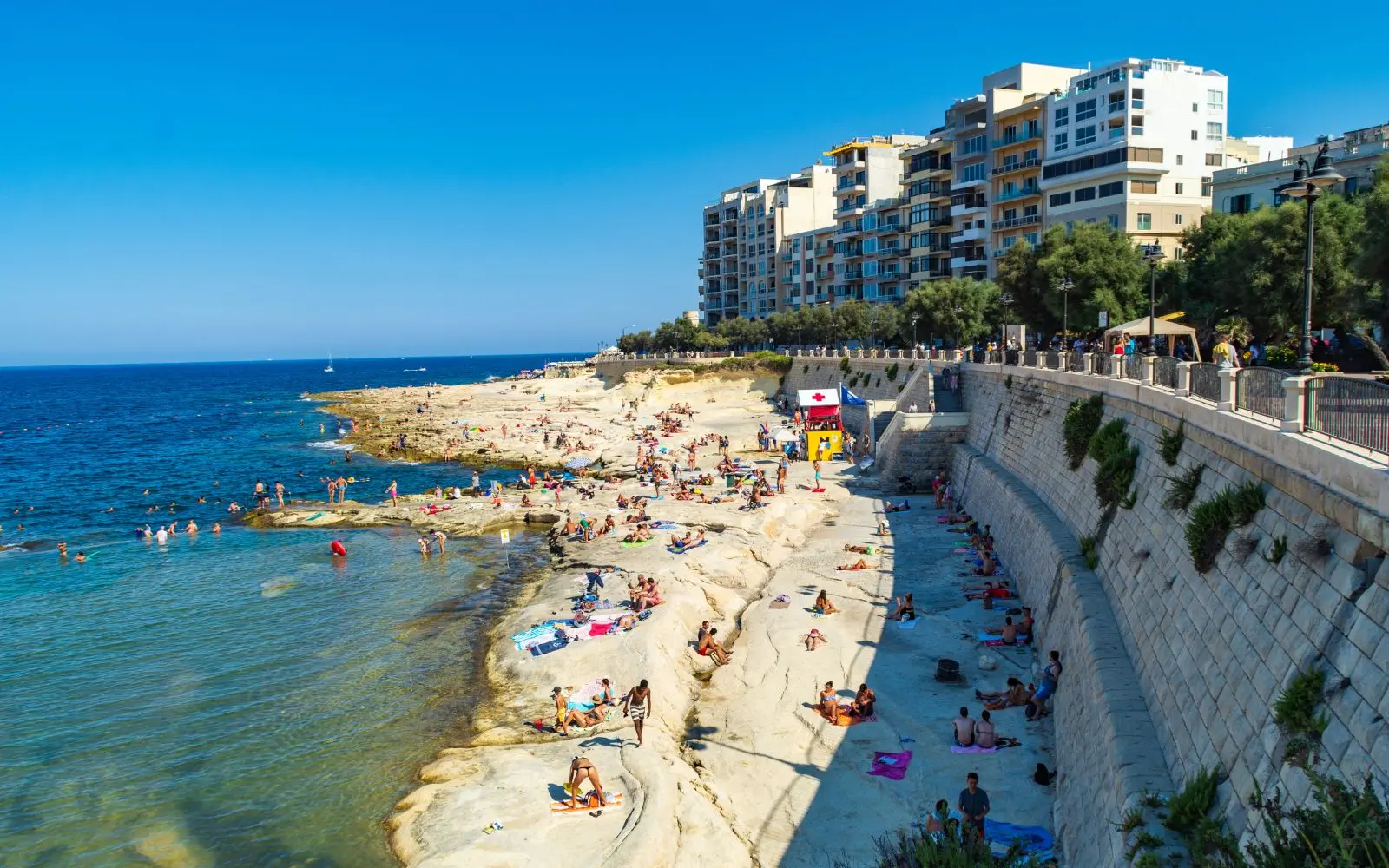
Tourists are expected to pay €213 million in eco-contribution next year, with Finance Minister Clyde Caruana justifying the measure by citing the pressure tourists place on infrastructure and the government’s plan to continue boosting tourism numbers beyond the 4.5 million visitors projected for 2026.
The 2027 Budget raises the eco-contribution from €1.50 to €8 a night in hotels (capped at €64 per person) and €10 in short lets (capped at €80 per person). It also adds new charges on cruise passengers (€10) and Comino visitors (€5). The Gozo Ferry will also raise its fees for non-residents of Gozo.
The budget estimates show the eco-contribution raised €6.7 million in 2025. They expect €21 million in 2026 and €213 million in 2027.
That would work out to €47.33 per tourist on 2026’s projected figures – and around €42.60 per tourist if tourism figures climb by a further 500,000 as it has done in every year since 2022.
But the budget estimates do not send that money to infrastructure or energy. Labour’s manifesto promised local councils a direct share of the eco-contribution. No line in the estimates sets money aside for them.
Instead, the ‘Environmental Contribution is injected directly into the Tourism Ministry’s budget, which will increase its total spending to €217 million in 2027 (€214.6 million in recurrent spending, €2.9 million in capital spending(spending on large projects)).
A Tax and Customs Administration statement claimed the revenue would be “directed solely and exclusively to upgrade and embellish the local infrastructure in touristic areas around the Maltese Islands. “
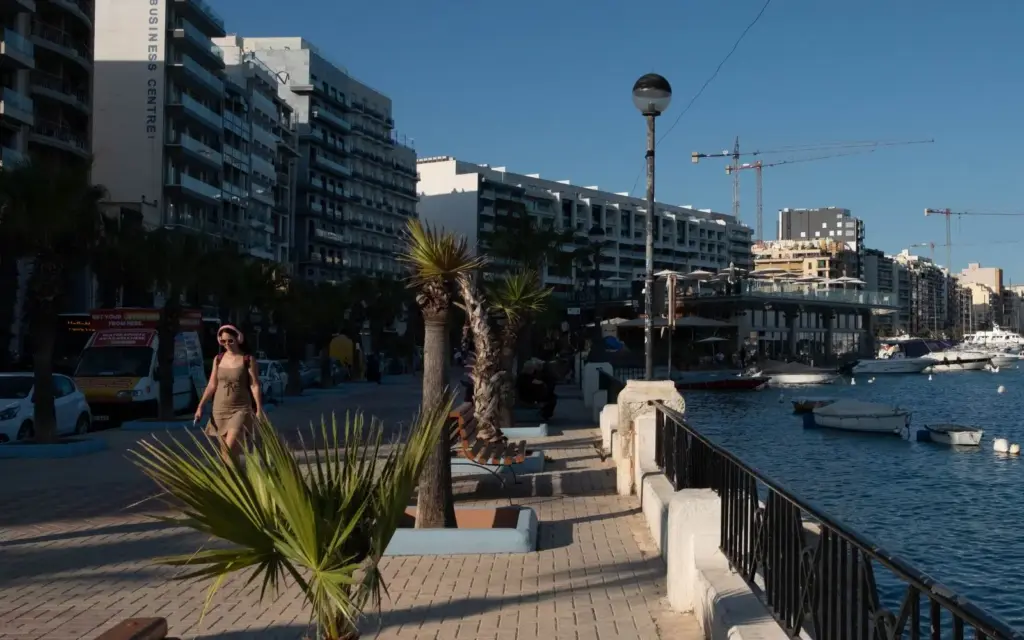
Almost all of the ministry’s budget goes to one place, the Malta Tourism Authority, which will receive €200 million in 2027. The estimates do not break down the MTA’s spending, but the authority’s accounts are tabled in parliament. In July 2026, Tourism Minister Jo Etienne Abela tabled its most recent financial estimates, covering 2026.
Marketing took 85% of the MTA’s spending in 2025, the last year fully accounted for. Advertising, promotion and marketing rose from €102.5 million in 2023 to €178 million forecast for 2026, a 65% increase over three years.
Part of that is “route development”, money paid to airlines to keep fares to Malta low. Until 2023, the MTA reported it separately: €54.4 million in 2022 and €50.3 million budgeted for 2023. The MTA provides no breakdown of beneficiaries.
Marketing, digital, brands and events took €56.3 million and €60.7 million in the same years. Since 2024, the two have been reported as one figure, so it is no longer possible to tell how much goes to airlines.
A significant marketing expense for the MTA is its sponsorship agreements under the Visit Malta label; this includes sponsorships with Manchester United, Joseph Portelli’s SPAL, and countless events, music festivals, and other activities that receive MTA funding.
In a recent parliamentary question, Tourism Minister Jo Etienne Abela said that information on how much the authority and its VisitMalta brand paid, or committed to pay, in sponsorships in 2025 and 2026, and to whom, was “commercially sensitive”.
In his speech, Minister Caruana said that airline incentives would be reviewed to target the shoulder months and “destinations that bring quality tourists”. It does not say what they cost now and which airlines will benefit.
The tourism authority is now running deficits. It overspent €6.6 million in 2025 and expects to overspend €24.2 million in 2026.
Product development will almost triple in 2026. It will rise from €5.3 million to €14.8 million. Product development payments will increase from €8.7 million to €26.6 million.
The MTA’s product development directorate says it aims to diversify the tourism offer and improve the visitor experience. This includes some community infrastructure projects such as regenerating Mellieħa Parish Square and the Għadira promenade, adding new lighting for Naxxar Parish Church, and installing new bells for Ta’ Ġieżu Church in Valletta.
Payments to related parties more than doubled in 2024. Audited accounts record €23.3 million of spending with related parties, up from €10.1 million in 2023. They do not name those parties.
Staff are a small part of the bill by comparison. Staff costs were €12.1 million in 2025, up from 10.3 million in 2022. The MTA employed 209 people on average in 2024, when key management cost €0.86 million and the board €0.10 million.
| MTA | 2022 actual | 2023 actual | 2024 actual | 2025 actual | 2026 budget |
| Ministry grant | €122.1 million | €119.5 million | €152.5 million | €168.2 million | €180.7 million |
| less grant allocated to capital projects | not disclosed | −€6.8 million | −€2.9 million | −€2.2 million | −€10.5 million |
| Contributions and other income | €9.1 million | €11.4 million | €8.3 million | €8.6 million | €8.4 million |
| Total income | €131.2 million | €124.1 million | €157.9 million | €174.7 million | €178.6 million |
| Advertising, promotional and marketing | €110.7 million | €102.5 million | €130.7 million | €157.6 million | €169.3 million |
| of which route development (airlines) | €54.4 million | €50.3 million (budget) | not disclosed | not disclosed | not disclosed |
| of which marketing, digital, brands and events | €56.3 million | €60.7 million (budget) | not disclosed | not disclosed | not disclosed |
| Product planning and development | €5.4 million | €3.2 million | €3.5 million | €5.3 million | €14.8 million |
| Staff costs | €7.1 million | €8.8 million | €10.2 million | €12.1 million | €12.1 million |
| Other operating expenses | – | €4.5 million | €4.6 million | €5.3 million | €5.6 million |
| Depreciation | – | €0.9 million | €0.9 million | €1.0 million | €0.9 million |
| Total expenditure | €133.5 million | €119.8 million | €150.5 million | €181.3 million | €202.8 million |
| Surplus (deficit) | −€2.2 million | €4.3 million | €7.4 million | −€6.6 million | −€24.3 million |
The rest of the Tourism Ministry bill
Outside the MTA, the ministry’s remaining €17.5 million is focused on the following items:
- Institute of Tourism Studies: €9.9m
- Ministry for Tourism Salary: €2.7m (44 staff; 23 on contract)
- Ministry for Tourism Operation expenses: €1.6m
- Tourism Project Advisory Committee: €2m
- Town Centre Management Paceville, €1,000: cut from €250,000 to a token amount.
About €24 million more in tourism-related spending sits in other ministries’ budgets. The Gozo Channel subsidy falls by €4 million, while higher fares for non-residents are expected to bring in €13 million.
- Gozo Channel subsidy, €10.7m: down from €14.7m as non-resident fares rise.
- Fast ferry subsidy, €9.2m
- Tourism Zone Regeneration Agency, €2.4m
- Gozo tourism promotion, €0.86m
- Sports-tourism schemes, €0.7m
Malta’s Tourism Numbers:
Malta’s tourism has more than doubled over the last decade. The number of visitors has soared from around 1.7 million in 2015 to 3.5 million in 2024, and surpassed the 4 million mark for the first time in history in 2025, a 500,000-person increase from the year prior.
That’s the equivalent of an extra 70,000 people in the country every day. In August 2025, that number was 111,600 extra people per day.
In 2026, Malta is projected to surpass 4.5 million tourists. In his budget speech, Caruana said that he expects the number of tourists to grow in 2027.
The data indicate that tourism numbers have surged post-COVID-19 and are a direct result of policy. Figures are now almost double the 2.3 million that arrived in 2022, the first full year of post-pandemic recovery.
In terms of total tourism expenditure, tourists spent over €3.9 billion on their trips in Malta in 2025, up from 3.3 billion the year prior. The NSO reported that each tourist spent €971.
The largest contributors are tourists from the UK (€942 million) and Italy €374 million). The largest growth in spend and arrivals has come from Ireland, with expenditure up 58% in 2025, followed by Poland (45.6%).
Still, each tourist is spending less. Between January and September 2026, the average tourist spent €959 per trip, about €27 less than in the same period last year, according to NSO figures.
| Year | Total Inbound Tourists |
| 2011 | 1,415,018 |
| 2012 | 1,443,414 |
| 2013 | 1,582,153 |
| 2014 | 1,689,809 |
| 2015 | 1,783,366 |
| 2016 | 1,965,928 |
| 2017 | 2,273,837 |
| 2018 | 2,598,690 |
| 2019 | 2,753,239 |
| 2020 | 658,567 |
| 2021 | 968,136 |
| 2022 | 2,286,597 |
| 2023 | 2,981,476 |
| 2024 | 3,563,618 |
| 2025 | 4,022,310 |
| Year | Total Expenditure |
| 2015 | €1,639,067,000 |
| 2016 | €1,708,952,000 |
| 2017 | €1,946,894,000 |
| 2018 | €2,101,765,000 |
| 2019 | €2,220,627,000 |
| 2020 | €455,108,000 |
| 2021 | €870,710,000 |
| 2022 | €2,012,540,000 |
| 2023 | €2,674,877,000 |
| 2024 | €3,291,490,000 |
| 2025 | €3,904,355,000 |
How do tourists spend that money?
A large part of tourist spending goes on simply getting here and having somewhere to sleep.
Flights, sea fares, accommodation and Packages (flights/sea fares and accommodation bundled) together account for €2.46bn, or 63% of the total tourists spent in 2025. The remaining 37% (€1.44bn) is spent on everything else: food, shopping, excursions, entertainment, etc.
For context, the eco-contribution works out at roughly €47 per visitor by the government’s estimates, or about 5% of what the average tourist spends on a whole trip.
| Category | Total | Share |
| Package holidays (flights + accommodation bundled) | €927m | 24% |
| Air/sea fares (independent travellers) | €653m | 17% |
| Accommodation (independent travellers) | €885m | 23% |
| Everything else (food, shopping, excursions, entertainment) | €1,440m | 37% |
| Total | €3,904m | 100% |
The figures have continued into this year. Between January and September, tourists who did not book a package holiday spent an average of €213 on air and sea fares and €329 on accommodation. Together that’s about €542, or roughly 60% of their trip spending. The remaining €355, about 40%, went on the rest.
And what about workers?
As of the most recent figures (Q2 2026), 86,757 people worked in wholesale and retail trade, transport and storage, and accommodation and food services. While not specifically labelled as tourism, they include tourism-linked roles.
The sector also employs a significant number of foreign nationals. According to Labour Force Survey data for 2024, tabled in Parliament by Finance Minister Clyde Caruana in December 2025, 79,158 people worked in wholesale and retail trade, transport and storage, and accommodation and food services.
Of these workers, 36,477 (46%) were foreign nationals, more than in any other sector. This means that almost a third of Malta’s 120,116 foreign workers recorded in 2024 were employed in the sector.
It is also the lowest-paid sector in the economy. Employees there earned a median basic salary of €16,800 a year, against €20,800 across all sectors. Foreign employees in the sector earned a median of €15,871, about €2,460 less than their Maltese colleagues on €18,332, and the lowest figure for any group in the data.
Across the economy, foreign employees earned a median basic salary of €18,378, compared with €22,620 for Maltese employees, a gap of more than €4,200 a year.