Malta Tops EU Charts In Platform-Driven Tourism Intensity
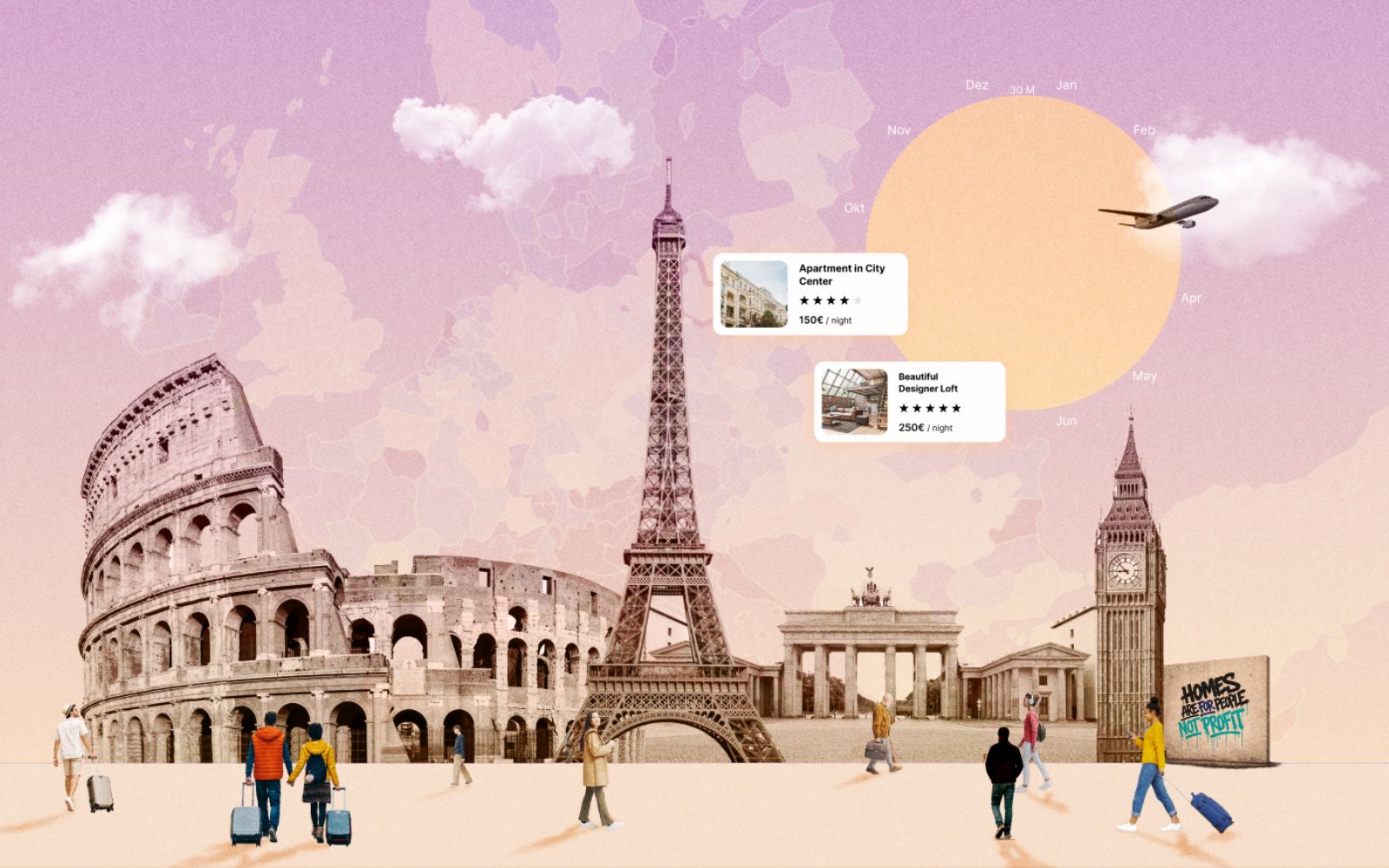
Image credit: Bene Brandhofer | UJN | iStock
Malta ranks the highest in platform-driven tourism intensity among EU countries, a new research project by the Urban Journalism Network and its partners, covering Airbnb, Booking.com and Expedia Group, reveals.
Intensity measures the number of nights for the number of people who booked accommodation. For example: a family of four staying two nights is counted as eight nights. In Malta’s case, platform-driven tourism intensity is 13,658 guest nights per 1,000 inhabitants.
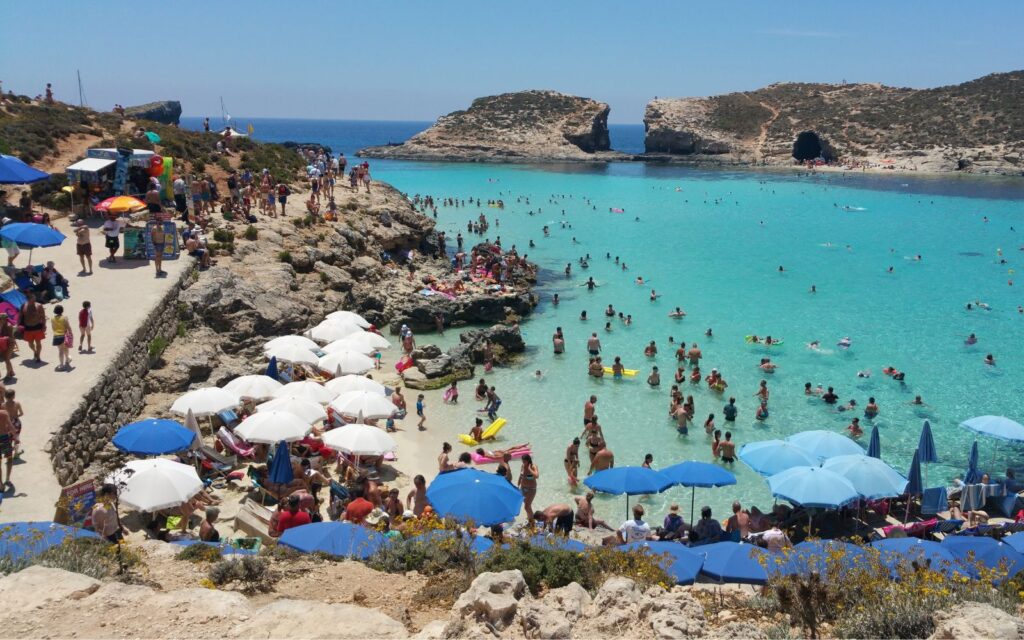
That’s a +136.5% increase from 2018. These figures do not include cruise ship passengers, whose numbers are also increasing.
Amphora Media is the network’s member in Malta. Our earlier investigation explored how short lets reshaped Malta’s communities, generating hundreds of thousands in revenue for some and leaving others with waste and noise.
The study is based on Eurostat data released on 2nd July that covers short-term rentals, such as apartments, booked through the three major providers — Airbnb, Booking.com and Expedia Group — and excludes more traditional forms of accommodation, such as hotels and campsites.
Data shows that both short-term rentals and hotel bookings have increased since the pandemic.
Platform tourism is not entirely synonymous with short lets. But overall, platform tourism is growing much faster than hotel stays.
In Malta’s case, the gap in growth between platform-driven tourist stays and hotel tourism is among the largest in the study, alongside Sweden and Norway.
Gobbling up homes and leaving waste
At the regional level, Malta, together with the Greek, Spanish and Portuguese islands, the Croatian coastline, Algarve in Portugal, and Corsica experienced the highest number of overnight stays relative to population size.
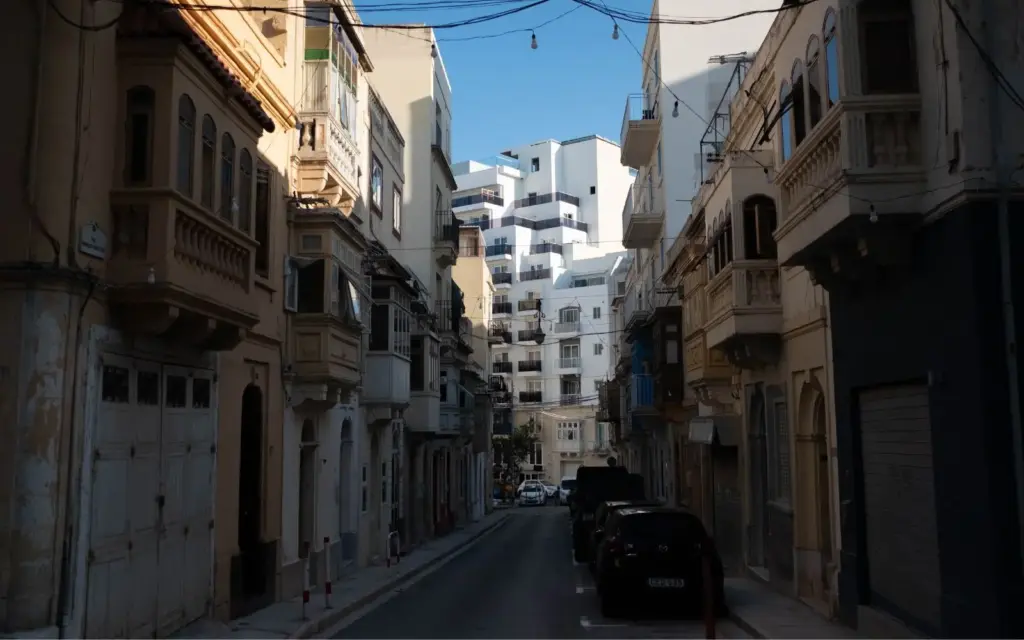
In Malta, platform-driven tourism has transformed localities like Swieqi, which are designated as residential and tourist accommodation is not allowed. But short-lets in ordinary apartments exploit a loophole in planning law. Many Airbnb listings in Swieqi advertise themselves as being close to Paceville: some do not even mention Swieqi at all.
This trend leaves residents with noise disturbances, vandalism, and festering waste generated in tourist rentals and brought out at inappropriate times. “I’m not saying Maltese don’t litter, because they do as well, but the majority for sure are tourists. Especially those in short lets, they’re the ones who cause the most problems,” Gżira mayor Neville Chetcuti told Amphora Media.
“Malta has a reputation abroad as a place where everyone does what they want – everyone smokes cannabis, everyone breaks things – that’s the reputation Malta has,” St Julian’s mayor Guido Dalli said.
Amphora Media’s investigation showed that in Valletta alone, 1 in 6 homes is part of the tourism market. In tourism hotspots like Sliema, Gżira, and others, that number is now 1 in 10.
It is a profitable industry. Our investigation into short lets advertised on Airbnb shows they generated an estimated €47 million over a year. Sliema’s Airbnb market was the largest, worth €7.3 million, followed by St Julian’s (€5 million) and St Paul’s Bay (€3.8 million).
The combined revenue of the top 10 Airbnb earners exceeds the 2024 allocation to the Valletta local council from the central government.
Yet some short-let operators do not contribute to the public purse. Amphora Media’s investigation found that one in five listings is unlicensed.
Brace for August
Like many other countries, Malta experiences tourism peaks in August. This is when 15% of the year’s guest nights are booked. The concentration of bookings in August is milder than in Greece, Croatia and France.
Since the dominance of summer is not as pronounced in Malta, the Tourism ministry has issued a press release claiming that this shows diversification, higher added value, and quality of the tourism product. Amphora Media has seen no evidence to support this claim, and research by Urban Journalism Network shows that tourists increasingly look for cooler holiday destinations in summer.
A recent report by the EU Joint Research Centre simulates how future climate change will affect overall tourism demand.
“The Central and Northern European regions are projected to become more attractive for year-round tourism activities. Conversely, 52 European regions spanning Bulgaria, Greece, Cyprus, Spain, France, Italy, Portugal and Romania are expected to experience a decline in tourist numbers compared to current levels.”
Tourism in Malta has been growing rapidly, but it is outpaced by growth in the cooler regions of Norway, Sweden, Finland, and Poland.
This project was coordinated by the Urban Journalism Network and its partners. Research by Gaby Khazalova, graphics by Bene Brandhofer & David Meidinger, datavisual coordination by Hendrik Lehmann
More to read
-
-
Environmental

Green To Grey: How Is Land Take-Up Regulated?
-
-
Environmental

Green to Grey: When Development Creeps Up On Agricultural Land
-
-
Environmental
Infrastructure, Commercial Complexes, Cemetery: Satellite Data Reveals Malta’s Largest Green-to-Grey Areas
-
-
Environmental
Green To Grey: Malta Lost Over 830,000 Square Metres Of Land To Development In Five Years
-
-
Environmental
Profit In Every Drop: The Companies Pumping Malta’s Groundwater For Free
-
-
Crime & Legal Affairs
Listen: The Trial Against Yorgen Fenech – A Podcast By Amphora Media
-
-
Politics
Open Malta: A New Political Data Transparency Platform By Amphora Media
-
-
Crime & Legal Affairs

MGA-Licensed Operator Linked To €5.86 Billion German Illegal Gambling Probe