EU’s New Safe Countries List: Why It Changes Little For Malta And Deportations

By Daiva Repečkaitė
- EU institutions agree on a list of safe countries to which asylum seekers can be sent, either because they come from these countries, have transited through them, or because their governments agree to process asylum claims there.
- Five EU safe countries still have the death penalty.
- Malta is already deporting people to these countries in large numbers, but most deportees do not appear to have arrived irregularly.
- The government praises a high deportation-to-irregular-arrival ratio, but the nationalities of deportees do not fully reflect arrivals by sea.
Malta is already deporting large numbers of people to countries the EU now plans to designate as “safe”.
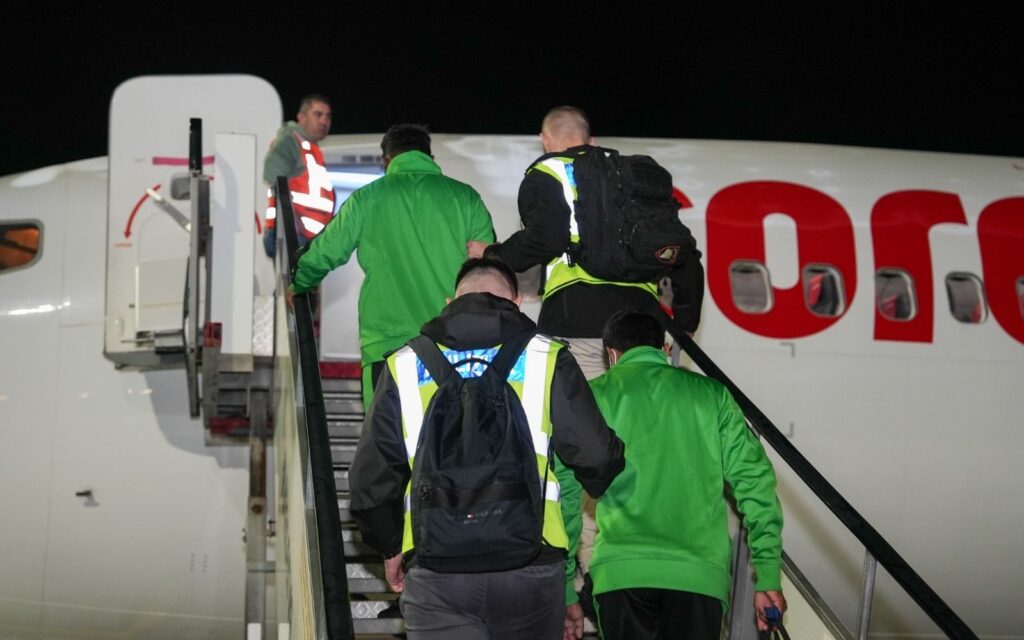
Recently, Home Affairs Minister Byron Camilleri praised a swift operation where migrants rescued at sea in December were deported in a matter of weeks. But most of those deported over time were not asylum seekers, raising questions about what the bloc’s new safe countries list will actually change on the ground.

On 18th December, the European Parliament and Council (the latter represents governments) agreed on the first-ever EU-wide list of safe countries of origin, allowing member states to fast-track or reject asylum applications from nationals of those countries.
While the move is intended to expedite asylum decisions and increase returns, Malta’s data suggest that deportation figures, often cited by the government as evidence of effective migration control, are driven more by the return of migrant workers and visa overstayers than by asylum policy.
What has the EU proposed?
At the EU level, the following countries will be designated as safe countries of origin, with limited exceptions: all EU candidate countries, Bangladesh, Colombia, Egypt, India, Kosovo, Morocco, and Tunisia.
Five of these countries – Bangladesh, Egypt, India, Morocco and Tunisia – retain the death penalty in their laws.
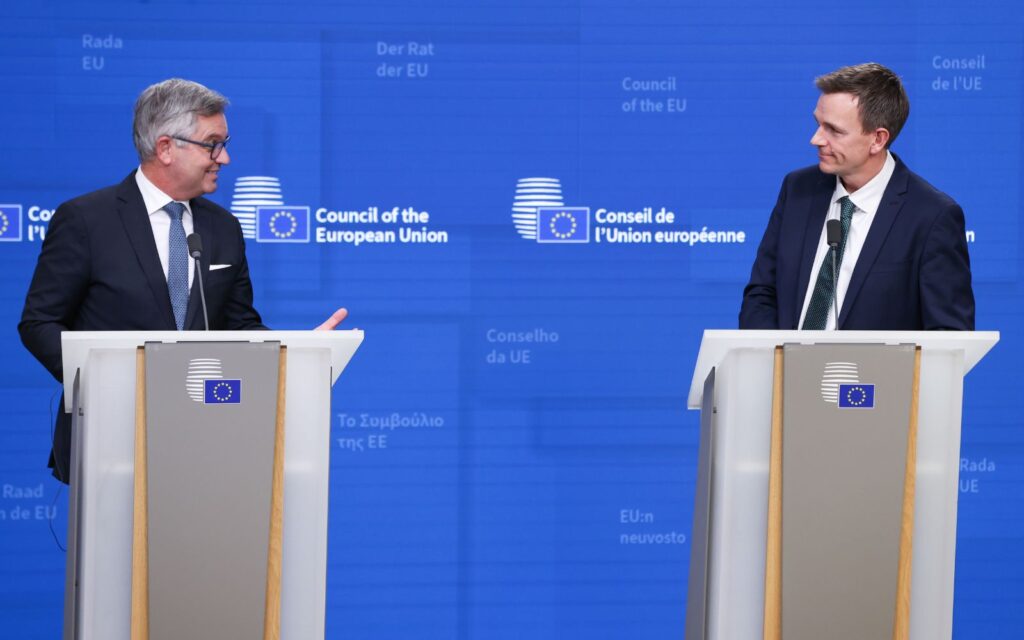
“Where we can go faster, we should go faster,” EU migration commissioner Magnus Brunner said, arguing that faster procedures are needed to address asylum backlogs across the bloc.
While the list is new at the EU level, the idea is not. Currently, EU member states maintain their own lists of safe countries and regularly update them. Malta’s list does not include Colombia or Kosovo and does not automatically extend to EU candidate countries.
“When you have a high influx of refugees coming from a certain country, this country is often inserted into the [national] list,” said Gaia Romeo from the Vrije Universiteit Brussel, who focuses on the implementation of EU safe country policies in her PhD.
“The EU has been trying to have a common list of safe countries of origin since 2004,” she explained.
What about vulnerable groups?
The new EU rules can make it easier to reject asylum applications under examination and expedite the processing of pending claims. The new rules would not affect Ukrainian applications due to the ongoing conflict there.
The final text stresses that individual assessments will still be required but that the onus will now be on the applicant to justify “why the concept safe country of origin is not applicable to him or her”.
It says that “special attention” should be paid to applicants in vulnerable situations, including LGBTIQ persons, victims of gender-based violence, human rights defenders, religious minorities and journalists.

But experts warn that these safeguards risk remaining largely theoretical in accelerated procedures.
“It really depends on how it is implemented,” Frowin Rausis, who researches asylum policy at the University of Geneva with an EU-funded project called “Finding Agreement in Return”, told Amphora Media.
“Cases that concern gender based violence and LGBTQI (…) need a lot of trust, time, and resources that might be absent in an accelerated procedure. If you can’t identify them, you’‘ll also not be able to protect them,” he said.
Romeo points to similar concerns in Italy.
“I’ve been told of many cases of people who had a very evident vulnerability or were in the need of protection, but the process was too fast, because they could not understand the procedure, couldn’t access a lawyer, or they didn’t trust the system,” she said.
“Someone coming from a very repressive system needs some time to understand whom they can trust.”

Malta: Asylum in numbers
Malta will be entering the new EU framework with asylum applications at their lowest level since 2010.
In 2024, the largest number of asylum seekers came from Syria (which accounts for nearly half of all applicants), Colombia and Bangladesh. Over 500 applications were left pending. These applicants were predominantly from Syria, Ukraine and Sudan.
According to 2024 data compiled by aditus foundation, Malta considered 88 applications inadmissible.
Malta has been found in violation of asylum seekers’ rights on multiple occasions. Since 2004, it has lost five cases at the European Court of Human Rights, including rulings concerning the detention of Bangladeshi asylum seekers and the failure to properly assess the case of a Bangladeshi journalist.
This is how asylum seekers from the countries on EU’s safe list fared in Malta
| Country of origin | Applica-tions | Pending applica-tions | Protec-tion | Inadmis-sible | Rejections |
| Bangla-desh | 27 | 10 | 1 | 2 | 21 |
| Colombia | 30 | 38 | 0 | 0 | 16 |
| Egypt | 16 | 0 | 0 | 7 | 11 |
| India | No data | No data | No data | No data | No data |
| Kosovo | No data | No data | No data | No data | No data |
| Morocco | 9 | No data | 0 | 0 | 2 |
| Tunisia | 4 | No data | 0 | 1 | 1 |
| EU candida-tes | 57 | 89 Ukrainians, no data for others | 7 | 5 | 20 |
Deportations: Are rejected asylum seekers leaving Malta?
The government said the number of migrants returned is around 81% of irregular arrivals, and that arrivals themselves have fallen by 93% over the last five years, thanks to effective return policies for those not qualifying for protection. Statistics on sea arrivals and deportations in 2025, as referenced by Minister Camilleri, have not yet been published.
Between 2020 and 2024, Malta deported 1,840 individuals. Nationals of countries now designated as safe at the EU level feature prominently among those returns, according to Eurostat data.
The data does not distinguish between forced returns of asylum seekers and other migrants. Five of the ten countries on this list grant EU citizens visa-free short-stay travel.
This suggests that about one-fifth of all deportations over the five years involved citizens who arrived in Malta visa-free and likely overstayed their visas. According to Jobsplus, as of December 2024, India, Nepal, Colombia, Serbia, Albania, Pakistan and Bangladesh featured among the top nationalities of employees in Malta.
Most deported nationalities in Malta in 2024 (highlight: visa-free travel)
| Nationality | Forced returns (rounded) | Residence permits for employment | Visa overstay (rounded) | Number of boat arrivals |
| Bangladesh | 95 | 342 | 10 | 113 |
| India | 50 | 3,354 | 85 | 0 |
| Serbia | 25 | 339 | 70 | 0 |
| Egypt | 25 | 116 | 5 | 28 |
| Colombia | 25 | 1,488 | 75 | 0 |
| Nepal | 25 | 2,328 | 30 | 0 |
| Pakistan | 10 | 482 | 10 | 31 |
| Georgia | 15 | 121 | 20 | 0 |
| Albania | 15 | 482 | 15 | 0 |
| North Macedonia | 15 | 119 | 25 | 0 |
The ranking of the most deported nationalities has remained stable over time. For each nationality, the number of migrants holding work permits far exceeds the number of deportations, showing that most deportations concern migrants other than rejected asylum seekers.
Most deported nationalities in Malta 2020-2024 (highlight: visa-free travel)
| Nationality | Forced returns | Residence permits for employment | Visa overstay (2021-2024, rounded) | Number of boat arrivals (approximate) |
| Bangladesh | 635 | 2,387 | 150 | > 896 |
| Egypt | 159 | 664 | 85 | > 209 |
| India | 92 | 20,380 | 190 | No data |
| Colombia | 89 | 6,612 | 150 | No data |
| Serbia | 88 | 2,564 | 205 | No data |
| Nepal | 82 | 15,283 | 70 | No data |
| Georgia | 70 | 656 | 85 | No data |
| Albania | 67 | 4,769 | 75 | No data |
| North Macedonia | 45 | 1,157 | 80 | No data |
| Morocco | 42 | 758 | 65 | > 133 |
Note: no overstay data from 2020 was published. NSO publishes nationality data on boat arrivals only when that nationality is included among the most common nationalities, so the numbers are expected to be higher
When deportation figures are compared with boat arrivals, the discrepancy becomes clearer.
Some Bangladeshis and Egyptians used the sea route, but most of the other sea arrivals in 2024 were from Syria (46 people), Pakistan (31), Eritrea (9), Ethiopia, Ghana, Sudan (3 each), and Palestine (2).
During 2020-2024, Bangladeshis constituted the largest number of sea arrivals (21%), followed by Sudanese (18%), Eritrean (12%), Syrian (9%) and Somali people (210).
The data suggest that most deportations do not concern rejected asylum seekers, but migrants who entered Malta through other channels, including labour migration and visa-free travel.

Malta has deported one Syrian since 2020, alongside 33 Pakistanis, 40 Ghanaians, no Eritreans, Sudanese, Palestinians and Ethiopians.
Malta is already deporting people to Bangladesh, Egypt, India, Colombia, Morocco and several EU candidate countries, all of which feature on the EU’s new safe countries list. Nepal is the only country among Malta’s most frequently deported nationalities that does not.
Taken together, the figures indicate that Malta’s high deportation-to-arrival ratio is driven by two factors: a sharp decline in sea arrivals, and a large number of returns involving non-asylum migrants.
As a result, deportation figures are more accurately understood in relation to overall migration flows, rather than arrivals by sea alone.

EU proposal has limited impact and familiar problems
EU data shows that member states already maintain and revise their own lists of safe countries, which are frequently challenged in court.
In recent years, Greek courts rejected Türkiye as a safe third country, Italian tribunals ruled that Tunisia could not be considered safe, and Dutch authorities concluded that Colombia, now on the EU-wide list, does not offer sufficient protection for asylum seekers.
Rausis doubts the new framework will significantly increase returns or harmonise asylum policy.

“The harmonisation effect is limited, but more importantly, the question of return is critical for many countries. This will make it more effective in the best case to get a return decision.”
“But the actual question of whether people are returned is not based on this kind of unilateral declaration. It’s really about the extent to which the cooperation with third countries is working.”
Romeo agrees. “Candidate countries tend to cooperate on returns, but then it’s very easy for [their citizens] to return to the EU.”
For Malta, the EU’s safe countries list may streamline procedures at the margins. But it does not explain, or justify, a deportation narrative that is driven largely by migrants who never entered the asylum system in the first place.
Further reading:
More to read
-
-
Environmental

Green To Grey: How Is Land Take-Up Regulated?
-
-
Environmental

Green to Grey: When Development Creeps Up On Agricultural Land
-
-
Environmental
Infrastructure, Commercial Complexes, Cemetery: Satellite Data Reveals Malta’s Largest Green-to-Grey Areas
-
-
Environmental
Green To Grey: Malta Lost Over 830,000 Square Metres Of Land To Development In Five Years
-
-
Environmental
Profit In Every Drop: The Companies Pumping Malta’s Groundwater For Free
-
-
Crime & Legal Affairs
Listen: The Trial Against Yorgen Fenech – A Podcast By Amphora Media
-
-
Politics
Open Malta: A New Political Data Transparency Platform By Amphora Media